The Integration Fallacy
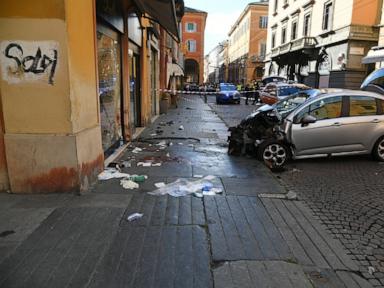
Politicians love a good tragedy. It provides a convenient stage for the "integration" theater. When a violent incident occurs—like the recent attack in Modena—the immediate reflex from the Ministry of the Interior and the usual talking heads is to lament a "failure of integration." They treat integration like a software patch that just didn't install correctly.
This is a lazy, superficial diagnosis.
The Modena incident isn't a failure of integration. It is a failure of state capacity and a fundamental misunderstanding of human geography. We’ve spent decades pretending that if we just throw enough language classes and "cultural sensitivity" workshops at newcomers, the friction of mass migration will evaporate. It won't. Integration isn't something a government does to a person; it is a byproduct of economic utility and the rule of law. When neither exists, you don't get a "failed integration"—you get a predictable vacuum filled by chaos.
Stop Blaming "Culture" for Institutional Rot
The competitor narrative suggests that the Modena attack is a symptom of a widening cultural rift. This is a classic distraction. It allows the state to avoid looking at its own crumbling infrastructure.
Let's talk about the "security zones" and the "degraded neighborhoods" that the Italian press loves to highlight. These aren't cultural enclaves; they are bureaucratic ghettos. When you have a legal system that takes years to process asylum claims or deport violent offenders, you aren't dealing with a migration crisis. You are dealing with a judicial collapse.
The current debate focuses on whether migrants want to belong. That’s the wrong question. The right question is: Why does the Italian state provide the perfect petri dish for antisocial behavior?
- The Permissiveness Trap: Inconsistent enforcement of existing laws creates a "no-man's-land" psychology.
- Economic Exclusion: High barriers to entry in the formal labor market push people toward the informal (and often criminal) economy.
- The Housing Crisis: Concentrating poverty in specific urban corridors ensures that "integration" remains a physical impossibility.
I have spent years watching policy experts draft white papers that read like sociology assignments. They ignore the "battle scars" of the actual street-level reality. In cities like Modena, Milan, or Rome, the issue isn't that people have different religions or customs. The issue is that the state has ceded territory to the highest bidder—usually organized crime or desperate fringe elements.
The Brutal Reality of the Security Debate
"People Also Ask" if migration makes cities less safe. The honest, brutal answer is: Unmanaged, legally ambiguous migration combined with a slow judiciary makes cities less safe. Period.
Pretending there is no correlation doesn't help the migrants who are trying to build lives; it only empowers the far-right. By refusing to acknowledge the security risks inherent in a broken system, the "pro-integration" side leaves the door wide open for populist demagoguery.
The "lazy consensus" says we need more "dialogue."
Logic says we need more deportations of violent offenders and faster work permits for the law-abiding.
We have created a system where the "good" migrants are punished with endless red tape, while the "bad" actors exploit the system's slowness. This isn't a migration debate. It’s a management disaster.
The Economic Myth of the "Replaceable" Worker
Another pillar of the integration debate is the economic necessity argument. "We need them to pay for our pensions." This is a half-truth that masks a deeper failure.
Importing a low-skill workforce into a country with high youth unemployment and a stagnant GDP is not a strategy; it’s a temporary bandage. If the Italian economy cannot provide high-value jobs for its own university graduates—who are fleeing to Berlin and London in droves—how can it possibly "integrate" thousands of people into a disappearing manufacturing base?
We are trying to solve 21st-century demographic shifts with 19th-century labor models.
The Cost of the Status Quo
- Social Friction: Increased policing costs in "high-risk" zones.
- Political Instability: The constant oscillation between "open borders" and "naval blockades" prevents any long-term planning.
- Human Capital Waste: Thousands of people sitting in reception centers for years, becoming unemployable.
Reclaiming the Rule of Law
If we want to fix the "Modena problem," we have to stop talking about integration as a warm, fuzzy feeling. Integration is a contract. You follow the law, you contribute to the economy, and in exchange, you get the protection and benefits of the state.
When the state fails to protect its citizens from violent attacks, the contract is broken. When the state fails to provide a clear, swift path to legal status or exit, the contract is broken.
The solution isn't more "integration councils." It is a radical overhaul of the interior ministry's speed. We need specialized courts that handle migration cases in weeks, not years. We need a police force that isn't hamstrung by political correctness when dealing with crime in immigrant neighborhoods. And we need to admit that there is a limit to how many people any society can absorb before the physical infrastructure—schools, hospitals, housing—snaps.
The Counter-Intuitive Path Forward
The best way to "integrate" people is to stop obsessing over it. Focus on the basics:
- Enforce the law equally. No "sensitive" zones where the police are afraid to go.
- Deregulate the labor market. Make it easier for anyone—migrant or local—to start a business or get a job.
- Physical Decentralization. Stop dumping people into the same three neighborhoods in every city.
The downside to this approach? It’s hard. It requires actual governance, not just speeches. It requires firing incompetent bureaucrats and challenging the "integration" industry that thrives on the status quo.
The Modena attack wasn't a warning shot. It was a confirmation that the current model is dead. You can keep talking about "integration concerns" until the next tragedy, or you can start enforcing the law and building an economy that actually works.
Pick one. Because the "middle ground" is just a graveyard for failing states.
Stop asking how to integrate the world. Start asking how to govern your own streets.