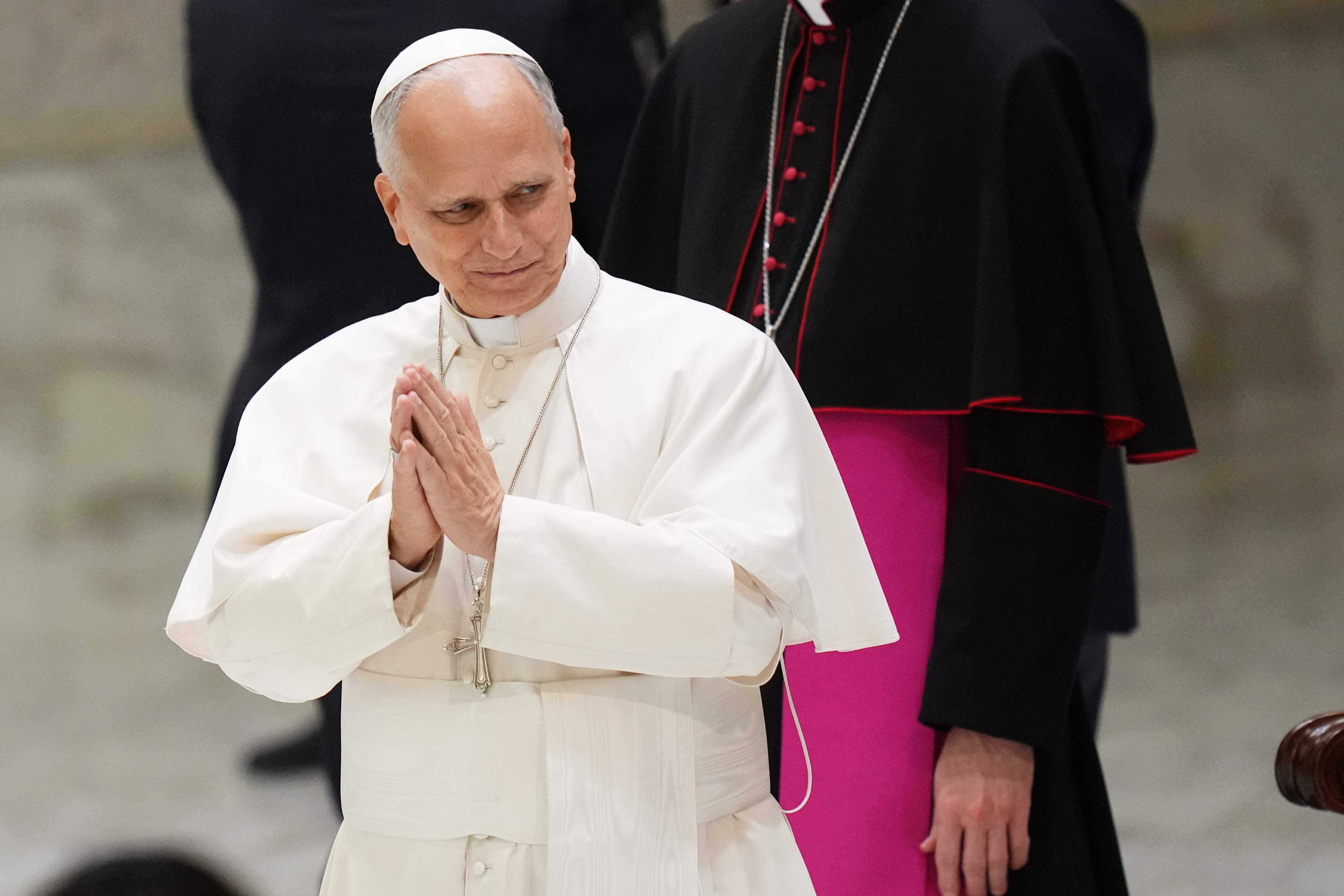
When the Holy See confirms that a pontiff will meet privately with clergy abuse survivors during an apostolic journey to Latin America, standard media coverage treats the announcement as a routine pastoral gesture. That framing misses the institutional reality. These meetings are high-stakes crisis-management interventions deployed to arrest severe reputational decay, stabilize regional ecclesial legitimacy, and enforce canonical accountability across historically opaque diocesan networks.
To understand why the Vatican schedules unscripted or closed-door survivor audiences during Latin American visits—such as the landmark interventions in Chile and Peru in 2018 or subsequent regional trips—one must analyze the intersection of canonical governance, regional demographic attrition, and institutional trust economics. The Vatican does not execute these engagements merely for symbolic optics. They function as diagnostic and corrective mechanisms within a centralized monarchy struggling to compel compliance from decentralized local bishops. If you liked this article, you might want to read: this related article.
The Structural Deficit in Latin American Ecclesial Governance
Latin America represents the demographic core of the global Catholic Church, housing roughly forty percent of the world's baptized Catholics. Yet the region has experienced an acute decline in institutional adherence, driven in part by systemic failures in handling clerical sexual abuse. Unlike the United States, Ireland, or Australia—where aggressive secular litigation, mandatory reporting statutes, and independent state commissions forced rapid institutional restructuring—many Latin American jurisdictions historically lacked the civil-legal mechanisms required to compel diocesan transparency.
This absence of external legal pressure created a governance vacuum. In numerous dioceses, local bishops prioritized institutional preservation and clerical solidarity over survivor welfare, relying on internal canonical secrecy—historically shielded by the pontifical secret prior to its abolition for abuse cases in late 2019—to bury allegations. For another perspective on this event, see the latest coverage from Reuters.
When the Vatican intervenes via direct papal engagement, it is compensating for three specific failures in regional governance:
- Information Asymmetry: Local episcopal conferences frequently filter or sanitize reports sent to the Dicastery for the Doctrine of the Faith (DDF) in Rome. Direct survivor meetings bypass the episcopal chain of command, giving the pontiff unfiltered primary-source intelligence on local cover-ups.
- Principal-Agent Misalignment: Under canon law, diocesan bishops are not mere branch managers; they possess ordinary, immediate jurisdiction within their territories. When bishops resist Vatican directives on safeguarding, the papacy faces a classic principal-agent problem. Publicly validating survivors shifts the moral and political leverage back to Rome, isolating non-compliant prelates.
- Legitimacy Erosion: In countries where secular institutions already suffer from low public trust, the Church's moral capital was its primary social asset. Once that asset is compromised by perceived impunity, pastoral authority collapses across unrelated policy domains, from education to social welfare.
The Three Pillars of Papal Crisis Intervention
A formal Vatican announcement regarding survivor meetings during a foreign trip follows a precise operational sequence. Each phase serves a distinct institutional objective designed to maximize diagnostic accuracy while managing diplomatic friction with the host nation's hierarchy.
1. Pre-Visit Intelligence and Vetting
The Vatican rarely improvises survivor audiences. Weeks or months prior to departure, papal nuncios—the Holy See's diplomatic representatives—coordinate with trusted local intermediaries, safeguarding commissions, or international victim advocacy networks to identify participants. The selection criteria prioritize cases that illustrate systemic failure rather than isolated misconduct. Specifically, Vatican planners look for survivors whose testimonies expose patterns of episcopal negligence, intimidation, or administrative stonewalling. By selecting cases with documented paper trails, the Holy See ensures that the subsequent papal encounter yields actionable canonical evidence.
2. Controlled Asymmetry in the Encounter
These meetings are almost universally conducted behind closed doors, without press access, and often omitted from the official printed itinerary until hours before or after they occur. This operational secrecy serves two competing functions. First, it protects survivors from immediate media exploitation and creates a psychological environment conducive to candid disclosure. Second, it allows the Vatican to control the narrative framing. By releasing a brief communiqué confirming the meeting occurred—emphasizing listening, prayer, and requests for forgiveness—the Holy See signals contrition without exposing the pontiff to real-time cross-examination on specific canonical liabilities or financial settlements.
3. Post-Encounter Administrative Enforcement
The true metric of a papal survivor meeting is not the emotional tenor of the room, but the administrative actions executed within ninety days of the flight back to Rome. Historically, direct papal encounters in Latin America have served as the catalyst for Apostolic Visitations—extraordinary canonical investigations led by special envoys empowered to audit diocesan archives, interview clergy, and recommend the removal of sitting bishops. In the 2018 Chilean crisis, initial papal skepticism gave way to an unprecedented corrective wave only after direct engagement with survivors and an investigative mission led by Archbishop Charles Scicluna exposed systemic deceit by the local hierarchy. That sequence culminated in the mass resignation offer of the entire Chilean episcopal conference and the laicization of high-profile offenders.
The Economics of Institutional Trust and Moral Capital
To evaluate the efficacy of these interventions, analysts must look at institutional trust through an economic lens. For a religious institution, credibility operates as a non-renewable currency; once debased through hypocrisy, it cannot be restored through rhetorical assurances alone.
When a pope meets with survivors, the Vatican is executing a high-cost signal. In signaling theory, a message is only credible to skeptical observers if the sender incurs a cost that a deceptive actor would be unwilling to pay. By meeting with survivors whom local bishops previously dismissed as ideologically motivated detractors, the papacy publicly invalidates its own regional leadership. The institutional cost is severe: it fractures internal morale among the clergy, invites backlash from conservative factions who view such gestures as capitulation to secular pressure, and exposes the Church to heightened civil liability in jurisdictions where moral acknowledgment can be construed as legal admission.
The Vatican absorbs this internal friction because the alternative—continued silence—carries an existential cost. In Latin America, the rise of evangelical Protestantism and secular disaffiliation provides disaffected Catholics with immediate exit options. If the institutional Church is perceived as an unaccountable syndicate protecting abusers, demographic attrition accelerates irreversibly. Survivor meetings function as an emergency circuit breaker designed to halt this outflow by demonstrating that the supreme authority of the institution aligns with the wounded rather than the bureaucracy.
Operational Limitations and Structural Friction
Despite their dramatic symbolic weight, papal survivor meetings suffer from profound structural limitations. Treating them as a comprehensive solution to clerical abuse misunderstands both canon law and organizational behavior.
- The Execution Bottleneck: A pope can listen to ten survivors in a afternoon, yet the canonical justice system must process thousands of cases globally. The DDF remains burdened by severe backlogs, complex evidentiary standards, and a shortage of trained canonists. High-profile papal empathy cannot compensate for a judicial apparatus that takes five to eight years to adjudicate a single laicization petition.
- Diocesan Sabotage: Once the papal plane departs, enforcement reverts to the local bishop and the metropolitan archbishop. Under the Motu Proprio Vos estis lux mundi—promulgated in 2019 and updated in 2023 to establish procedures for investigating episcopal negligence—the Vatican created mechanisms to hold bishops accountable. However, the system still relies heavily on metropolitan archbishops investigating their neighboring suffragan bishops. In tightly knit regional hierarchies, collegiate loyalty frequently blunts investigative rigor.
- The Re-Traumatization Hazard: For survivors, a private audience with a pontiff carries immense psychological weight. When that encounter is not followed by transparent canonical verdicts, financial restitution, or the removal of complicit prelates, the initial sense of validation curdles into deeper institutional betrayal. Survivors frequently report that private papal apologies feel hollow when local dioceses continue to fight them aggressively in civil courts over statutes of limitations.
- Geographic Disparity: Papal visits are rare, capital-intensive events concentrated in major metropolitan hubs. Survivors in rural, indigenous, or impoverished Latin American dioceses—where clerical power is most absolute and civil oversight weakest—rarely gain access to papal delegations. Consequently, the corrective shockwave of a papal visit often dissipates before reaching the peripheral dioceses where abuse is most entrenched.
Distinguishing Symbolism from Structural Reform
A rigorous assessment of any Vatican announcement regarding Latin American survivor engagement requires separating diplomatic theater from durable institutional change. Observers should evaluate the aftermath of such visits against four concrete benchmarks rather than press releases:
First, examine whether the Vatican dispatches independent canonical investigators with unrestricted access to secret diocesan archives within six months of the visit. Without forensic document review, survivor testimonies remain vulnerable to clerical counter-narratives.
Second, track personnel changes within the host nation's episcopal conference. Genuine accountability requires the forced resignation or canonical sanctioning of bishops found to have transferred offenders or obstructed civil authorities, rather than quiet transfers to honorary Vatican posts.
Third, verify the establishment of independent, lay-led safeguarding commissions with direct reporting lines to Rome, bypassing the local bishop's veto power. Under Vos estis lux mundi, every diocese is mandated to maintain accessible reporting systems, yet operational independence varies wildly across Latin America.
Fourth, monitor changes in the diocese's civil-legal posture. True institutional repentance requires abandoning scorched-earth litigation tactics against survivors seeking financial support for therapy and medical care.
Strategic Imperative for Institutional Observers
Vatican crisis diplomacy in Latin America has entered a mature phase where private papal audiences are no longer novel enough to reset public perception on their own. The global media ecosystem and survivor advocacy networks now treat these encounters as baseline expectations rather than extraordinary acts of humility. For the Holy See to convert these high-stakes meetings into measurable trust recovery, the administrative apparatus in Rome must synchronize its judicial velocity with its pastoral messaging. Observers, policymakers, and journalists covering these visits should shift their analytical focus away from the closed doors of the nunciature and onto the canonical dockets of the Dicastery for the Doctrine of the Faith over the subsequent twelve months. The legitimacy of the Latin American Church will not be decided by the eloquence of a papal apology, but by the speed and transparency with which Rome dismantles the episcopal networks that enabled the concealment.