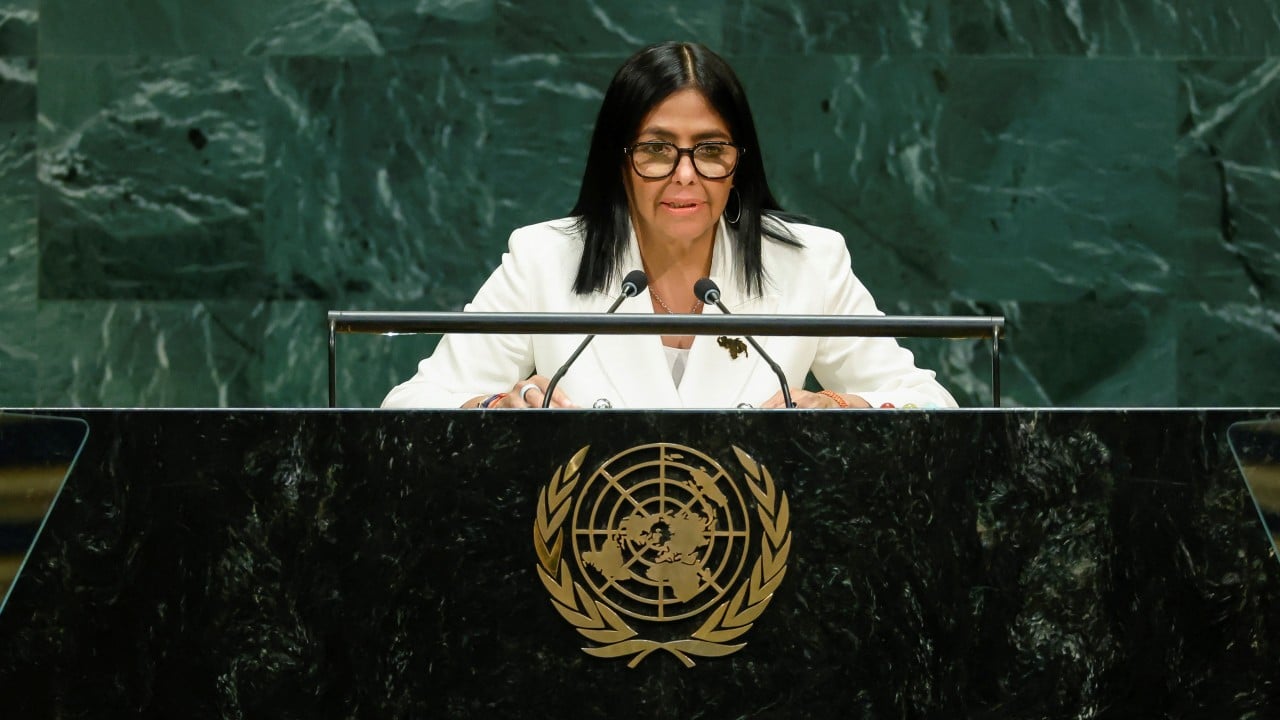
When Venezuela's acting president, Delcy Rodríguez, stepped up to the podium at the United Nations General Assembly, the diplomatic corps leaned in. Years of compounding crises, disputed votes, structural economic collapse, and intense international pressure had reduced Caracas to a geopolitical powder keg. Her message was carefully calibrated for global consumption. Elections would happen when the Venezuelan people determined the right moment, she insisted, offering a narrative of national recovery and sovereign dignity.
Yet, beneath the polished rhetoric delivered under the high ceilings of Turtle Bay, the reality on the ground tells a far more complicated story. A promise without a calendar is merely political theater. Electoral timelines do not materialize out of thin air, and rebuilding a broken institutional framework requires far more than diplomatic platitudes.
To understand why this UN address failed to satisfy international observers, one must look closely at the mechanical hurdles facing any potential transition. Restoring voter registries, auditing electronic voting machines, and permitting a genuinely free press cannot be accomplished in a vacuum. Decades of administrative overhauls have hollowed out the National Electoral Council. Trust has been thoroughly dismantled. When an administration promises a vote at an unspecified future date while retaining total control over the apparatus that decides eligibility, the gesture rings hollow.
International intermediaries understand these maneuvers well. Following her return from the United States without any concrete electoral pacts signed, foreign ministries across the Americas and Europe began reassessing their positions. The calculus in Washington and regional capitals involves balancing the urgency of democratic restoration against the risk of plunging the country into deeper instability. Opposition leaders, meanwhile, find themselves walking a treacherous tightrope. Endorsing a process controlled entirely by the ruling apparatus risks legitimizing a flawed status quo, while rejecting dialogue entirely risks shutting the door on incremental reform.
The economic dimensions further complicate the timeline. Rebuilding the national infrastructure requires billions of dollars in foreign investment, debt restructuring, and the rehabilitation of a neglected energy sector. Investors will not commit capital while the rules of governance remain entirely arbitrary. A credible election is not just a political checkbox; it is the fundamental prerequisite for financial creditworthiness and international legitimacy. Without a firm date, capital remains on the sidelines, and ordinary citizens continue to bear the brunt of hyperinflation and infrastructure decay.
At its core, the current political stalemate reflects a regime struggling to manage its own succession while projecting an image of reform. The language of unity and national soul-searching sounds resonant in a UN speech, but it fails to substitute for structural guarantees. Until Caracas commits to a verifiable calendar with independent oversight, every speech at the international stage will remain an exercise in buying time. The window for managed transition is narrowing, and the underlying pressures inside the country continue to mount.

