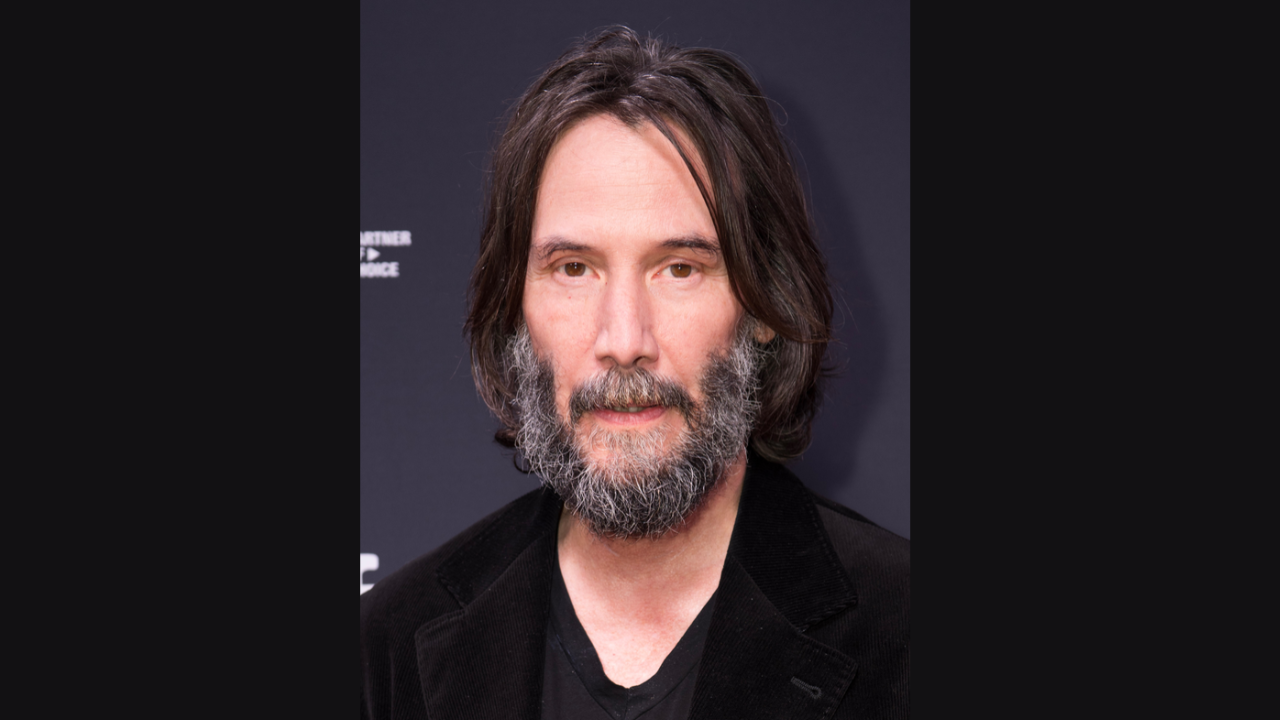
In early 2023, Keanu Reeves filed for a civil harassment restraining order in Los Angeles Superior Court after a 38-year-old man repeatedly trespassed onto his Hollywood Hills property and left behind a DNA testing kit to prove they were related. The legal filing named Bryan Keith Dixon, detailing six separate intrusions between November 2022 and January 2023. Reeves, represented by prominent entertainment litigator Mathew Rosengart, sought immediate legal protection not just for himself, but also for his longtime partner, Alexandra Grant. The court granted a temporary restraining order, mandating that Dixon stay at least 100 yards away from the couple and their residence while law enforcement investigated the escalating pattern of trespass and delusion.
Most celebrity news outlets treated the filing as another bizarre Hollywood footnote. They focused on the novelty of the DNA kit and moved on within 24 hours. That surface-level coverage misses the actual story. When an actor known globally for avoiding litigation and keeping a famously low profile hires one of the most aggressive attorneys in Los Angeles, something fundamental has broken down in the private security apparatus. The Dixon case exposes the severe limitations of physical security in the Hollywood Hills, the specific psychological mechanics of modern celebrity delusion, and the reactive nature of California's civil harassment statutes.
Anatomy of an Escalating Intrusion
Stalking cases rarely begin with a dramatic breach of a bedroom window. They build slowly through a series of boundary tests that private security teams often struggle to categorize before a crime actually occurs. According to the court documents filed on Reeves' behalf, Dixon's behavior followed a textbook escalation curve over a roughly ten-week period.
The first documented incident occurred on November 5, 2022. Dixon allegedly entered the property through a side gate and fell asleep in the backyard before security personnel discovered him and escorted him off the grounds. At that stage, a trespasser on a celebrity estate in Los Angeles is often processed by private guards as a lost tourist, an intoxicated hiker, or an opportunistic burglar. You remove them, log the incident, and reinforce the latch.
Dixon did not stay away. He returned the very next morning, November 6, leaving behind a suspicious backpack on the property. Inside that bag, security personnel found a DNA testing kit. The stated intent, later corroborated by Dixon's own social media footprint, was to prove a blood relation to the actor. Dixon had begun using the name "Jasper Keith Reeves" online, constructing an alternate reality in which he was a rightful heir or biological relative of the John Wick star.
By January 2023, the intrusions became more frequent and brazen. Court records indicate Dixon breached the property multiple times in a single month, forcing Reeves to hire a dedicated private investigation firm to track the suspect's movements, criminal history, and online activity. That investigation revealed Dixon was not a harmless eccentric. He had an active bench warrant out of Rhode Island for felony breaking and entering with criminal intent, alongside prior arrests for possession of burglary tools and simple assault. The gap between a deluded fan leaving a swab kit and an individual with a documented history of unlawful entry had closed completely.
The Geography of Vulnerability in the Hollywood Hills
To understand how an individual with an active warrant could enter the same multi-million-dollar estate six times in three months, you have to look at the physical reality of Los Angeles real estate. Unlike Beverly Hills or Holmby Hills, where flat lots allow for 12-foot concrete perimeter walls, continuous infrared beams, and gated street checkpoints, the Hollywood Hills are an architectural nightmare for executive protection teams.
Properties in the hills are carved into steep, uneven canyon terrain. Sightlines are broken by dense chaparral, retaining walls, neighboring structures built directly above or below the lot line, and winding roads with zero sidewalks. A property might boast a state-of-the-art biometric front gate facing the street while remaining completely exposed from a dry ravine or an adjacent unbuilt lot twenty feet below the pool deck.
Private security detail operatives working these estates face a constant dilemma. You cannot turn a residential home into a military forward operating base without violating municipal zoning codes, fire department access rules, and the client's basic desire to live like a human being. Motion sensors in the canyons trigger constantly due to coyotes, raccoons, deer, and shifting brush in the Santa Ana winds. Alarm fatigue sets in quickly. A persistent intruder who studies the terrain can often find blind spots between camera angles and slip onto a terrace before a patrol guard completes a perimeter sweep.
Reeves' property has faced this exact vulnerability before. In September 2014, two separate female intruders entered his home within a three-day span. One woman entered through an unlocked door while Reeves was asleep and waited for him in his library; the second entered the property the next day while a cleaning crew was present, stripped naked, took a shower in his bathroom, and swam in his pool. Those 2014 incidents prompted significant security upgrades, yet nearly a decade later, the topography of the Hollywood Hills still allowed another intruder to reach the backyard repeatedly.
The Psychology of Erotomania and Kinship Delusions
Public commentary around celebrity stalkers almost always defaults to romantic obsession. The media looks for the unrequited lover, the obsessed fan writing letters in red ink. Threat assessment professionals—the forensic psychologists and former federal agents who actually manage these cases—know that kinship delusions and entitlement fixation are often far more volatile.
In forensic psychiatry, stalking behaviors driven by severe mental illness frequently involve fixed false beliefs about identity and lineage. Unlike a fan who knows they are a stranger trying to get close to a famous person, an individual experiencing a kinship delusion genuinely believes they belong on the property. To Dixon, walking through a side gate onto Reeves' estate was not trespassing; it was coming home. Leaving a DNA kit was not a prank; it was an administrative step to formalize a biological truth he believed was being withheld from him.
This distinction matters enormously for threat mitigation. A traditional deterrent—a stern warning from a security guard, a locked gate, or a basic misdemeanor trespass citation—relies on the target sharing a baseline consensus reality. You tell a rational trespasser they will go to jail, and they weigh the risk against the reward. An individual operating inside a fixed delusion interprets security guards as corrupt gatekeepers illegally blocking them from their own family. Confrontation does not deter them; it validates their persecution narrative and often accelerates their attempts to bypass the obstacle.
When Dixon began referring to himself as Jasper Keith Reeves and asserting online that he was turning over all his personal rights to the actor, he was displaying classic markers of identity fusion. Threat assessment experts treat this specific behavior as a high-priority red flag. Once a subject merges their legal or biological identity with the target, any perceived rejection—or even continued silence from the target—can trigger a sudden shift from passive presence to acute hostility.
Why Restraining Orders Are Legal Band-Aids
Given the severity of the threat, outsiders often ask why it took six intrusions for Reeves to seek a restraining order. The answer lies in the frustrating mechanics of California's legal system and the strategic calculus of celebrity threat management.
Under California Code of Civil Procedure Section 527.6, a petitioner can obtain a Civil Harassment Restraining Order (CHRO) if they can prove a knowing and willful course of conduct directed at a specific person that seriously alarms, annoys, or harasses them, serving no legitimate purpose. On paper, it looks straightforward. In practice, filing a restraining order against a high-profile target's stalker carries massive tactical risks.
First, filing for a restraining order creates a public record. While courts allow certain redactions, the filing confirms the target's exact residential address or neighborhood, validates to the stalker that they have successfully captured the celebrity's personal attention, and guarantees global press coverage. For many fixated individuals, receiving legal papers signed by their target's attorney is the ultimate validation. It proves a relationship exists, even an adversarial one. Threat assessment firms frequently advise clients against filing restraining orders early on because the legal process itself acts as fuel for the obsession.
Second, a restraining order is a piece of paper. It does not erect a physical barrier. Its primary utility is not prevention; it is procedural escalation. In Los Angeles, simple misdemeanor trespassing on residential property often results in a "cite and release" by the Los Angeles Police Department, especially when jail overcrowding and misdemeanor bail policies limit detention for non-violent offenses. An intruder can be detained by private security, cited by LAPD, and back on the street before the security guard finishes writing the incident report.
Once a temporary restraining order is granted and formally served on the respondent, the legal calculus changes instantly. Violating a court-issued restraining order elevates the offense. It gives responding LAPD officers immediate probable cause to execute a custodial arrest rather than issuing a field citation. For Reeves' legal team, bringing in Mathew Rosengart to secure the order was not about hoping a court order would magically cure Dixon's delusions. It was about arming local law enforcement with the legal mechanism required to physically remove and detain him the next time he appeared at the gate.
The Maturation of Celebrity Litigation
The involvement of Mathew Rosengart signals another shift in how high-profile talent handles personal security threats. Rosengart, a former federal prosecutor who gained widespread public recognition for successfully dismantling Britney Spears' conservatorship, represents a new breed of entertainment counsel. Historically, Hollywood studios and talent agencies handled stalkers quietly through back-channel fixers, off-duty police moonlighting as drivers, and quiet payoffs to relocate transient individuals out of state.
That era of informal containment is largely dead. Liability standards, corporate insurance requirements, and the ubiquity of social media make off-the-books handling legally perilous. If a private security guard uses excessive force against a mentally ill trespasser on a residential property, the homeowner faces catastrophic civil liability. Everything must be documented to a courtroom evidentiary standard from day one.
Notice how Reeves' team constructed their case before stepping foot in Los Angeles Superior Court. They did not rely solely on security guard logs. They retained an investigative firm to conduct a multi-state criminal background check, uncovered the outstanding Rhode Island felony warrant, archived Dixon's social media posts to prove the delusional pattern, and meticulously documented the timeline of all six intrusions. By the time the petition hit the judge's desk, the narrative was airtight.
The Structural Failure of Upstream Intervention
Beneath the celebrity headlines and the high-powered legal maneuvering sits a much grimmer reality that affects thousands of non-famous Californians every year. The Dixon case highlights the total absence of upstream mental health intervention before a crisis reaches a courtroom or a front door.
Dixon traveled across the country with an active felony warrant, exhibiting clear signs of untreated psychiatric distress, and repeatedly breached a private residence over nearly three months before the legal system could apply meaningful friction. For Keanu Reeves, immense financial resources meant he could afford 24/7 armed executive protection, private investigators to track down out-of-state warrants, and an elite former federal prosecutor to draft an airtight civil petition.
An ordinary citizen facing an identical pattern of fixation has none of those buffers. Without private guards to intercept the intruder at the side gate, the first interaction occurs at the front door. Without private investigators to pull multi-state criminal histories, the victim walks into court alone, trying to convince an overworked commissioner that a stranger leaving weird packages on their porch represents an imminent threat of violence.
Even with every resource available to a top-tier film star, the system remains entirely reactive. A guard has to catch the intruder on the property. An investigator has to build the dossier. A judge has to sign the order. A process server has to track down a transient individual to legally serve the paperwork before the order even takes effect. Throughout that entire cycle, the burden of defense rests entirely on the target's perimeter wall and the vigilance of the people watching the cameras.