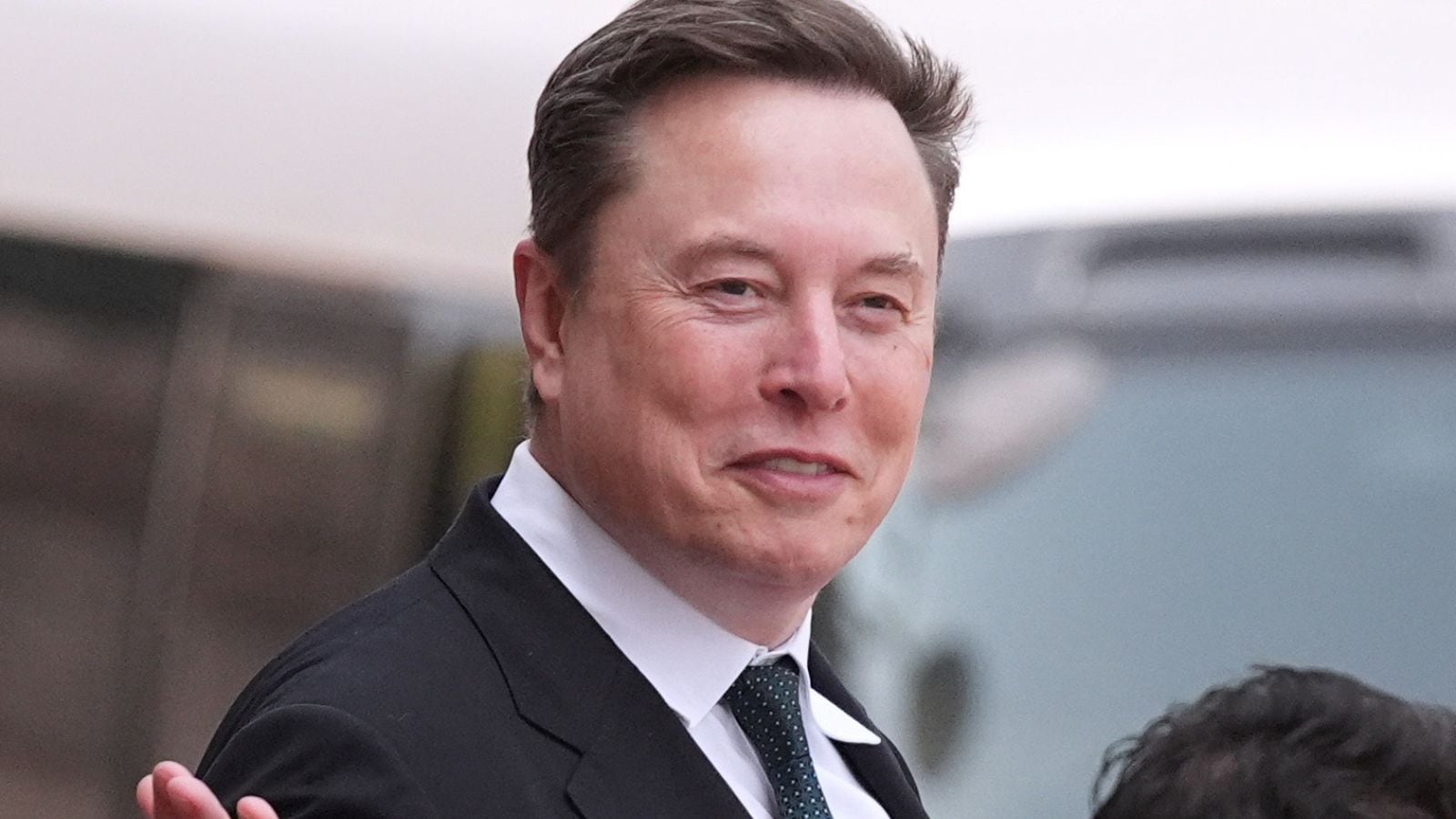
The financial world is treating June 12, 2026, as a day of economic coronation. Today, SpaceX shifts from a closely held aerospace fiefdom into a publicly traded behemoth on the Nasdaq under the ticker symbol SPCX. Wall Street syndicates are marveling at the sheer scale of the transaction, which is pulling $75 billion from global capital markets at an implied valuation of $1.77 trillion. It is comfortably the largest initial public offering in human history, nearly tripling the $26 billion record set by Saudi Aramco. Retail investors, holding an unprecedented 30% allocation of the float, are chasing the stock with a fervor not seen since the dot-com era, driving demand to nearly four times oversubscription.
But beneath the surface of this historic launch lies a deeply precarious financial architecture. SpaceX is entering the public markets not as a lean, dominant rocket business, but as a heavily indebted, loss-making corporate conglomeration that has structural structural risks. The company is trading at an unprecedented 94 times its 2025 revenue of $18.7 billion. For context, tech giants like Apple and Alphabet trade at single-digit or low double-digit revenue multiples. To justify a trillion-dollar-plus valuation, a business must generate massive cash flows. SpaceX does not. The business posted a staggering net loss of $4.94 billion for the full year of 2025, and the bleeding has only accelerated, with a $4.28 billion net loss recorded in the first quarter of 2026 alone. Expanding on this theme, you can find more in: The Hidden Calculus Behind the New Hermès Fortress on Bond Street.
The xAI Absorption and the Artificial Intelligence Cash Burn
The true explanation for this sudden rush to the public markets is not a desire to democratize space exploration. It is a desperate need to fund an aggressive, capital-intensive artificial intelligence expansion.
In February 2026, Elon Musk engineered a quiet internal restructuring, merging his cash-strapped artificial intelligence startup, xAI, into the broader SpaceX corporate umbrella. The transaction valued the combined entity at $1.25 trillion, assigning an arbitrary $80 billion valuation to xAI. While the official marketing narrative pitches this as a masterstroke of vertical integration—weaving autonomous systems into Starlink and rocket guidance—the reality is visible in the S-1 prospectus. The AI division is a financial black hole. Experts at Harvard Business Review have shared their thoughts on this matter.
SpaceX 2025 Segment Performance
┌──────────────────┬──────────────────┬──────────────────┐
│ Segment          │ Revenue          │ Operating Income │
├──────────────────┼──────────────────┼──────────────────┤
│ Starlink         │ $11.4 Billion    │ $4.4 Billion     │
│ Space Launch     │ $4.1 Billion     │ -$657 Million    │
│ AI (xAI)         │ $3.2 Billion     │ -$6.4 Billion    │
└──────────────────┴──────────────────┴──────────────────┘
The data shows a company at war with its own balance sheet. While Starlink remains a viable, highly profitable commercial enterprise, its $4.4 billion in operating income was completely wiped out by the staggering $6.4 billion operating loss from the AI division. Building out massive data centers like the Colossus cluster requires immense capital. The AI unit burned through an additional $2.5 billion in the first quarter of 2026 alone, driven by massive graphics processing unit procurement and high energy infrastructure costs.
By anchoring xAI to SpaceX, the massive capital expenditure requirements of a speculative artificial intelligence race have been tethered to the reliable cash flows of a satellite internet utility. The $75 billion raised today is not earmarked for Mars. It is an emergency liquidity injection to fund a tech war against better-capitalized Silicon Valley rivals.
The Index Inclusion Trap for Passive Investors
Traditional initial public offerings go through a lengthy "seasoning" process. Benchmark providers usually require months, sometimes a full year, of public trading history and a minimum 10% public float before considering a company for index inclusion. These rules were designed specifically to shield retirement accounts and passive funds from the intense price volatility that defines newly listed equities.
SpaceX has successfully broken those guardrails. Through aggressive lobbying and a market capitalization that automatically makes it the sixth-largest corporation in America on day one, index providers have buckled. Effective May 2026, Nasdaq updated its rules to allow mega-cap companies exceeding a $100 billion valuation to bypass traditional seasoning gates, permitting index inclusion just 15 trading days after listing.
This systemic shift means that passive index-tracking funds will be legally forced to buy hundreds of millions of dollars of SPCX shares within weeks of the debut, regardless of the company's underlying lack of profitability.
Ordinary citizens who hold basic retirement portfolios or target-date index funds will soon have structural exposure to a highly volatile, heavily leveraged aerospace asset. While the S&P 500 has held firm on its financial viability screens, the sudden inclusion of SpaceX into major Nasdaq benchmarks guarantees artificial price support in the short term, masking the fundamental valuation disconnect.
Absolute Governance and the Disappearance of Shareholder Rights
Public equity investment operates on an implicit social contract. Investors supply capital, and in return, they receive equity ownership and a fractional voice in corporate governance. SpaceX has discarded the governance portion of this arrangement entirely.
According to regulatory filings, Elon Musk controls approximately 85% of the total voting power within the newly public company through a dual-class share structure. The Class B shares distributed to insiders carry ten votes per share, completely neutralizing the voting efficacy of the Class A shares being sold to the public.
This absolute centralization of power introduces a profound governance risk that institutional analysts are quietly flagging. Public shareholders have zero recourse to influence corporate policy, executive compensation, or capital allocation. If the chief executive decides to divert billions in capital from profitable satellite operations to fund speculative, long-term engineering experiments, the board of directors—handpicked and structurally beholden to the majority voter—will offer no resistance.
Furthermore, the unusual mechanics of this public offering illustrate a stark "take-it-or-leave-it" posture. Standard IPO conventions involve an investment banking syndicate establishing a flexible target price range based on institutional bookbuilding feedback. SpaceX bypassed this custom entirely, dictating a rigid, non-negotiable price of $135 per share from the onset.
The Divergent Realities of the Core Segments
Evaluating SpaceX as a singular corporate entity is an analytical mistake. It is an uneasy alliance of three vastly different businesses operating under a single balance sheet.
Starlink
The satellite internet network is the sole reason the company can command a trillion-dollar valuation. Generating $11.4 billion in 2025 revenue, it commands global dominance over low-Earth orbit telecommunications. It is highly profitable, structurally sound, and expanding rapidly.
Space Launch
The rocket division, despite executing 161 successful launches in 2025 and fundamentally dominating the global launch market, operated at a loss of $657 million. The massive capital costs associated with developing the Starship platform continue to outpace the revenue generated by commercial and defense launch contracts.
Artificial Intelligence
The newly integrated xAI segment is an active drain on the firm's financial health. It operates at an extreme deficit, carries significant environmental and regulatory scrutiny regarding datacenter power permits, and demands billions in ongoing capital injections just to stay competitive with established industry models.
Public investors are buying into a business model where the immense profits of a cutting-edge telecommunications network are being actively deployed to subsidize a deeply unprofitable rocket development program and a highly speculative AI infrastructure buildout.
The Long Road to Expiration
The initial trading days of SPCX will likely show significant upward momentum, driven by intense retail enthusiasm and mandatory buying from passive index funds. This early performance will obscure the true test facing the company.
The real inflection point will arrive in late 2026, when the mandatory insider lock-up periods expire. Over 4,400 current and former SpaceX employees are set to become paper millionaires today, with roughly 400 individuals securing stakes valued at over $100 million. When these insiders, alongside early venture capital backers, gain the legal right to liquidate their positions and convert their paper wealth into tangible cash, the structural integrity of the $1.77 trillion valuation will face its first true market test. Capital markets are volatile, and a 94x revenue multiple leaves no cushion for operational delays, regulatory setbacks, or a cooling of the broader artificial intelligence market.