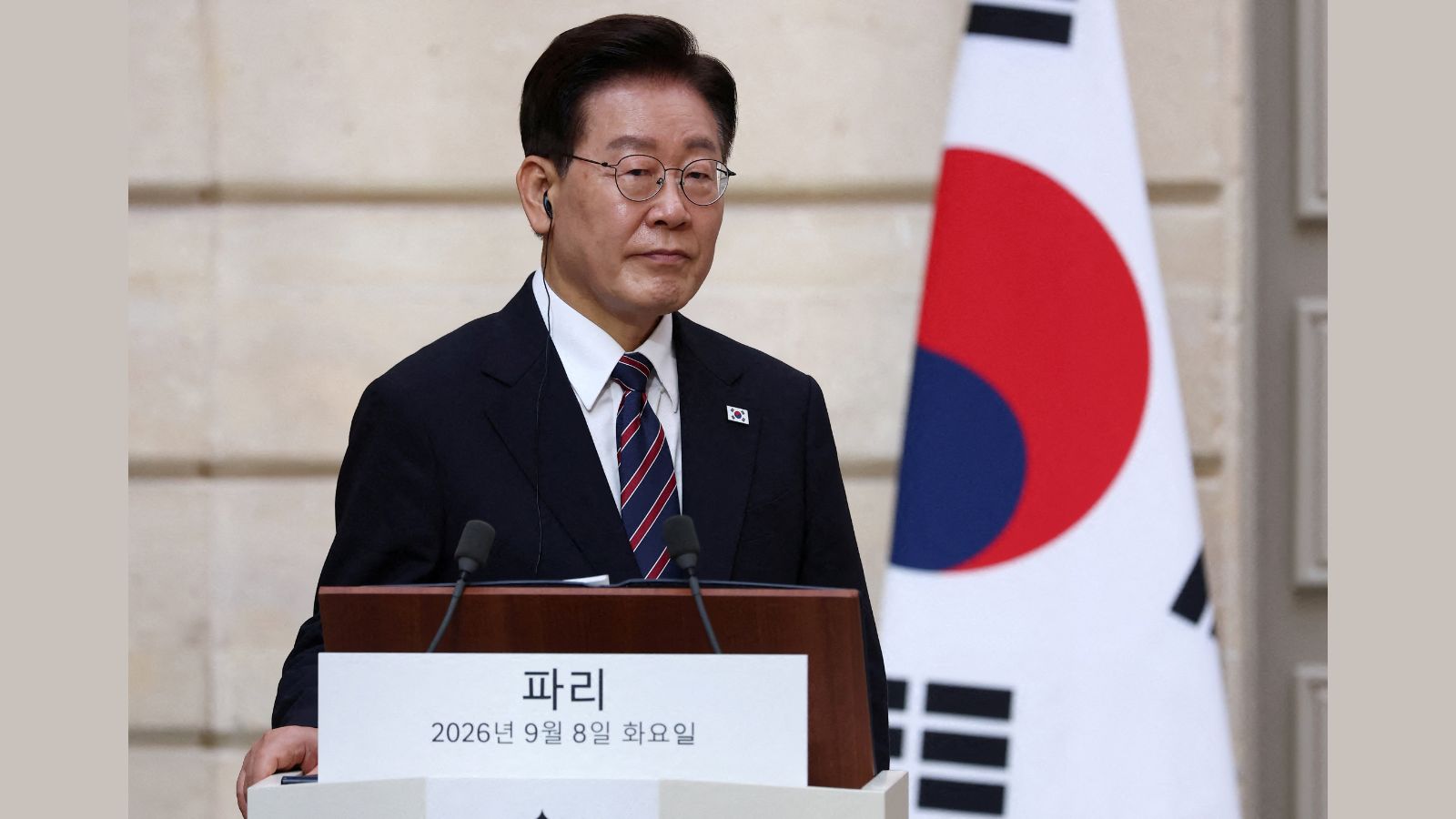
South Korea is moving to expand its naval operating zone closer to the Strait of Hormuz, seeking parliamentary approval to push the anti-piracy Cheonghae Unit to roughly 650 kilometers from the chokepoint following blunt criticism from U.S. President Donald Trump over allied support during the U.S.-Iran conflict.
The decision lands squarely between two competing pressures. Washington wants visible burden-sharing in a volatile waterway. Seoul wants to protect commercial shipping without letting its ships—or its political leadership—get dragged into an active war with Iran. You might also find this connected story insightful: What Happens When Sanctuary Becomes a Target.
Having covered defense policy and alliance politics across East Asia for over twenty years, I recognize this posture immediately. South Korean governments rarely move from "no" to "yes" on overseas deployments in one clean leap. Instead, they stretch definitions, adjust operating radii, and frame combat-capable assets as navigational protection so that every constituency—Washington, Tehran, and voters at home—gets a different reading of the same move.
Why Seoul Is Adjusting Its Naval Footprint Now
President Lee Jae Myung drew a hard line in September 2026 when he declared there would be no deployment that enters or involves South Korea in the war against Iran. That statement was meant to quiet domestic protests and signal caution to Tehran. As discussed in recent coverage by Reuters, the results are significant.
Two months later, the calculus shifted. Extending the Cheonghae Unit's mission envelope to about 650 kilometers from the Strait of Hormuz gives Seoul an answer to Trump's pressure without crossing the threshold into direct warfighting alongside U.S. forces.
Distance matters on a naval chart. A destroyer operating hundreds of kilometers away sits in a different threat envelope than a vessel transiting narrow coastal waters under drone, missile, or small-boat surveillance. Yet even an incremental push toward the Gulf of Oman and Hormuz approaches carries political weight because it shows Seoul is bending—if only by inches—to White House demands.
Extending an anti-piracy patrol radius by hundreds of kilometers looks technical on paper, but in wartime diplomacy it functions as a carefully calibrated concession.
The Mechanics of Trump's Burden-Sharing Squeeze
Trump's pressure on allies over the Strait of Hormuz follows a familiar transactional playbook. When the United States bears military and economic risk in a contested maritime corridor, Washington argues that wealthy trading nations dependent on global energy flows cannot sit on the sidelines.
South Korea is uniquely exposed to that argument. A major share of its crude oil and liquefied natural gas transits through or near Persian Gulf routes, and its economy relies heavily on open sea lanes. If shipping insurance spikes or tankers face blockades and strikes, Korean manufacturers feel the shock quickly.
At the same time, alliance friction has grown sharper even where Seoul spends heavily on its own defense. Washington has pointed to South Korea's higher defense budgets while still pressing for concrete operational contributions outside the Korean Peninsula. Meanwhile, force constraints tied to the Middle East conflict have already rippled back into the Pacific, including canceled or altered joint drills.
| Pressure Point | Washington's Angle | Seoul's Constraint | Practical Outcome |
|---|---|---|---|
| Maritime Security | Wants allies to share risk protecting shipping near Hormuz | Fears retaliation and entanglement in U.S.-Iran hostilities | Expands Cheonghae Unit radius toward ~650 km with caveats |
| Domestic Politics | Expects decisive alliance solidarity after public criticism | Faces street protests and parliamentary scrutiny over war risk | Frames mission around safeguarding navigation, not combat |
| Force Readiness | Stretches U.S. assets across theaters, affecting regional exercises | Must keep deterrence sharp against North Korea at home | Prefers bounded, reversible naval commitments over ground forces |
What Most Coverage Misses About South Korea's Middle East Role
Standard reporting tends to treat South Korea's Middle East dilemma as a binary choice: obey Trump or defy him. That misses the quiet commercial engine already running in the region.
Even as Seoul refuses to join military operations against Iran, South Korean defense contractors have been expanding across the Gulf. Systems like the Cheongung-II medium-range surface-to-air missile battery, Chunmoo multiple rocket launchers, and K2ME armored platforms have drawn major orders and localization agreements from countries such as the United Arab Emirates, Saudi Arabia, and Iraq.
Defense Exports Versus Combat Deployment
Selling air defense batteries to Gulf states is not the same thing as sending a South Korean destroyer into a shooting war. From Seoul's perspective, supplying defensive hardware helps regional partners protect their own airspace and infrastructure while keeping South Korean uniforms out of offensive strikes.
Still, that distinction creates an awkward tension. A country that profits from selling high-end weapons into a tense neighborhood while insisting it has zero appetite for frontline military risk invites skepticism from both hawks and critics. If a South Korean-made interceptor shoots down an incoming threat near a partner base during a regional flare-up, the political boundary between "commercial supply" and "conflict participation" gets blurry fast.
The North Korea Factor Behind Closed Doors
Every deployment debate in Seoul runs through Pyongyang. South Korean planners worry that shifting naval assets, intelligence attention, or diplomatic bandwidth westward could weaken focus on North Korea—or tempt Kim Jong Un to test boundaries while Washington and Seoul are tied up elsewhere.
Consider a hypothetical scenario where a South Korean destroyer operating near the Gulf of Oman is ordered to assist in an emergency maritime rescue during a missile exchange. Even without firing a shot, the ship becomes a high-value target and a political flashpoint at home, forcing Seoul to weigh alliance loyalty against immediate peninsula security.
The Risks of Stretching a Non-Combat Mandate
Expanding the Cheonghae Unit's reach is not a risk-free compromise. Iranian officials have warned that foreign military involvement around the Strait of Hormuz carries serious consequences. Once a warship moves closer to a contested theater, mission creep becomes a real danger.
- Escalation exposure: Misidentification, radar lock-ons, or nearby strikes can turn a "safeguarding navigation" mission into a crisis overnight.
- Parliamentary friction: Seeking legislative approval puts every assumption about rules of engagement and withdrawal triggers under public debate.
- Alliance whiplash: Partial measures rarely satisfy a White House that measures commitment in visible frontline participation.
Nor is there any guarantee that a softer political climate in Washington after U.S. midterms will cool the pressure. Foreign policy in the final stretch of a presidency often becomes more personal and more urgent as leaders chase legacy outcomes.
For Seoul, the real test is whether a 650-kilometer adjustment holds the line or simply becomes the first step toward deeper involvement.