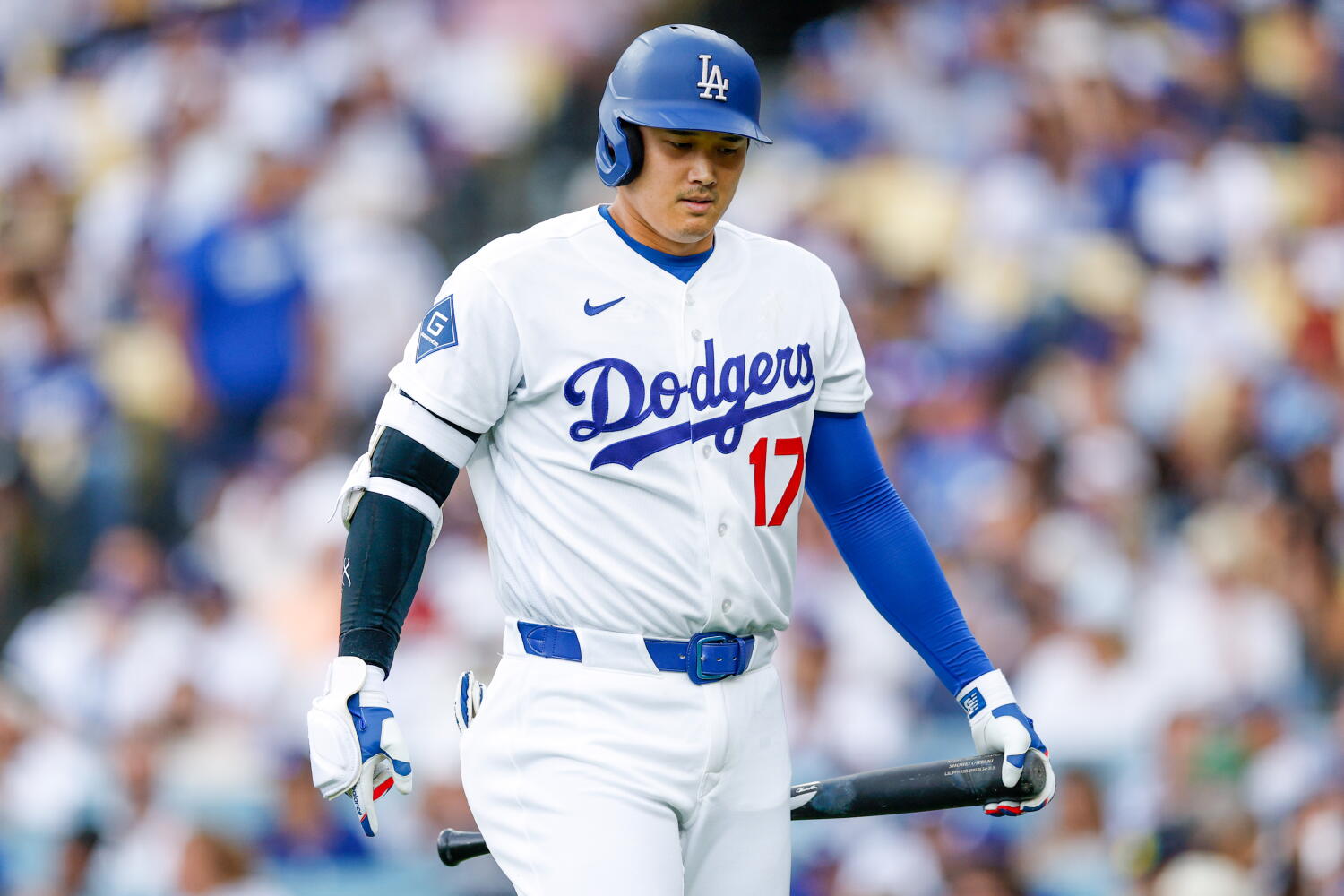
Shohei Ohtani is fighting through a cumulative wave of left knee, right biceps, and neck issues that has forced Los Angeles Dodgers manager Dave Roberts to openly weigh a total shutdown. While the superstar designated hitter has managed to avoid an immediate stint on the injured list, the physical reality behind his recent benchings reveals a franchise walking a razor-thin edge. Ohtani missed consecutive games for the first time all season after appearing visibly compromised during a four-strikeout performance against the St. Louis Cardinals.
The friction between wanting baseball's most unique weapon on the field and protecting his long-term health highlights a structural vulnerability for Los Angeles. When a player occupies a dual-threat stratosphere, every physical ailment carries multiplied consequences. Ohtani has not pitched since July 3 due to lingering joint irritation that required a lubricant injection during the All-Star break, and his path back to the mound has transformed from an anticipated return into a daily medical negotiation.
The Anatomy of a Breakdown
Baseball workloads test the limits of human biology, but Ohtani's historical profile pushes past standard parameters. Operating as an elite hitter while rehabbing from major arm surgery places extraordinary demands on kinetic chains. When the left knee lacks stability, the compensatory strain shifts upward. Biceps tightness and cervical spine stiffness do not happen in a vacuum. They are often downstream effects of a body overcompensating for structural fatigue.
Manager Dave Roberts addressed the delicate calculus facing the front office with blunt candor. A ten-day pause on the injured list might offer temporary relief, but it guarantees nothing in a sport where timing and rhythm are painstakingly fragile.
"Is a day or two, or I mean, even 10 days, is that going to help get him to be 100 percent? Don't know the answer," Roberts admitted to reporters.
That uncertainty forces the organization to look past raw statistics. Even as Ohtani maintains an offensive presence with thirty home runs and an OPS north of .900, his recent mechanical breakdown at the plate tells the real story. Pitchers have exploited small windows where his lower-half restriction robs him of rotational velocity.
The October Dilemma
The Los Angeles front office constructed its roster blueprint around the premise of Ohtani eventually reclaiming a spot in the pitching rotation. That projection now sits on life support. Shutting him down entirely from pitching duties for the remainder of the season is no longer a hypothetical worst-case scenario. It is an active agenda item inside the Dodger Stadium war room.
Evaluating the risk versus reward requires looking at the broader bullpen ecosystem. The Dodgers possess alternative arms, yet none carry the psychological or statistical ceiling of a healthy Ohtani throwing triple-digit fastballs. However, pitching him at 70 percent capability risks catastrophic re-injury. Modern sports science has taught front offices that playing through multi-site inflammation usually accelerates a full structural collapse.
To understand the pressure, consider a hypothetical parallel. If a traditional starting pitcher experienced simultaneous knee tendinitis, forearm discomfort, and neck spasms, teams routinely shut them down immediately. The emotional gravity surrounding Ohtani alters standard protocols. Organizations hesitate to bench a generational talent who insists he can still impact a ballgame with one swift swing.
Roster Management Under Duress
Beyond Ohtani, the Dodgers training room resembles a triage unit. Pitching depth has been tested by injuries to multiple arms across the staff, forcing the organization to rely heavily on minor-league depth and reclamation projects just to navigate the grueling 162-game schedule. Adding Ohtani to the injured list would clear a 26-man roster spot to inject fresh legs into an exhausted clubhouse, yet it simultaneously strips the lineup of its most feared presence.
The front office must weigh whether an impaired Ohtani is more valuable than a healthy replacement player operating at peak physical capacity. Baseball history shows that October runs are rarely won by hobbled superstars running on adrenaline. They are captured by complete rosters firing on all cylinders.
Every strategic choice made over the next fortnight will dictate the ceiling of the franchise. The Dodgers are discovering that managing a unicorn requires making deeply unpopular choices about human limits. Ohtani wants to compete through the pain, but the physical ledger always collects its debts. Whether those payments come due in an October bullpen or an early winter operating room will define the trajectory of the championship race.