Turnovers keep piling up for the Seattle Seahawks, and even after snapping a two-game skid in mid-October and climbing to 6–4 entering their Week 11 bye, the giveaway habit remains the single biggest threat to Mike Macdonald's defending champions. Box scores rarely tell the full story of a possession lost. When you strip away the lazy narrative that Seattle merely suffers from "bad ball security," a sharper structural truth emerges: the Seahawks' turnovers are largely a symptom of offensive script imbalance, quarterback risk tolerance, and pressure-induced breakdowns rather than random misfortune.
Look at how Seattle's autumn unfolded across its two-game losing streak in Weeks 5 and 6. On October 11 at Lumen Field, the Seahawks lost 32–29 to the San Francisco 49ers after surrendering four turnovers—two interceptions thrown by Sam Darnold and two lost fumbles. Four days later in Denver on Thursday night, Seattle dropped a 17–14 overtime heartbreaker to the Broncos with three more giveaways: two more Darnold interceptions and a lost fumble by Rashid Shaheed. Add in the three turnovers that fueled Washington's 33–31 win over Seattle in Week 3, and a pattern jumps off the tape. When Seattle's offense gets tilted away from clean, physical football, the ball hits the turf or lands in defensive hands. Learn more on a connected topic: this related article.
Why Turnovers Keep Piling Up for the Seahawks
Blame the football first. That is what old-school coaches do when a locker room is bruised after back-to-back defeats.
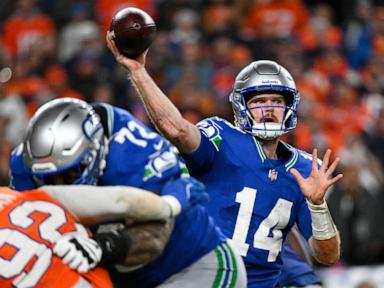
In reality, Seattle's giveaways cluster around specific tactical stress points. When offensive coordinator Brian Fleury's unit relies heavily on dropback volume against disciplined fronts, the margin for error shrinks fast. Against Denver in Week 6, Darnold threw 51 passes, took five sacks, and threw two interceptions without a touchdown pass, even as Seattle racked up 24 first downs and held the ball for more than 35 minutes. Moving the chains does not save a possession when the final snap ends in the opponent's hands. Further journalism by CBS Sports delves into similar views on the subject.
Fumbles have compounded the passing errors at the worst possible moments. Early-game fumbles in traffic or after contact flip field position before a defense can settle into a rhythm. In the Week 5 loss to San Francisco, losing two fumbles on top of two picks meant Seattle's defense—despite holding the 49ers to 14 first downs and 269 total yards—kept defending short fields. A stingy defense can bend, yet it cannot indefinitely absorb free possessions handed to an opponent.
| Game / Stretch | Opponent | Result | Turnovers Lost | Key Giveaway Details |
|---|---|---|---|---|
| Week 3 | at Commanders | L 33–31 | 3 | RB fumble early; 2 Sam Darnold INTs (one tipped, one returned 50 yards for TD) |
| Week 5 | vs. 49ers | L 32–29 | 4 | 2 Sam Darnold INTs; 2 lost fumbles (Emanuel Wilson, George Holani) |
| Week 6 | at Broncos | L 17–14 (OT) | 3 | 2 Sam Darnold INTs; 1 Rashid Shaheed lost fumble |
| Week 10 | at Raiders | W 21–13 | Fumbles noted | Drew Lock strip-sacked Q1 and fumbled in Q4; Seattle still won |
Even when the Seahawks win, the warning signs linger. In their Week 10 road victory over the Las Vegas Raiders, Drew Lock took sacks from Maxx Crosby and put the ball on the ground twice, yet Seattle still walked out with a 21–13 win behind a dominant ground-and-pound approach and Jaxon Smith-Njigba hauling in eight of Lock's 14 completions for 171 yards and a touchdown. That game captures the central paradox of Seattle's 2026 season. The blueprint works when Seattle runs it 35 times and keeps the passing game efficient and targeted. The blueprint frays when Seattle asks its passing attack to carry too much weight in tight quarters.
The Quarterback Split Nobody Wants to Simplify
Quarterback debates in the NFL usually turn into loud, binary arguments. This one has real statistical teeth, even if the answer is not as simple as benching a veteran on a whim.
Entering mid-November, Sam Darnold has carried a heavy turnover ledger across the past two seasons, with seven of his giveaways this year coming in Seattle's four losses. Against Washington, San Francisco, and Denver, Darnold threw two interceptions in each defeat, turning tightly contested games into uphill climbs. Drew Lock, by contrast, has thrived in games tailored to protecting the football, feeding Smith-Njigba, and letting Seattle's defense dictate terms—helping push Lock's record as a starter/contributor in that mold to 4–0 while Darnold sits at 2–4.
A quarterback who pushes the ball downfield on every third-and-medium looks aggressive on highlight reels, yet a single forced throw in the red zone or near midfield erases ten plays of patient execution.
Still, reducing Seattle's turnover problem solely to Darnold versus Lock misses two vital caveats. First, protection and pass rush matter. Taking five sacks in a game—as happened against both San Francisco and Denver—compresses the pocket, forces late releases, and turns strip-sacks or hurried throws into high-leverage mistakes. Second, sample size and game context cut both ways. A backup or spot starter operating in a run-heavy script with low pass volume is far less exposed to late-game, must-throw situations than a quarterback asked to lead a fourth-quarter comeback against a two-score deficit.
Consider a hypothetical example to see how game script distorts raw numbers. Suppose Team A trails by ten points with six minutes left and throws 18 passes against a defense playing soft coverage with extra rushers; two interceptions in that stretch look catastrophic on a box score even though the offense was already playing from behind. Meanwhile, Team B leads by a touchdown with eight minutes left, hands the ball off on seven of nine snaps, and throws three safe checkdowns. Neither quarterback is suddenly immune to mistakes, yet their turnover profiles look worlds apart.
Hidden Drivers Behind the Giveaway Spike
When people talk about turnovers, they act as though ball security is just a grip-strength drill in August. It is not.
Defensive pressure and blitz timing force quarterbacks off their spot before routes break open. When edge rushers win early or interior linemen collapse the A-gaps, a quarterback has to choose between eating a sack, taking a hit as he throws, or firing into a closing window. Tipped passes at the line of scrimmage—like the deflection that turned into an interception in Washington—often happen when passing lanes shrink under rush pressure.
Ball-carrier exposure in high-traffic zones is the second quiet culprit. Running backs hitting creases near the goal line or in short-yardage piles face multiple tacklers attacking the ball from different angles. One helmet on the nose of the football changes everything, regardless of how many times a player worked on tuck drills during the week.
Game management under scoreboard stress also plays a role. Trailing late or trading punches in a back-and-forth divisional clash tempts play-callers and quarterbacks to chase explosive plays rather than take three points or pin an opponent deep with a punt. Over a full 17-game slate, chasing home runs on low-percentage throws tends to cost more possessions than it creates.
How Seattle Rebounds Without Breaking Its Identity
Rebounding from a two-game skid is one thing; curing a recurring turnover leak before the stretch run against NFC West and playoff contenders is another. Seattle does not need to abandon its aggressive defensive identity or stop feeding playmakers like Smith-Njigba and Cooper Kupp. It needs to align its offensive tempo and risk profile with what actually wins close games.
First, anchor early downs to the run game and high-percentage throws to keep offenses ahead of the chains. Second-and-4 gives a play-caller options; second-and-12 invites predictable passing downs and pass-rush pin-your-ears-back angles.
Second, tighten situational decision-making in scoring territory and two-minute windows. Field goals are not surrender when a team's defense is holding opponents down; kicking three points preserves momentum and denies the other side a short-field gift.
Third, audit every turnover by cause rather than just player. Separate unforced errors—poor reads, lazy ball placement, careless handoffs—from pressure-driven mistakes where protection broke down first. Fix the protection and route timing first, and the giveaways drop naturally.
With a division showdown in Santa Clara against the 49ers looming right after the bye, the Seahawks know the math. Out-gaining opponents means very little if Seattle keeps handing them extra possessions, and the simplest way to rebound for good is to stop spotting rivals the football before the whistle even blows on the next drive.