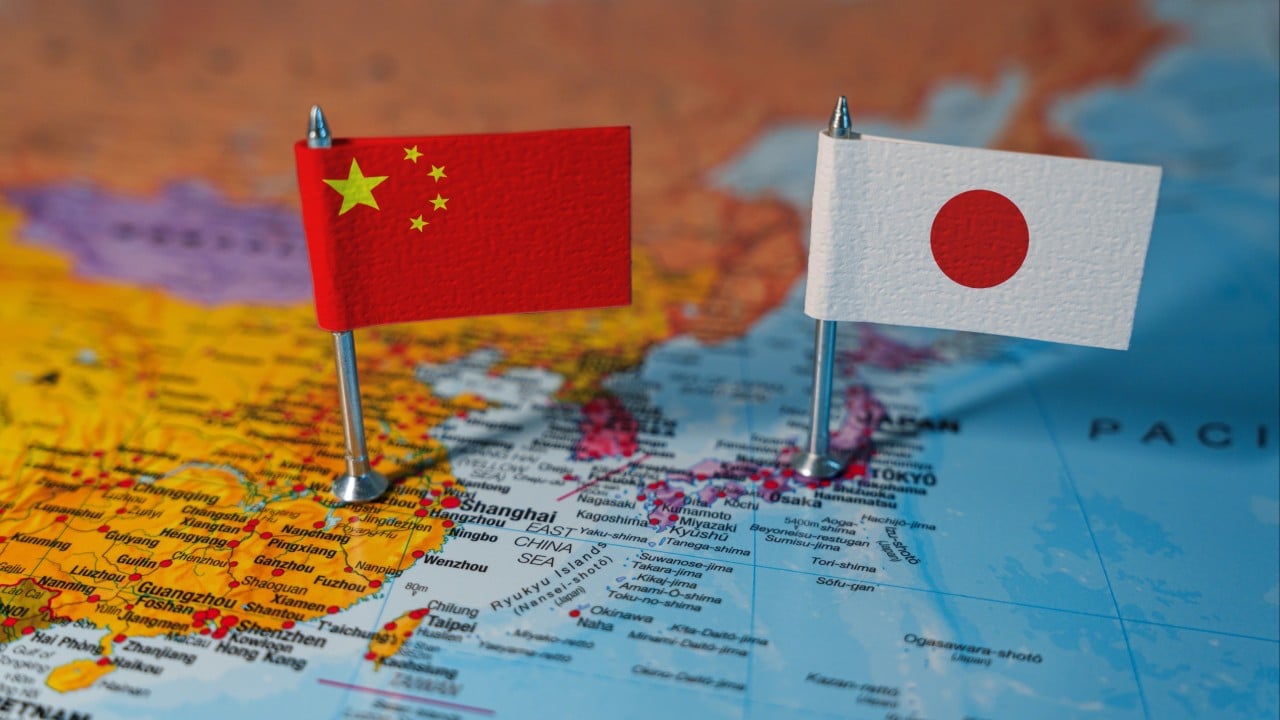
Chinese authorities have detained multiple Japanese corporate executives and employees under aggressive new enforcement actions targeting dual-use technology and rare-earth export controls. These high-profile detentions, centered around industrial hubs like Dalian, signal a definitive weaponization of trade compliance laws. For foreign corporations operating inside Beijing's jurisdiction, the rules of engagement have fundamentally changed, transforming routine supply chain management into a high-stakes legal minefield.
The Anatomy of a Compliance Trap
When Beijing passed its sweeping Export Control Law, international boardrooms initially treated it as a bureaucratic alignment with Western trade restrictions. That complacency was a catastrophic miscalculation. Unlike Western regulatory frameworks that often rely on civil penalties, corporate audits, and fines, China’s enforcement mechanism seamlessly merges economic security with national penal codes.
Consider a hypothetical scenario involving a foreign machinery plant in Liaoning Province. Under standard operational protocols, local engineers package processed rare-earth components for shipment back to a parent company overseas. If those materials cross an ambiguous threshold defined by changing state edicts, corporate logistics coordinators can instantly transition from commercial employees to criminal suspects accused of smuggling banned materials.
The detentions of executives from major Japanese manufacturing firms are not random administrative overreaches. They represent a targeted strategy designed to enforce absolute economic compliance through intimidation. Beijing holds a near-monopoly on the extraction and processing of critical rare-earth elements. By tightening the screws on who controls these materials at the ground level, state regulators are signaling that corporate immunity no longer exists for foreign entities.
Geopolitical Retaliation Disguised as Jurisprudence
To understand why Japanese executives are bearing the brunt of this crackdown, one must look past customs documents and examine diplomatic friction. Bilateral relations deteriorated sharply following high-level political remarks in Tokyo concerning potential regional contingencies involving Taiwan. Almost immediately, the regulatory apparatus in China shifted into an offensive posture.
Beijing restricted Japan-bound exports of dual-use goods—materials possessing both civilian and military applications. Japanese firms caught attempting to move components containing restricted minerals suddenly found themselves accused of violating criminal statutes rather than trade codes.
Foreign chambers of commerce in Beijing and Shanghai have long warned their members about the expanding definition of state secrets and national security. Yet, corporate headquarters in Tokyo, Seoul, and Western capitals continue to treat local compliance as a checklist item handled by mid-level regional managers. This structural disconnect leaves executives completely exposed to political shifts they neither track nor understand. When trade policy becomes foreign policy by other means, standard corporate risk assessment models become entirely useless.
The Chilling Effect on Foreign Capital
Foreign direct investment into China is experiencing an unprecedented structural retreat. The risk calculus for executive deployment has turned toxic. No amount of projected regional revenue justifies the personal liability of waking up in a detention facility under vague allegations of smuggling dual-use components.
Multinational corporations are quietly initiating emergency evacuation protocols for senior foreign staff, replacing expatriate directors with local hires who carry different legal risk profiles. However, substituting local personnel does not solve the underlying compliance crisis; it merely shifts the burden onto domestic employees who face even greater vulnerability under state security investigations.
Corporate legal teams are scrambling to audit supply chains for any trace of rare-earth materials or dual-use electronics. The difficulty lies in the opacity of Chinese statutes. What constitutes a prohibited export can change overnight based on unannounced ministerial decrees or shifting diplomatic tides. Compliance officers cannot protect their companies when the target parameters are deliberately kept blurry.
Boardrooms across the globe are waking up to an uncomfortable reality. Operating within a state-directed market means accepting that commercial law is subordinate to geopolitical leverage. The executives currently detained in Dalian are not anomalies. They are the frontline casualties of a permanent economic cold war where every supply chain is a potential battleground.