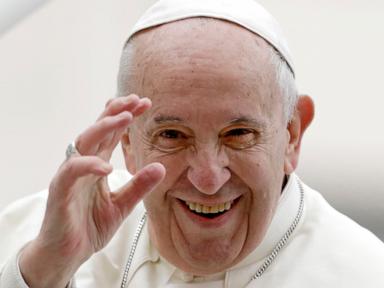
The release of a dead pontiff’s private writings always triggers a specific kind of theater inside the Roman Curia. When the Vatican announced the publication of The Private Diary of Pope Francis, spanning more than three decades from December 1992 to August 2024, observers treated it as a standard literary unveiling. It is anything but standard. Edited and annotated by Cardinal Víctor Manuel Fernández, the head of the Dicastery for the Doctrine of the Faith, these 160 pages represent an unvarnished look at Jorge Mario Bergoglio’s internal landscape long before and long after he stepped onto the loggia of St. Peter's Basilica.
Yet, looking past the pious framing provided by official church channels reveals a more calculated reality. Papal diaries are never neutral historical artifacts. They are curated entries into the permanent archive of institutional memory, released at specific moments to solidify a legacy, answer critics, or guide a successor institution through ongoing ideological wars.
To understand the weight of these notes, one must look at how the Vatican handles private papers. For centuries, pontiffs have left behind personal reflections, some burning them to protect confidences, others leaving them to trusted aides who sat on the material for decades. Pope John XXIII’s Journal of a Soul set a precedent for spiritual transparency, offering a window into a humble soul wrestling with divine calling. Bergoglio’s diaries follow this template of spiritual interiority, yet they operate in a completely different media ecosystem.
The timeline of the entries is telling. Beginning in late 1992, the notes capture Bergoglio during his time as an auxiliary bishop in Buenos Aires, through his turbulent tenure as Archbishop, his elevation to the cardinalate, and finally the historic, polarizing years of his papacy up until a few months before his death in April 2025. That duration covers the entirety of his rise as a global ecclesiastical reformer and the fierce internal resistance he faced from conservative factions within the Roman Curia.
Critics of the late pontiff often pointed to his improvisational communication style—his off-the-cuff plane interviews and sharp verbal jabs at clericalism—as evidence of an undisciplined executive. These diaries offer the counter-narrative: a man who maintained a rigorous, decades-long private writing habit, processing ecclesiastical politics through a lens of Ignatian discernment.
However, the editorial hand of Cardinal Fernández cannot be ignored. Fernández is arguably Bergoglio’s closest theological ally, an appointment to the powerful Doctrine office who shared the former pope's vision for a more pastoral, less rigid Church. When a trusted insider edits a deceased leader's most intimate spiritual notes, questions of curation inevitably arise. What was left out? Which sharp criticisms of Curial bureaucrats were softened to preserve institutional peace? History is written by the survivors, and ecclesiastical history is no exception.
The timing of the five-language simultaneous release across 94 countries also speaks to the global branding apparatus of modern Catholicism. The Vatican publishing house, in partnership with major commercial imprints like Penguin Random House, operates with acute awareness of the international book market. The release is designed to frame the narrative around Francis’s final years before external biographers or disgruntled former aides could define his legacy from the outside.
Inside the text, the entries strip away the public theater of papal audiences and international summits. They capture the raw administrative exhaustion of a man trying to reform an ancient bureaucracy while managing his own physical decline. For decades, journalists and Vaticanologists analyzed every public gesture for hidden meaning. Now, researchers have direct access to how Bergoglio framed his own doubts, prayer life, and frustrations with institutional foot-dragging.
The real value of these reflections lies not in sensational political revelations, but in the psychological portrait of a Jesuit attempting to govern a global institution while remaining tethered to his pastoral roots in South America. He frequently contrasted the bureaucratic machinery of Rome with the gritty reality of urban poverty he knew in Argentina.
As the volumes land on desks from Rome to New York, the debate over Francis’s pontificate will shift from contemporary political point-scoring to long-term historical analysis. Conservatives and reformers will inevitably comb through the translated pages, weaponizing select passages to prove their respective interpretations of a papacy that stretched the Church's boundaries.
The diary entries stand as a final testament from a leader who understood that history would judge him harshly or kindly depending on who held the pen. By writing daily notes across thirty-two years, Bergoglio ensured that he would retain the final word on his own tumultuous journey, even from beyond the grave.