Multiple senior military commanders and top military lawyers have been systematically pushed out of the Department of Defense after raising legal and operational objections to directives issued by Defense Secretary Pete Hegseth. The dismissals represent an unprecedented overhaul of the uniform command structure, removing four-star generals, service chiefs, and Judge Advocates General who questioned command decisions or flagged statutory limitations. Rather than traditional performance-based transitions, these forced retirements reflect a deliberate effort to eliminate internal pushback within the E-Ring. The fallout has sent shockwaves through the armed forces, sparking deep concern among defense officials about the erosion of lawful dissent and constitutional guardrails inside the military establishment.
Decades of Pentagon precedent rely on a delicate tension between civilian control and professional military advice. Civilian leaders set policy, but uniform flag officers are legally bound to uphold the Constitution and enforce the Uniform Code of Military Justice. When that balance breaks down, the integrity of national defense collapses into political compliance.
The Systematic Dismantling of Military Legal Oversight
The earliest and most telling phase of the purge targeted the top legal minds across the services. Defense Secretary Pete Hegseth announced sweeping replacements among the senior Judge Advocates General, explicitly stating that existing military lawyers were not well suited to advise on execution when commands are issued. Lieutenant General Joseph B. Berger III of the Army and Lieutenant General Charles Plummer of the Air Force were abruptly relieved. Their primary offense was not incompetence or misconduct. It was their insistence on evaluating the legal boundaries of executive directives.
Military lawyers do not exist to block lawful orders. They exist to protect commanders from stepping across the line into unlawful conduct under federal law and international treaties.
By removing the top uniformed lawyers who questioned the statutory backing for specific domestic and international military deployments, the leadership sending orders created a chilling effect across every legal office in the Department of Defense. Junior officers in the JAG Corps watch as senior leaders with decades of distinguished service are dismissed without formal administrative cause. The message trickles down through the rank structure instantly. Raise a legal challenge to a high-level directive, and your military career ends on short notice.
Replacing Independent Legal Advice with Pre-Approved Compliance
Uniformed lawyers occupy a distinct role compared to political appointees in the General Counsel office. A JAG officer owes duty to the UCMJ and the Constitution rather than political expedience. When those officers are stripped of their assignments for providing candid assessments on issues like domestic troop deployments or rules of engagement, the legal foundation of military operations deteriorates.
Supporters of the administration argue that civilian leadership possesses the clear constitutional authority to direct the department as they see fit. They assert that lingering bureaucratic resistance delays necessary reforms and slows command decisions. However, equating legal scrutiny with insubordination misunderstands the operational necessity of sound legal counsel in warfare. Without independent legal reviews, service members down the chain of command face the severe risk of executing orders that violate established law.
Firing Four-Star Brass During Active Middle East Conflicts
The purge extended far beyond the legal corps into the highest echelons of operational command. Air Force General CQ Brown Jr. was abruptly removed from his post as Chairman of the Joint Chiefs of Staff. Soon after, Navy Admiral Lisa Franchetti was ousted as Chief of Naval Operations, alongside Air Force Vice Chief of Staff General James Slife.
The scale of the leadership shakeup expanded further during active combat operations in the Middle East. General Randy George, the Chief of Staff of the Army, was informed via a brief telephone call that he was being forced into immediate retirement. The removal of a four-star Army chief while troops were actively deploying to the Middle East caught senior military staff off guard and drew intense criticism from Capitol Hill. Accompanying George's departure were General David Hodne, commander of Army Training and Doctrine Command, and Major General William Green Jr., the Army Chief of Chaplains.
Pentagon Leadership Changes (2025–2026)
+------------------------+---------------------------------+--------------------------+
| Official               | Role                            | Status                   |
+------------------------+---------------------------------+--------------------------+
| Gen. CQ Brown Jr.      | Chairman, Joint Chiefs of Staff | Removed                  |
| Adm. Lisa Franchetti   | Chief of Naval Operations       | Removed                  |
| Gen. Randy George      | Army Chief of Staff             | Forced Immediate Retirement|
| Lt. Gen. Joseph Berger | Army Judge Advocate General     | Fired                    |
| Lt. Gen. Charles Plummer| Air Force Judge Advocate General| Fired                    |
+------------------------+---------------------------------+--------------------------+
The timing of these dismissals raised alarm among defense policy experts. Replacing key operational planners in the middle of active regional conflict creates friction in logistics, force protection, and joint tactical coordination. Multiple career officials inside the Pentagon described the removal of General George as reckless, pointing out that he was actively working to push critical warfighting equipment into theater to protect forward-deployed forces when he was ousted.
"Here is a four-star general who is actively working to get equipment and people into theater to protect forces, and you fire him in the middle of a war?" noted one defense official following the announcement.
💡 You might also like: Why the Skylight Attack is a Wake Up Call for Merchant Sailors Everywhere
The rationale provided by the Pentagon press office remained sparse, citing broad desires to streamline leadership and revitalize military culture. Privately, former officers and congressional oversight staff report that the underlying friction stemmed from senior brass pushing back against ideologically driven mandates, questionable promotion overrides, and strategic maneuvers that lacked clear operational ends.
Compliance Over Candor at the Highest Levels
For decades, military doctrine has championed the concept of professional candor. A subordinate officer is expected to voice honest concerns during the planning phase of an operation. Once a decision is made by lawful authority, that officer executes the order unless it is illegal.
That framework is falling apart.
When questioning a policy or pointing out operational shortfalls leads to immediate termination, officers stop offering candid assessments. They nod along. They rubber-stamp plans that contain glaring tactical flaws. The internal culture shifts from mission accomplishment to self-preservation.
Several officers who recently opted for early retirement indicated off the record that they felt forced to choose between breaking their oaths or ruining their careers. The broader concern among current Pentagon staff is that those who remain in key positions are chosen not for their strategic genius or combat record, but for their willingness to comply without hesitation.
The Danger of a Politicized Officer Corps
A military that operates on personal loyalty rather than professional competence poses a structural threat to democratic governance. When promotion lists are altered to bypass established board processes and install loyalists into flag officer billets, the meritocratic core of the armed forces breaks.
This dynamic extends beyond high-level strategy. It affects troop readiness, equipment procurement, and troop discipline on the ground. When experienced leaders who spent four decades rising through command ranks are pushed out overnight, decades of institutional knowledge vanish with them.
- Institutional Blind Spots: Decisions made without rigorous internal critique lead to strategic missteps during wartime.
- Erosion of Non-Partisan Trust: Public confidence in the military drops when leadership appears aligned with partisan ideological goals rather than national defense.
- Loss of Top Talent: High-performing mid-career officers resign early rather than work in an environment where dissent is treated as treason.
What Happens When Dissent Inside the Pentagon Is Silenced
The long-term danger of purging senior leadership is not merely the immediate operational disruption, severe as that is during ongoing wartime engagements. The true hazard lies in what happens during the next major international crisis.
If the Secretary of Defense is surrounded exclusively by officials who fear being fired for asking hard questions, no one will stand up to challenge flawed intelligence, unsound tactics, or unlawful commands. The constitutional role of the military as an institution sworn to protect the nation—not to serve as a personal instrument of political force—depends on commanders who have the courage to say no when an order breaks the law.
When those commanders are gone, the guardrails are gone too.
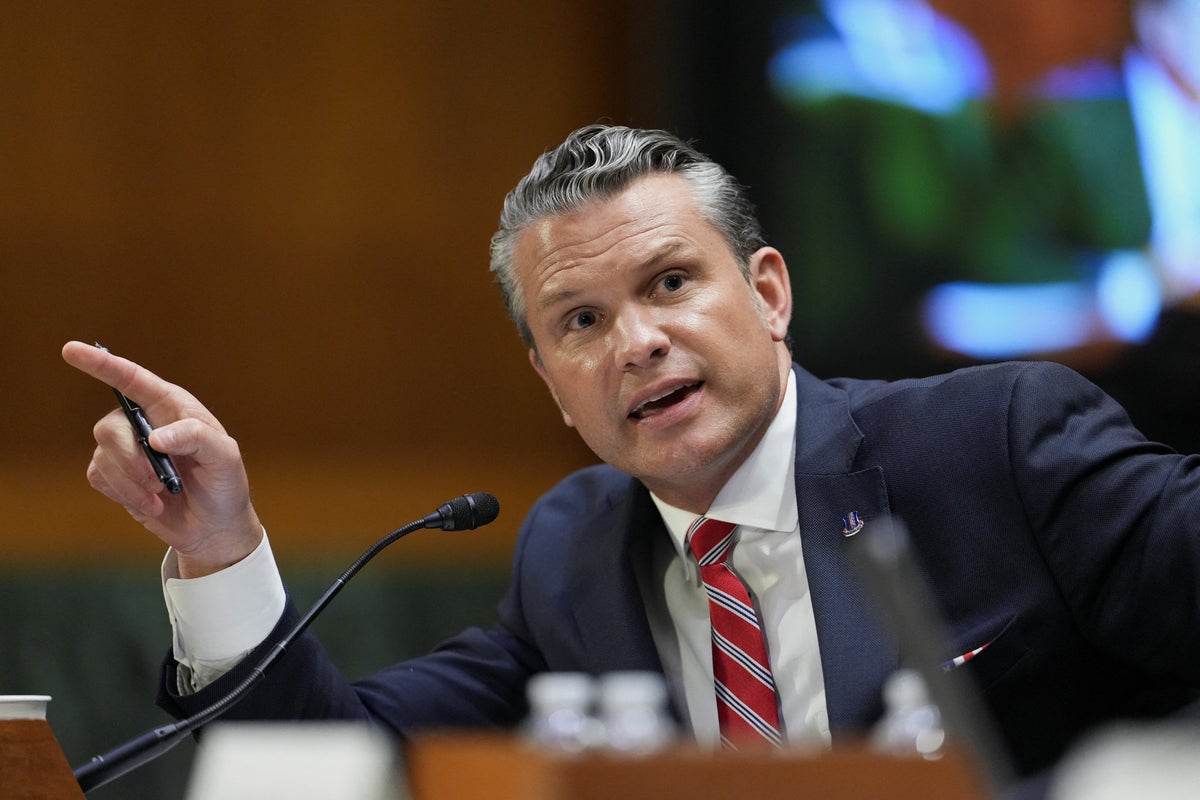
Congressional hearing on Hegseth military leadership changes
This congressional hearing excerpt captures the direct tension between lawmakers and the Defense Secretary regarding the dismissal of decorated general officers and the changing standards of military command.


