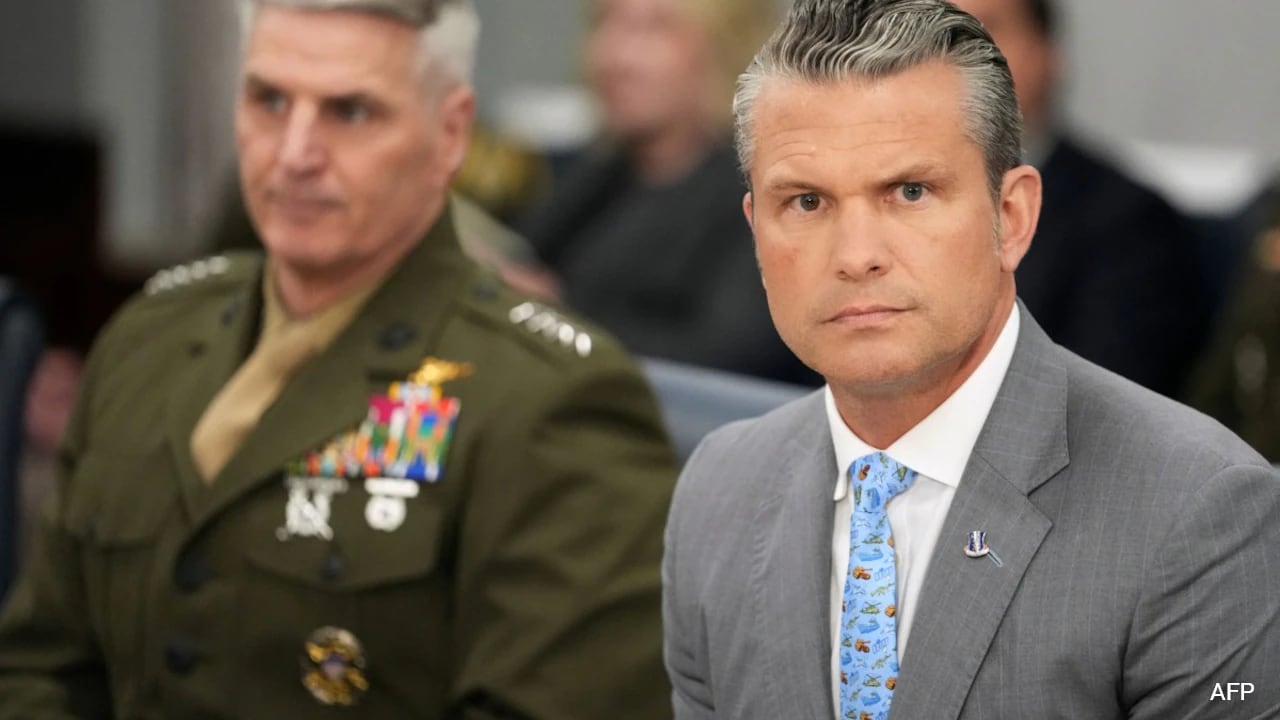
Political pressure on Secretary of Defense Pete Hegseth has intensified sharply in the wake of the 2026 midterm elections, driven by friction between his rapid cultural overhaul of the military and mounting frustration from both congressional appropriators and senior defense officials. While surface-level punditry frames the current crisis solely as an electoral reaction, the deeper reality inside the E-Ring points to a structural collision. Hegseth’s aggressive push to purge traditional bureaucratic norms has left the Department of Defense exposed to legislative gridlock, stalled procurement pipelines, and a fracturing alliance with key Capitol Hill committees.
Elections do not usually topple a Pentagon chief overnight. Cabinet secretaries serve at the pleasure of the president, insulated from the immediate ballot-box anger that unseats House members and senators. Yet history shows that when an administration suffers a mid-cycle political setback, the Pentagon becomes the primary arena where weakened executive authority meets emboldened congressional oversight.
The Anatomy of a Post-Election Reckoning
To understand why the walls are closing in on the current leadership, you have to look past the cable news shouting matches and examine the mechanics of defense governance. Since taking the helm, Hegseth operated under the assumption that decisive executive action could bypass decades of entrenched Pentagon inertia. That strategy works when the White House holds unchallenged political capital. It breaks down the moment a midterm shift alters the math on Capitol Hill.
A newly emboldened opposition in Congress now holds the gavel on critical oversight and appropriations subcommittees. That changes everything. Subpoena power is no longer a theoretical threat; it is an active calendar item.
For the past two years, the Secretary’s office prioritized rapid personnel shakeups, sweeping reviews of military readiness standards, and a vocal campaign against what his team termed ideological distraction within the ranks. Supporters cheered the disruption. Critics inside the building warned that breaking the bureaucratic machine without building a replacement would eventually stall basic operations.
Those warnings are now materializing in the form of delayed budget authorizations and an unprecedented backlog of senior officer confirmations. When the legislative branch decides to slow-walk the Pentagon, the Secretary of Defense cannot simply issue a memo to make the money flow. The Constitution gives Congress the power to raise and support armies, and after a rough election cycle, lawmakers are eager to remind the executive branch who signs the checks.
The Erosion of Quiet Consensus
Defense policy in Washington has long relied on a fragile, unwritten truce. Lawmakers from both parties historically allowed the Pentagon wide latitude on internal management in exchange for predictable defense spending in their districts and steady geopolitical deterrence abroad.
Hegseth’s tenure dismantled that truce. By treating the Department of Defense as an ideological battleground rather than a consensus-driven institution, his leadership team alienated moderate lawmakers who previously acted as buffers against partisan attacks. Now that political winds have shifted, those buffers are gone. The Secretary finds himself defending not just his policies, but his basic administrative competence before committees that have zero incentive to give him the benefit of the doubt.
Where the Operational Friction Actually Lives
Outside observers often assume the tension between a Pentagon chief and the military brass is purely political. In reality, the most dangerous friction is operational. Running a global enterprise with nearly three million personnel and a budget approaching a trillion dollars requires predictable administrative channels.
Consider how defense procurement actually functions. A major weapons program—say, a hypothetical next-generation destroyer or a contested-logistics drone network—requires multi-year funding commitments, clear industrial base signaling, and stable leadership at the service-secretary level. When senior civilian posts experience high turnover or remain tied up in political vetting, acquisition officers freeze. Nobody wants to sign off on a billion-dollar contract if the policy directives governing that program might be reversed six months later.
- Delayed Modernization: Key research and development initiatives lose momentum when leadership bandwidth is consumed by political damage control.
- Allied Hesitation: Foreign defense ministries watch Washington’s internal dysfunction closely, often delaying joint procurement agreements until political stability returns.
- Retention Anxiety: Mid-career officers—the majors, lieutenant colonels, and commanders who actually run the military—begin looking toward the private sector when promotion boards become unpredictable.
This is the hidden cost of a politicized Pentagon. The troops in the field still execute their missions, and the ships still deploy on schedule. At the top, however, the strategic planning horizon shrinks from decades down to news cycles.
The Historical Precedent for Mid-Term Shakeups
Washington has seen this movie before. When a president’s party takes a bruising in the midterms, the administration inevitably looks for ways to reset its narrative and appease restless lawmakers. The Secretary of Defense is frequently the highest-profile pressure valve available.
In November 2006, following a sweeping midterm defeat that handed control of both chambers of Congress to the opposition, President George W. Bush accepted the resignation of Donald Rumsfeld. Rumsfeld was a towering figure who had reshaped the department, yet his friction with senior generals and congressional leaders had become an unsustainable political liability for a White House needing a fresh start on Iraq.
A similar dynamic played out in 2018, though driven by policy rifts rather than pure electoral math, when Jim Mattis departed after clashes over alliance management and troop deployments. In both cases, the underlying lesson was identical. A Defense Secretary can survive fierce external criticism, and they can survive internal bureaucratic resistance, but they rarely survive both at the exact same time once the political umbrella shrinks.
Why Today's Crisis Differs From Past Transitions
While the Rumsfeld parallel offers a useful structural comparison, Hegseth’s predicament carries distinct modern complications. Rumsfeld entered office with decades of insider experience, having served as Defense Secretary once before in the 1970s. He knew where every bureaucratic lever was buried.
Hegseth arrived as an intentional outsider, selected precisely because he did not belong to the traditional defense establishment. That outsider status was his greatest asset during the confirmation battle and his early months in office. Today, it is a vulnerability. Without a deep bench of loyal, seasoned Washington operators inside the building to absorb incoming political fire, every controversy lands directly on the Secretary’s desk.
The Counter-Argument From Inside the E-Ring
To dismiss Hegseth’s tenure as a straightforward failure misses the genuine support his agenda commands among a significant segment of the defense community and the broader public. Defenders of the Secretary argue—with some justification—that the Pentagon had grown bloated, risk-averse, and disconnected from its core warfighting mandate long before he arrived.
From their perspective, the current uproar on Capitol Hill is proof that the reforms are working. You do not challenge a trillion-dollar bureaucracy, strip away entrenched administrative layers, and overhaul recruitment messaging without triggering a fierce immune response from the establishment.
Proponents point to several tangible shifts they view as long-overdue corrections:
- Recruiting Realignment: Refocusing military marketing on traditional warrior ethos and combat lethality rather than corporate-style diversity campaigns.
- Accountability Standards: Demanding stricter physical and operational readiness metrics across non-deployable support units.
- Procurement Disruption: Pressuring legacy defense contractors to deliver functional prototypes faster rather than hiding behind cost-plus contracts.
In a hypothetical scenario where the midterm elections had produced a status-quo outcome, Hegseth’s supporters would be framing this exact moment as the successful second phase of a historic Pentagon turnaround. Politics, however, does not grade on an administrative curve. Perceptions of instability carry their own strategic weight.
The Budget Trap Waiting in Congress
The most immediate threat to Hegseth’s longevity is not a dramatic floor speech or a leaked memo. It is the mundane, grinding reality of the National Defense Authorization Act and the accompanying defense appropriations bills.
Every year, the Pentagon relies on Congress to pass these twin legislative pillars. Without them, the department operates under Continuing Resolutions—stopgap funding measures that freeze spending at prior-year levels and prohibit the launch of new military programs. Pentagon comptrollers universally despise Continuing Resolutions because they waste billions of dollars in purchasing power and cripple long-term planning.
With oversight committees now looking to flex their muscles, lawmakers have a powerful lever. They can attach restrictive riders to defense funding bills, effectively tying the Secretary’s hands on personnel moves, base realignments, and administrative reorganizations. They can demand exhaustive, time-consuming audits of every policy change enacted over the past two years.
If the White House concludes that keeping Hegseth in the top job means enduring a permanent budget standoff that threatens broader administration priorities, the political calculus inside the West Wing will shift rapidly. Presidents are fiercely loyal until the moment loyalty becomes too expensive.
How Senior Military Brass Are Navigating the Storm
Caught directly in the crossfire are the members of the Joint Chiefs of Staff and the combatant commanders. By law and tradition, uniformed military leaders must remain apolitical, executing the lawful orders of their civilian superiors while offering candid military advice when called before Congress.
That balancing act has never been harder. When senior generals testify on Capitol Hill in the coming months, opposition lawmakers will inevitably press them on whether recent administrative shakeups have harmed unit readiness or morale.
- If a general defends the Secretary’s policies too enthusiastically, they risk being labeled a partisan operative by Congress.
- If they express even mild concern about bureaucratic disruption, their words will be weaponized by critics demanding Hegseth’s ouster—and potentially trigger retaliation from the Secretary’s inner circle.
Consequently, the Pentagon’s uniformed leadership has largely retreated into strict institutional caution. Meetings are tighter, written guidance is scrubbed for political subtext, and major strategic debates are increasingly deferred. The building is effectively in a defensive crouch, waiting to see whether the political storm passes or forces a change at the top.
The Global Calculus While Washington Feuds
Adversaries do not pause their strategic clocks for American election cycles. While Washington consumes itself with questions of cabinet survival and committee jurisdiction, global flashpoints remain dangerously active.
In the Indo-Pacific, naval and air patrols continue to test deterrence thresholds. In Eastern Europe and the Middle East, alliance commitments require constant diplomatic and logistical maintenance. Deterrence relies heavily on the perception of unified American resolve. When foreign capitals see a Secretary of Defense locked in an existential struggle with his own legislature, they adjust their risk assessments accordingly.
Allied defense ministers quietly ask backchannel questions about who actually speaks for American defense policy. Does a commitment made by the Secretary’s office today hold weight if Congress refuses to fund it tomorrow? That ambiguity erodes leverage at the negotiating table long before a single ship changes course.
The Narrowing Path Forward
Survival in Washington after a political setback requires a rapid pivot from disruption to governance. For Pete Hegseth, the options for executing that pivot are shrinking by the week.
Continuing with a combative, outsider posture will almost certainly guarantee a year of paralyzing congressional investigations, stalled confirmations, and legislative riders designed to strip his office of discretionary authority. Conversely, attempting a sudden reconciliation with the defense establishment risks alienating the political base that put him in the Pentagon in the first place, without guaranteeing forgiveness from his critics on the Hill.
The decisive factor will ultimately be the patience of the White House. Administration strategists must weigh the ideological value of keeping a loyal disruptor at the helm of the military against the practical necessity of passing defense budgets and maintaining Senate cooperation for judicial and executive appointments.
The Pentagon is built to survive wars, budget cuts, and technological revolutions, yet it runs entirely on institutional trust between the executive and legislative branches. Once that trust fractures in the aftermath of an election, no amount of executive willpower can force the machinery to run smoothly again.