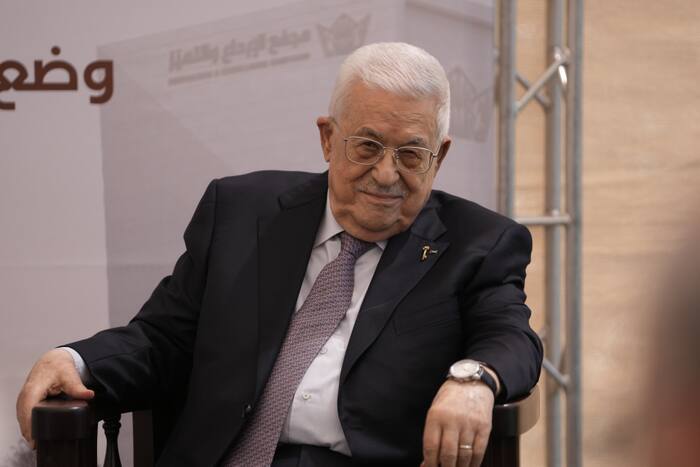
Two decades have passed since ordinary Palestinians last cast a ballot for a national parliament. That streak will now stretch even further. Palestinian Authority President Mahmoud Abbas issued a decree delaying the long-awaited legislative and presidential polls, moving the target date to September 2027. Publicly, the blame was assigned squarely to Israeli restrictions and the logistical nightmares plaguing the war-torn territories. But behind the closed doors of Ramallah’s presidential compound, the calculus had little to do with logistics and everything to do with political survival.
When Abbas initially announced that parliamentary elections would take place, skepticism rippled through the West Bank and the diaspora. The Palestinian Authority has mastered the art of scheduling votes it never intends to hold. A similar decree was issued and subsequently revoked in 2021, under the convenient cover of a dispute over voting rights in East Jerusalem. This time, the official justification points to the impossibility of administering a fair vote while Gaza remains in ruins and the West Bank burns under escalating military raids and settler violence. Recently making waves in this space: Hunger As A Weapon How Yemen Food Security Collapsed Beneath The Weight Of Conflict.
Yet, pointing solely to external obstacles ignores the profound structural panic inside the ruling Fatah movement. Opinion polls consistently show public confidence in the Palestinian leadership hovering near historic lows. Two decades without an electoral mandate have transformed the Palestinian Authority from a provisional liberation movement into an insular, geriatric bureaucracy. For an aging leadership cadre, holding an election under current conditions is equivalent to handing political opponents a loaded weapon.
The immediate catalyst for the delay was not just Israeli opposition, but a nightmare scenario unfolding within Palestinian politics itself: an unexpected alignment between Hamas and exiled security strongman Mohammed Dahlan. Dahlan, operating from the United Arab Emirates, retains deep financial and operational networks inside Gaza and parts of the West Bank. Faced with the prospect of a fractured Fatah movement losing its parliamentary majority to an opportunistic opposition coalition, the ruling elite chose self-preservation over democratic renewal. Further details into this topic are explored by BBC News.
Public reaction to the postponement has shifted from anger to a numbing fatigue. In the West Bank, recent surveys indicate that a significant portion of the population places the blame for the canceled vote directly on domestic leadership rather than external actors. Citizens struggling with economic collapse, freedom of movement restrictions, and postwar reconstruction view the endless political theater of elections-announced-and-canceled as proof of an elite completely detached from reality.
International partners, particularly in Europe, tried frantically to salvage the voting schedule. Diplomats in Brussels and London viewed a renewed electoral mandate as the only viable mechanism to restore legitimacy to the Palestinian Authority, a prerequisite if Ramallah is ever to play a credible governance role in a postwar Gaza. Those diplomatic pleas fell on deaf ears. For Abbas and his inner circle, maintaining control of institutional levers takes precedence over satisfying foreign capitals that provide financial lifelines but little domestic security.
Postponing the vote to late next year creates a perilous holding pattern. It delays an inevitable reckoning over succession, leadership reform, and national strategy. By kicking the political can down the road, the leadership has bought itself a temporary reprieve from defeat at the ballot box, but it has accelerated the erosion of whatever moral authority the Palestinian Authority still claims.


