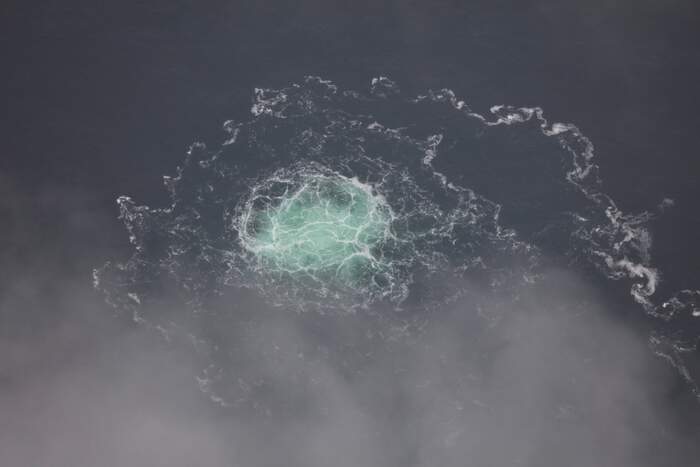
A former Ukrainian officer has gone on trial in Germany over the September 2022 explosions that ruptured the Nord Stream gas pipelines beneath the Baltic Sea. Prosecutors at the Hanseatic Higher Regional Court in Hamburg opened proceedings in October 2026 against Serhii Kuznietsov—identified in court filings as Serhii K.—alleging he acted on behalf of Ukrainian state authorities and helped orchestrate a war crime against civilian infrastructure. Four years after underwater blasts severed a core artery of Russian gas exports to Europe, the case has finally moved from intelligence whispers and diplomatic friction into a German courtroom.
Nobody in power looks thrilled about the docket. In related news, take a look at: Why Tokyo Protested Russia Arresting Yuki Imai as a Spy.
After years of slow-moving investigations, sealed files, and carefully worded silence from Berlin, putting a Ukrainian military veteran in the dock over Nord Stream forces Germany to confront an uncomfortable collision of interests. The country no longer depends on Russian pipeline gas the way it did before Russia's full-scale invasion of Ukraine. Yet Germany remains one of Kyiv's most consequential military and financial backers, even as Chancellor Friedrich Merz's government keeps sending support and pursuing joint drone-interceptor production with Ukraine. Prosecuting an alleged state-linked sabotage plot against German energy infrastructure while bankrolling Ukraine's defense is a diplomatic tightrope with almost no comfortable landing spot.
Why the Hamburg Courtroom Matters More Than the Explosions
Undersea sabotage is messy enough on its own. Legalizing the blame inside a European Union court makes it radioactive. The New York Times has provided coverage on this important subject in extensive detail.
German federal prosecutors did not frame the case merely as a rogue maritime stunt or an isolated act of property damage. Court proceedings have linked Kuznietsov to a team of suspects and asserted that the operation carried authorization and mandate from Ukrainian state entities. Charging an alleged participant with complicity in a war crime by targeting civilian infrastructure turns a four-year-old energy shock into a formal legal indictment of state-backed action against a partner nation's critical assets.
That framing explains why political leaders across Europe have treaded so carefully. When a prosecutor states in court that a suspect operated on behalf of Ukrainian authorities, diplomacy stops being abstract. Every witness call, every intelligence leak, and every evidentiary ruling risks widening fissures between Berlin and Kyiv at a moment when Ukraine still faces relentless Russian strikes and needs steady Western backing.
A criminal trial demands proof beyond diplomatic convenience, and prosecutors in Hamburg have put state complicity right at the center of the record.
Even among countries that wanted Russian gas leverage broken, opinions clash sharply over what the trial represents. Polish Prime Minister Donald Tusk argued in August 2026 that Germany should not be prosecuting suspects accused of blowing up Nord Stream, saying those who built the pipelines should feel shame rather than those who disabled them. That remark captured a real divide in European strategic thinking. For some capitals in Central and Eastern Europe, Nord Stream was always a geopolitical trap designed to bind Germany to Moscow while bypassing transit states like Ukraine and Poland. For German prosecutors, however, blowing up major subsea pipelines in international and exclusive economic zones is a crime under German law regardless of who disliked the commercial deal behind them.
What Four Years of Investigation Actually Exposed
For more than two years after the September 2022 leaks sent plumes of methane churning across the Baltic Sea near Bornholm, public accounts of the blasts felt like a spy novel with missing chapters. Early speculation pointed in every direction. Some officials initially wondered aloud about Russian covert action, while Moscow rejected those claims as absurd and accused Western actors of trying to sever its energy export route to Europe. Other reports and commentators raised questions about American awareness or intelligence ties—allegations Washington and the CIA have flatly denied.
Gradually, German investigators narrowed their focus toward a Ukrainian-linked cell. Arrests and extradition battles followed across Europe, including Kuznietsov's detention in Italy in August 2025 while on vacation with his family and his transfer to Germany later that year. Another Ukrainian suspect, identified in reporting as Volodymyr Zhuravlev or Vladimir Z., was detained in Poland and later arrested in Croatia, where legal fights over extradition to Germany have dragged on alongside asylum claims.
Still, having suspects in custody is not the same as proving guilt in a strict German court.
Defense counsel has pushed back hard against the prosecution's narrative, arguing that conclusive evidence tying Kuznietsov to the operation is lacking. Meanwhile, Ukrainian President Volodymyr Zelenskyy and former military leadership such as Valerii Zaluzhnyi have denied Ukrainian state involvement, with Zelenskyy maintaining that Kyiv never took part in any Nord Stream operation and that German officials knew Ukraine was not behind planning or executing it.
That gap between prosecutorial assertions and Kyiv's denials is where the real investigative tension lives. In wartime intelligence operations, deniability is built into the tradecraft from day one. Compartmentalized cells, forged travel documents, private vessels, and off-the-books funding leave sparse paper trails. Prosecutors must bridge that gap with hard forensic, financial, telecom, or witness evidence that survives cross-examination—not circumstantial geopolitics.
The Strategic Blind Spots Behind Nord Stream
To understand why this case hits such a raw nerve, look at what Nord Stream actually was before September 2022.
Nord Stream 1 began operating in 2012, and together with Nord Stream 2—completed in September 2021 but never put into commercial service—the four underwater lines were built for a combined capacity of 110 billion cubic meters of natural gas per year. In 2021, Nord Stream 1 alone carried more than a third of Russia's total gas exports to Europe.
For years, critics warned that routing massive volumes of Russian gas directly under the Baltic Sea to northeastern Germany gave Moscow economic leverage while stripping transit leverage from Ukraine. Berlin insisted it was a commercial project governed by market rules and legal safeguards. Once Russia invaded Ukraine in February 2022, that commercial argument collapsed under the weight of energy coercion, sanctions, and shifting gas flows. By the time the pipelines blew up seven months later, gas deliveries through Nord Stream 1 had already been choked off.
Yet the physical destruction of the pipelines did something irreversible. It erased the physical infrastructure that could easily restore cheap, direct Russian pipeline gas to Germany if a future political settlement ever tempted Europe back toward old habits.
Consider a hypothetical scenario to see how energy markets read that permanence. Suppose an energy trader in 2027 models long-term European industrial gas costs after a hypothetical ceasefire in Eastern Europe. Without intact Nord Stream lines, bringing large-scale Russian gas back to Germany would require either negotiating transit through third countries or building entirely new infrastructure—an expensive, politically fraught proposition compared to relying on liquefied natural gas terminals, pipeline imports from Norway, and broader supply diversification. That physical finality is part of why the blasts carry strategic weight far beyond the cubic meters of gas sitting in the pipes in September 2022.
Energy Security Meets Undersea Vulnerability
Nord Stream also exposed a sobering truth about modern industrial infrastructure: critical energy and data arteries sit largely unguarded on the seabed.
Subsea gas pipelines and undersea fiber-optic cables do not have perimeter fences, radar domes, or round-the-clock armed escorts along thousands of kilometers of ocean floor. Operating in relatively shallow parts of the Baltic Sea requires specialized diving or underwater capabilities, disciplined planning, and favorable weather windows—yet once explosives detonate against thick steel pipe wrapped in concrete weight coating, repair costs soar and insurers, regulators, and navies are forced to rethink peacetime security assumptions.
Since 2022, European governments and NATO have stepped up seabed surveillance, patrol coordination, and critical infrastructure protection in the Baltic. Still, patrolling vast stretches of water with thousands of merchant vessels passing through every week remains a resource-heavy challenge. Any single ship or dive team operating quietly can create outsized economic and political shockwaves.
Why No Verdict Will Settle the Story Easily
With hearings scheduled in Hamburg running into early 2027, the court will rule on the specific criminal charges against Kuznietsov. A conviction or an acquittal will carry real legal weight for the defendant and his co-accused.
It will not, however, erase the competing political realities around the case. In Ukraine, commentators and citizens have already pointed to a sharp cultural divide: if Ukrainian operatives were involved, many inside the country view striking an adversary's revenue-generating energy lifeline during a war for survival very differently than German prosecutors viewing it as a war crime against civilian infrastructure. Across Europe, governments will continue balancing rule-of-law prosecutions against wartime solidarity, knowing that every ruling in Hamburg echoes far beyond the courtroom walls.
If you want to keep track of this thread or pick it back up later without losing your place, signing in to a Google Account lets you save your chat history and return to the conversation whenever the next hearing breaks news.
When a war reaches into the seabed and drags allied capitals into a criminal dock, the legal verdict is only the opening act of a much harder reckoning over who sets the rules of conflict beneath the waves.


