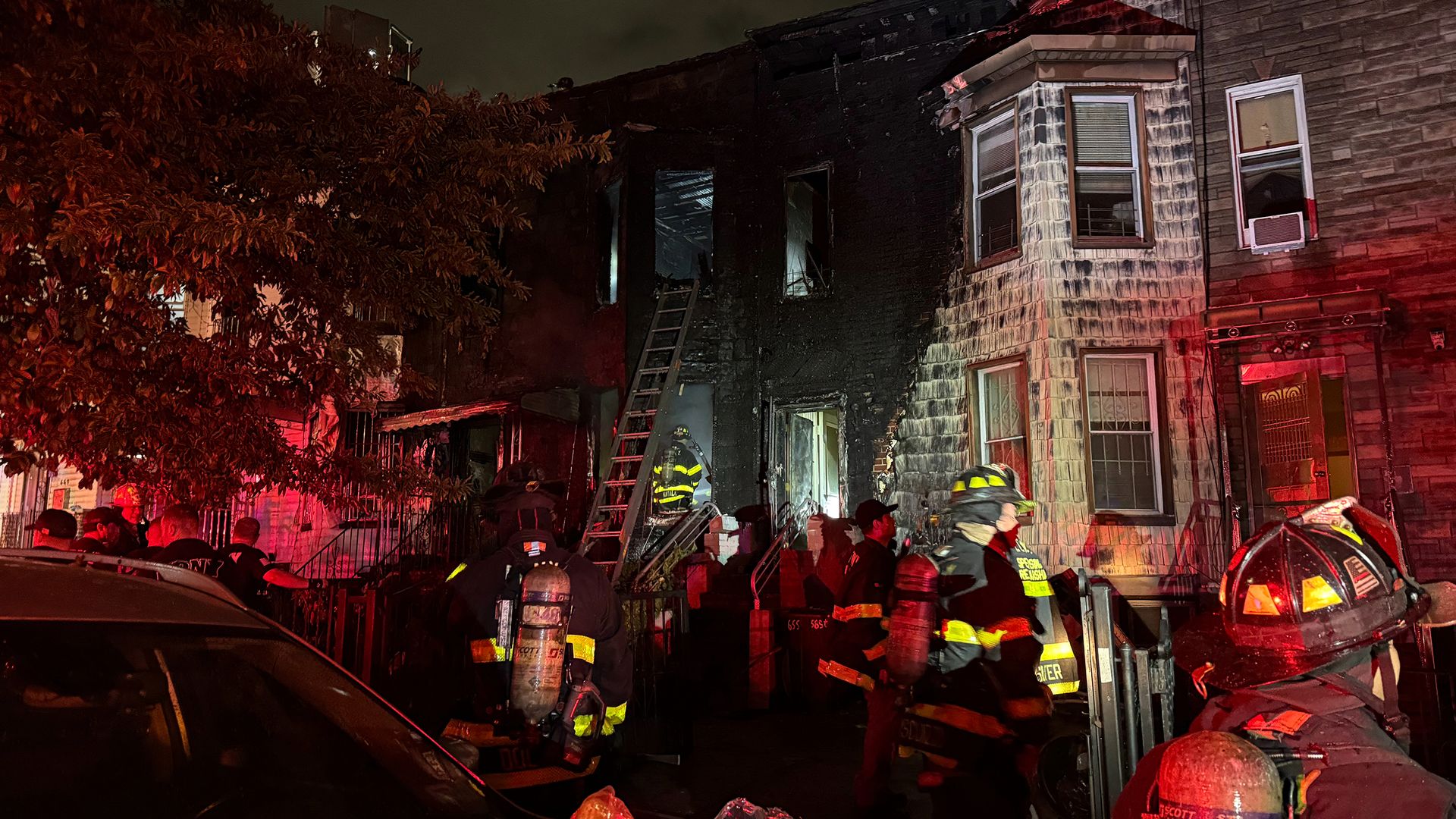
A catastrophic New York house fire that leaves six people dead and at least nine others injured is rarely a freak accident. When multi-fatality residential fires strike New York neighborhoods, the tragedy almost always traces back to a predictable convergence of aging housing stock, illegal basement conversions, and chronic code enforcement gaps. While initial breaking news reports focus on the immediate chaos—sirens, shattered windows, and the frantic heroism of first responders—the real story lies in the structural and systemic failures that turn single-family homes into fatal traps long before a single spark ignites.
The mechanics of modern residential fires have changed drastically over the last four decades, yet New York's older housing infrastructure remains trapped in a bygone era. Walk down any residential block in Queens, Brooklyn, the Bronx, or the older suburbs of Long Island and Westchester, and you will find thousands of wood-frame homes built between the 1920s and 1950s. These structures were never engineered to contain the thermal load of twenty-first-century living, nor were they designed to house multiple families crammed into subdivided floors. When fire breaks out in these buildings, the outcome is dictated by physics and policy in equal measure.
The Deadly Physics of Modern Residential Fires
Forty years ago, if a fire started in a living room, occupants had roughly seventeen minutes to escape before the room reached flashover—the terrifying moment when every combustible surface in an enclosed space ignites simultaneously due to extreme heat. Today, that window has collapsed to under three minutes.
The culprit is the synthetic revolution inside the American home. Vintage furniture made of solid oak, wool, and cotton burned slowly and produced relatively predictable smoke patterns. Modern couches, mattresses, carpets, and electronics are overwhelmingly composed of polyurethane foam and petroleum-based plastics. When these materials burn, they act like solid gasoline. They release exponentially higher heat output and generate thick, black, hyper-toxic smoke loaded with hydrogen cyanide and carbon monoxide.
In a New York house fire, this compressed timeline leaves zero margin for error. Most victims do not die from burns; they succumb to asphyxiation within seconds of inhaling superheated, toxic gases. If a home lacks working, interconnected smoke alarms on every level, sleeping residents are incapacitated before their brains even register the smell of smoke.
Consider a hypothetical scenario common across New York's outer boroughs. An overloaded power strip behind a synthetic sectional sofa overheats at 2:30 AM. Within ninety seconds, the sofa is engulfed, and temperatures at the ceiling exceed 1,000 degrees Fahrenheit. Thick black smoke banks down to waist level, obliterating visibility. If the stairwell is open—a standard feature in older balloon-frame or platform-frame New York houses—that staircase immediately becomes a chimney, funneling lethal heat and gas straight up to the second-floor bedrooms where families are sleeping.
The Illegal Conversion Epidemic and Housing Scarcity
To understand why a single New York house fire can claim six lives and injure nine others, you have to follow the money and the housing market. New York suffers from one of the most severe affordable housing shortages in the developed world. Rents have outpaced wages for decades, pushing working-class families and immigrants into the shadow housing market.
Landlords and homeowners facing skyrocketing property taxes, insurance premiums, and mortgage rates frequently turn to illegal conversions to generate extra income. Attics, basements, and garages are partitioned into cramped, windowless apartments using cheap drywall and hollow-core doors.
These makeshift units violate the most fundamental rule of fire safety: two unobstructed means of egress.
In a legally permitted apartment, every sleeping room must have at least two ways out—typically a door leading to a protected hallway and an egress window large enough for a person to climb through and a firefighter in full gear to enter. In an illegally converted New York basement or attic, those secondary exits rarely exist.
- Basement traps: Windows are often tiny, painted shut, or sealed behind heavy security bars installed to deter burglaries, effectively locking residents inside during an emergency.
- Attic mazes: Narrow, winding staircases with low ceilings disorient fleeing occupants and prevent firefighters from advancing charged hose lines upward against the rising heat.
- Subdivided hallways: Unpermitted partition walls block natural light and create confusing labyrinths where smoke quickly obscures the path to the exterior door.
When fire strikes a home illegally subdivided to house fifteen or twenty people instead of the four or five it was built for, casualty counts skyrocket. Emergency dispatchers sending units to what city records list as a standard two-family dwelling are suddenly confronted with a mass-casualty event.
Why Municipal Code Enforcement Keeps Falling Behind
Whenever a high-fatality fire dominates the local news cycle, city officials inevitably pledge crackdowns on illegal housing and promise stricter enforcement. Yet the cycle repeats every winter. The reason is not necessarily apathy; it is a fundamental collision between legal rights and bureaucratic capacity.
Municipal building inspectors in New York face a massive structural hurdle: the Fourth Amendment of the U.S. Constitution. Unlike commercial properties or large apartment buildings with public lobbies, inspectors cannot simply walk into a private one- or two-family home to check for illegal basement apartments without a warrant or explicit permission from the occupant.
When neighbors call 311 to report suspected illegal conversions—citing dozens of mailboxes, excessive garbage cans, or constant foot traffic—inspectors are dispatched to the address. If nobody answers the door, or if the person who answers refuses entry, the inspector cannot force their way inside. They leave a notice, close the complaint, or enter a protracted legal process to obtain an administrative search warrant from a judge. By the time a warrant is secured months later, the landlord may have temporarily removed the locks or moved tenants out, only to reinstate the setup weeks after the inspection passes.
Furthermore, aggressive enforcement creates a grim humanitarian dilemma. When city agencies do successfully vacate an illegally converted home, the displaced tenants—often low-income families with nowhere else to go—are suddenly rendered homeless. Fear of eviction and displacement makes tenants fiercely protective of their landlords, leading them to deny inspectors entry even when their own lives are at risk.
The Winter Surge and Electrical Grid Strain
Fire fatalities in New York consistently spike between November and March, driven by plummeting temperatures and aging residential infrastructure. Many older New York homes rely on antiquated steam radiators or outdated forced-air systems that distribute heat unevenly. Upper floors swelter while basements and corner bedrooms remain freezing.
To compensate, residents plug in portable electric space heaters. According to data consistently tracked by the National Fire Protection Association (NFPA), space heaters account for a disproportionate share of residential heating fire deaths nationwide, despite being involved in a smaller fraction of overall heating fires.
The danger is rarely the heater itself, which modern safety standards equip with tip-over switches. The danger is how the heater is powered. Older New York homes frequently feature outdated 60-amp or 100-amp electrical service panels and ungrounded wiring installed generations ago, long before households ran multiple computers, air fryers, high-definition televisions, and high-wattage heaters simultaneously.
Plugging a 1,500-watt space heater into an extension cord or a cheap multi-outlet power strip creates massive electrical resistance. The cord overheats beneath a rug or behind curtains, melting the insulation and igniting surrounding combustibles while the circuit breaker fails to trip. In multi-family dwellings where extension cords are snaked under doors to share power between subdivided units, the electrical load becomes a ticking time bomb.
The Lithium-Ion Battery Multiplier
Over the past several years, New York fire investigators have confronted an entirely new threat that accelerates residential fires with terrifying speed: lithium-ion batteries.
Driven by the explosion of e-bikes, e-scooters, and micro-mobility devices across New York's delivery workforce and commuter base, high-capacity lithium-ion batteries are now stored and charged inside thousands of residential hallways, basements, and living rooms.
Unlike a standard electrical fire that smolders before spreading, a damaged, overcharged, or uncertified lithium-ion battery undergoes thermal runaway. This is a violent chemical chain reaction that releases immense heat, flammable gases, and toxic vapors in a fraction of a second. A thermal runaway event does not slowly build; it explodes like a blowtorch, instantly blocking primary exits.
Because e-bikes are heavy and valuable, riders rarely leave them locked outside on the street overnight. They bring them inside and charge them in the exact places people need to use to escape—front foyers, shared stairwells, and basement corridors. When a battery fails in the middle of the night, the primary escape route for the entire building is instantaneously severed, forcing residents toward windows that may be barred, sealed, or three stories above concrete driveways.
The Myth of the Heroic Rescue and the Reality of FDNY Response
Public perception of house fires is heavily shaped by television and movies, where firefighters smash through doors, navigate cleanly through glowing orange flames, and carry unconscious victims out to safety. Reality is far harsher.
New York City and its surrounding suburban departments boast some of the best-trained, fastest-responding fire services in the world, often arriving on scene within four minutes of a 911 call. Yet even a four-minute response time cannot outrun a three-minute flashover curve.
When engine and ladder companies arrive at a heavily involved New York house fire, visibility inside the structure is zero. Firefighters operate entirely by touch and thermal imaging cameras in environments exceeding 800 degrees at waist level. Moving through a cluttered, illegally partitioned home while dragging a heavy, pressurized hose line—often weighed down by storage boxes, bicycles, and narrow makeshift hallways—consumes precious minutes.
For every victim pulled alive from a burning building, firefighters must overcome physics, structural collapse hazards, and layout anomalies that were never meant to exist. Relying on fire department response as a primary safety net is a fatal miscalculation; survival in a modern house fire is almost entirely determined by early detection and immediate self-evacuation before the first siren ever leaves the firehouse.
What Actually Prevents Multi-Fatality House Fires
Policy debates after a six-fatality fire routinely get bogged down in ideological arguments over housing density, landlord greed, and municipal budgets. While structural housing reform takes decades, the interventions that actually stop people from dying in their sleep are mechanical, immediate, and brutally simple.
Interconnected Smoke Alarms
A single battery-operated smoke detector in a hallway is no longer sufficient for modern synthetic fires. If a fire starts in a closed basement, a standard alarm on the second floor will not sound until smoke has already breached the stairwell and compromised the upper hallway. Interconnected alarms—which can now be installed wirelessly without tearing open plaster walls—ensure that when smoke is detected in the basement, every alarm on every floor screams simultaneously, buying residents the critical ninety seconds needed to get out.
Closed Bedroom Doors
Fire safety researchers at UL's Fire Safety Research Institute (FSRI) have spent years demonstrating one of the simplest life-saving habits available: sleeping with your bedroom door closed. A standard hollow-core interior door acts as a remarkably effective thermal and smoke barrier. In controlled burn tests, rooms with open doors routinely reach lethal temperatures exceeding 1,000 degrees with near-zero oxygen, while adjacent rooms behind a closed door remain under 100 degrees with breathable air, keeping occupants alive until firefighters reach their window.
Quick-Release Security Bars
In high-density urban neighborhoods, homeowners install window bars for legitimate security reasons. However, fixed bars without an interior release mechanism are death sentences. Building codes require approved quick-release latches operable from the inside without a key, tool, or special knowledge, yet thousands of older installations remain welded shut.
UL-Certified Charging and Dedicated Circuits
High-wattage appliances—specifically space heaters and e-bike chargers—must never be plugged into extension cords, surge protectors, or ungrounded adapters. E-bike batteries require certification under UL 2849, the safety standard that tests the entire electrical system, charger, and battery pack together to prevent thermal runaway.
The True Cost of Deferred Maintenance and Shadow Housing
Every time a New York house fire claims half a dozen lives, the public mourns the victims, praises the bravery of the firefighters who pulled them from the wreckage, and moves on within seventy-two hours. The names of the dead fade from the headlines, replaced by the next news cycle.
Yet the underlying conditions remain completely untouched. Thousands of century-old wood-frame houses across New York remain packed beyond capacity, wired for an era of radios and incandescent bulbs, filled with petroleum-based furniture, and sealed off by unpermitted drywall and barred windows. Until housing affordability catches up with reality and enforcement mechanisms find a way to inspect shadow apartments without driving vulnerable families onto the street, the next multi-fatality fire is not a matter of if—it is simply a matter of which block and which winter night.