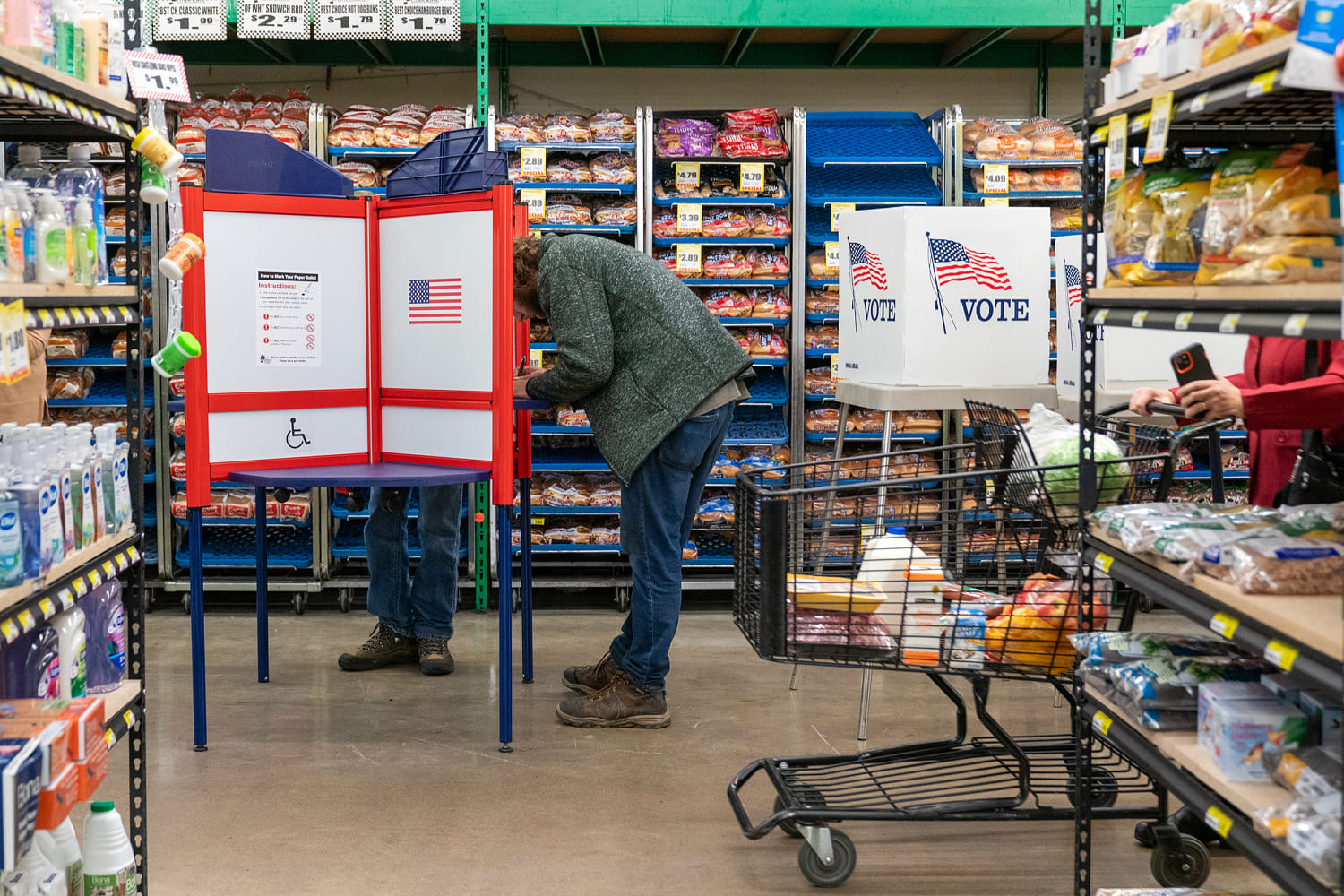
The Mississippi Senate race has stalled into an extended vote count because state election laws create a deliberate, multi-day bottleneck for absentee, provisional, and affidavit ballots, turning narrow margins into protracted legal wars. When precincts close in Mississippi, the initial tally rarely tells the whole story, particularly when turnout spikes or mail-in ballots arrive right up against statutory deadlines. Right now, county election commissions across all 82 counties are entering a mandatory post-election verification phase that freezes final certification, giving campaigns a narrow window to challenge individual ballots, scrutinize signature matches, and prepare for litigation in state and federal courts.
Most voters assume an election ends when the television networks project a winner or when county clerks upload precinct totals at midnight. That assumption breaks down quickly in Mississippi. Under state statute, county officials cannot certify results immediately, and the mechanics of how paper ballots are reconciled against poll books virtually guarantee delays whenever a race tightens.
Why Mississippi Vote Counts Drag Out
Mississippi runs a decentralized, county-by-county election administration system where local circuit clerks and county election commissioners hold massive operational authority. Unlike states that allow election workers to process and scan mail-in ballots weeks before Election Day, Mississippi restricts early tabulation. Workers must wait until the polls close or meet strict statutory triggers before running absentee ballots through scanners, creating an immediate backlog in high-population counties like Hinds, Harrison, and DeSoto.
The timeline stretches further because of how the state handles late-arriving mail. Mississippi law permits absentee ballots postmarked on or before Election Day to be counted if they arrive within five business days after the election. That five-day grace period acts as a hard stop against rapid certification. Even if a candidate leads by a few thousand votes on Wednesday morning, county boards cannot legally close the books until that window shuts.
Then come the affidavit ballots. If a voter shows up at a precinct and their name does not appear on the poll book, or if they lack an acceptable form of photo identification, poll workers issue an affidavit ballot. These paper ballots are sealed in individual envelopes and set aside. Over the next several days, county election commissioners must manually research every single affidavit voter, checking statewide voter registration databases to confirm eligibility, verify precinct assignments, and ensure the person did not cast a ballot elsewhere.
In a landslide, those uncounted affidavit and late absentee ballots sit in a vault as an administrative footnote. In a close Senate contest, every single envelope becomes a potential inflection point.
The Anatomy of a Ballot Battle
Once the counting slows down, the lawyers move in. Ballot battles in Mississippi rarely resemble the sweeping fraud conspiracies often portrayed on cable news; instead, they are granular, tedious wars of attrition fought over technical compliance with the Mississippi Election Code.
Campaign legal teams deploy observers to county courthouses to monitor the canvass—the official process of examining and counting valid votes. During the canvass, observers look for specific procedural flaws that can disqualify a ballot:
- Missing or mismatched signatures across the absentee ballot application, the ballot envelope, and the voter registration file.
- Improperly executed witness certificates, as Mississippi requires most absentee ballot envelopes to be signed by an attesting witness, such as a notary public or another authorized official, depending on the voter's reason for voting absentee.
- Precinct mismatches on affidavit ballots, where a voter cast a ballot in the wrong precinct after moving within the county without updating their registration.
- Damaged or ambiguous markings on optical-scan paper ballots that require bipartisan resolution boards to determine voter intent.
When a campaign observer spots a discrepancy, they lodge a formal challenge on the spot. The local election commission must then rule whether to accept or reject the ballot. If the commission rejects a ballot, it goes into a separate stack; if they accept it over an objection, the opposing campaign logs the incident for a potential post-election contest.
This process moves at a glacial pace. Reviewing 500 disputed envelopes in a single county can consume an entire workday, with attorneys arguing over whether a slightly slanted signature matches a voter's driver's license record from ten years ago.
The Five-Day Window and the Postal Bottleneck
A major flashpoint in recent Mississippi election cycles involves the intersection of state mail-in deadlines and United States Postal Service processing times. Because USPS consolidates mail sorting into regional hubs—meaning a letter mailed in Jackson might travel out of state before returning for local delivery—postmarks have become a recurring legal headache.
Occasionally, mail-in ballots arrive at a circuit clerk's office within the five-day post-election window bearing no postmark at all, or a smeared, illegible ink stamp. State law generally requires a clear postmark on or before Election Day to validate a late-arriving ballot. Without that ink stamp, county commissioners face an immediate dilemma: disenfranchise a voter whose ballot was delayed by postal sorting machines, or count a ballot that technically lacks statutory proof of timely mailing.
Federal courts have repeatedly scrutinized state post-election receipt windows across the country, creating shifting legal terrain. Campaigns routinely file preemptive injunctions or emergency motions seeking to segregate ballots received after Election Day so they can be excluded later if an appellate court rules against the state's grace period. That segregation requirement forces clerks to maintain parallel tallies—one including post-Election Day arrivals, one excluding them—doubling the administrative burden and fueling public skepticism while the numbers fluctuate.
Historical Precedent in Mississippi Election Disputes
Mississippi is no stranger to bruising, drawn-out election contests that spill out of county courthouses and into the judiciary. To understand how a Senate ballot battle unfolds, look at how state courts handle contested primaries and general elections.
In the 2014 Republican Senate primary runoff between incumbent Thad Cochran and challenger Chris McDaniel, the race fractured into weeks of bitter litigation over crossover voting and ballot integrity. McDaniel's team spent months scouring poll books across dozens of counties, alleging that voters who had participated in the Democratic primary unlawfully voted in the Republican runoff. While that dispute centered on primary rules rather than general election absentee deadlines, it exposed the structural vulnerabilities of Mississippi's paper-heavy, locally managed system. Circuit clerks struggled to produce uniform records, counties applied inconsistent standards when reviewing poll books, and the state Supreme Court ultimately had to step in to resolve procedural deadlocks.
Similarly, local legislative and judicial races across the Mississippi Delta and the Gulf Coast have repeatedly hinged on fewer than fifty votes, triggering full-scale election contests. Under Mississippi law, a candidate who loses a general election can file a formal petition contesting the result within twenty days after the election. Unlike a simple recount—which merely re-runs the accepted ballots through a tabulator—a full election contest opens the door to discovery, subpoenas, and bench trials where a judge examines rejected affidavit ballots one by one.
The Operational Strain on County Clerks
Behind the political theater sits a chronic resource problem. Most of Mississippi's 82 counties operate on tight municipal budgets, and circuit clerks often manage elections with skeleton crews supplemented by temporary poll workers who earn modest stipends for fourteen-hour shifts.
When a Senate race enters an extended count, those small offices are suddenly besieged by national campaign operatives, out-of-state election attorneys, and national media crews demanding immediate public records requests. Under the Mississippi Public Records Act, campaigns can demand copies of absentee ballot logs, poll book sign-in sheets, and rejected ballot envelopes.
Fulfilling those requests while simultaneously conducting the official canvass stretches local staff to the breaking point. Mistakes happen under that kind of pressure. A clerk might mislabel a box of affidavit ballots, fail to redact sensitive voter information before handing over a poll book, or delay uploading updated county totals to the Secretary of State's reporting portal. Opposing campaigns inevitably seize on those harmless administrative hiccups, framing routine human error as evidence of systemic incompetence or malfeasance.
Why Recounts in Mississippi Work Differently
A common misconception during an extended vote count is that a close margin automatically triggers a mandatory state-funded recount. Mississippi does not have an automatic recount law.
Even if a Senate race comes down to a tenth of a percentage point, the state will not step in to re-tabulate the votes on its own initiative. Instead, a trailing candidate must formally request a recount or file an election contest. If a candidate asks to examine the ballot boxes, they are entitled to do so under state law after giving proper notice to the opposing candidate and the county election commission, usually within twelve days of the election.
During a ballot box examination, the candidate's representatives can inspect every physical ballot, verify the seal numbers on the ballot boxes against the poll workers' closing certificates, and check the memory cards used in optical scanners. However, simply finding a discrepancy during a box inspection does not overturn an election. The challenging campaign must prove in court that enough illegal votes were cast—or enough legal votes were wrongfully excluded—to change the outcome of the race, or that fraud and procedural violations rendered the true will of the voters impossible to ascertain.
That legal threshold is intentionally high. Mississippi judges historically refuse to throw out an entire precinct's results over technical errors by poll workers unless there is clear proof that the mistakes altered the winner.
The Role of the Secretary of State and Certification Deadlines
While counties count the votes, the Mississippi Secretary of State serves as the chief election officer, collecting certified returns from all 82 counties and compiling the official statewide canvass. County election commissions generally have ten days after the election to complete their local canvass and transmit certified results to Jackson.
Once the Secretary of State receives the certified county abstracts, the office tabulates the final statewide total. In a federal Senate race, the Governor and Secretary of State must sign the formal Certificate of Election, which is then transmitted to the Secretary of the United States Senate in Washington, D.C.
Yet even that certification does not necessarily end the fight. Under Article I, Section 5 of the U.S. Constitution, the United States Senate itself is the ultimate judge of the elections, returns, and qualifications of its own members. If a Mississippi ballot battle drags past the state certification deadline, or if a losing candidate alleges widespread disenfranchisement or statutory violations, the campaign can petition the Senate Rules Committee to investigate and even refuse to seat the certified winner until the dispute is resolved.
What Actually Decides the Outcome
When the dust settles in an extended Mississippi vote count, the winner is rarely decided by dramatic courtroom revelations. Outcomes turn on cold arithmetic and organizational discipline.
The campaign that wins a protracted ballot battle is almost always the one that built its legal infrastructure months before Election Day. That means having pre-vetted local counsel on retainer in every major county, maintaining accurate database matches of its own voters who cast affidavit or absentee ballots, and deploying trained observers who know the exact statutory citations to argue before a county election commission at 9:00 p.m. on a Friday night.
When county commissioners sit down to adjudicate a stack of disputed affidavit envelopes, they rely heavily on the arguments presented by the attorneys in the room. If one campaign has an experienced election lawyer citing specific sections of Title 23 of the Mississippi Code while the other side has an untrained volunteer taking notes on a legal pad, the well-prepared side wins the close calls. Those individual rulings—fifty votes in Rankin County, thirty in Lauderdale, eighty in Forrest—quietly accumulate until the mathematical path for the trailing candidate disappears entirely.