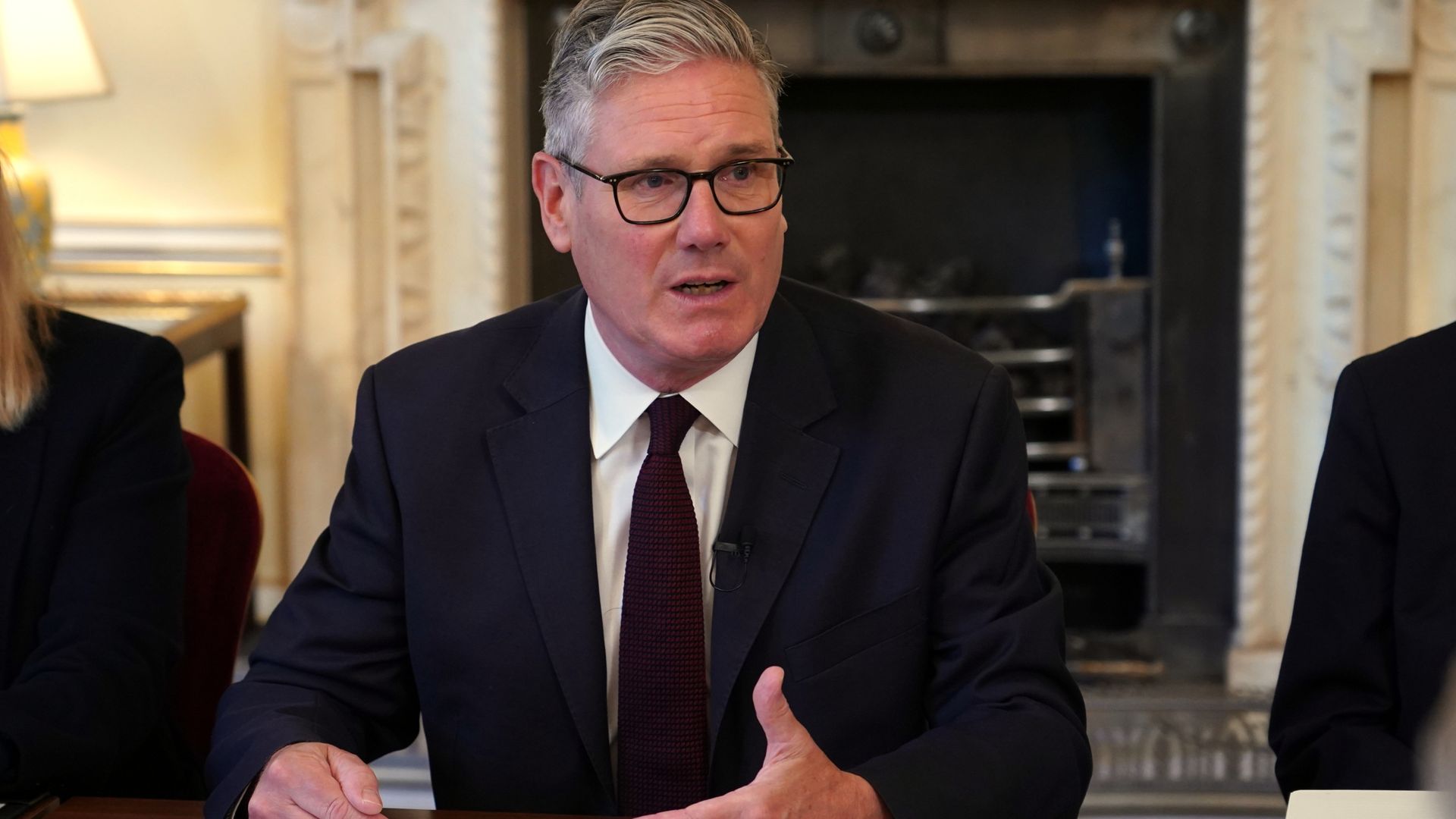
Miatta Fahnbulleh publicly backed the home secretary on migration after remarks she made to journalists sparked scrutiny over government unity and border policy. The dispute began when off-the-cuff or candid comments to reporters appeared to expose tension at the top of Westminster, forcing a rapid clarification that reaffirmed support for the Home Office line on migration.
Anyone who has covered British politics for long enough recognizes this choreography. A minister talks to the press. A phrase lands awkwardly in a morning briefing or a lunch with correspondents. Within hours, allies and rivals read an entire cabinet civil war into a handful of sentences, and the minister in question is back on the airwaves swearing undying loyalty to the department running the border. Yet treating this episode as mere gossip misses a much harder structural reality about how migration is managed, communicated, and contested inside government.
Migration sits at the fault line where political rhetoric collides with administrative friction. A minister can speak with genuine conviction about economic fairness, social cohesion, or international responsibility, only to find those words weaponized inside a debate defined by deterrence, processing backlogs, and voter anxiety. When Fahnbulleh stepped forward to back the home secretary on migration, she was not just putting out a press fire. She was stepping into an arena where every nuance is flattened into loyalty or dissent.
Why Offhand Remarks to Journalists Turn Into Policy Crises
Westminster runs on informal access. Journalists and ministers trade impressions over coffee, at party conferences, and in corridors where tape recorders are off but reputations are constantly being scored. Most of those conversations vanish without a trace because ninety percent of political chat is routine noise.
The remaining ten percent explodes when it touches a nerve that already aches. Migration is that nerve. Because public opinion on immigration is fiercely polarized and deeply tied to anxieties over housing, public services, and national identity, even a slight shift in tone from a government figure looks like a crack in the dam. If a minister suggests that enforcement alone will not solve a problem, critics hear softness on border control. If a minister emphasizes strict rules, internal critics hear callousness or indifference to labor shortages.
There is also a mechanical reason these stories escalate so fast. Modern news cycles reward conflict over nuance. A quote that sounds measured in a forty-minute conversation reads very differently as a standalone line in a breaking alert. Once a rival faction or an opposition spokesperson frames that line as a split between a minister and the home secretary, the story ceases to be about what was actually said. It becomes a test of discipline.
Consider a hypothetical example of how this dynamic plays out in practice. Suppose a junior or mid-ranking minister tells a group of reporters that local councils need better funding to house newcomers while visa rules are tightened at the national level. Both halves of that statement can be completely consistent with official policy. Yet if the headline highlights the warning about local strain without the accompanying commitment to enforcement, the narrative shifts immediately toward internal friction. Reaffirming support for the home secretary becomes the quickest way to close down speculation before it consumes the entire morning broadcast round.
The Home Secretary's Burden at the Center of Migration
To understand why backing the home secretary matters so much in these moments, you have to look at the sheer weight placed on the Home Office. No single department in Whitehall carries a heavier mix of high stakes and low margins for error. The home secretary is expected to project firm control over borders, asylum claims, visas, and removals while operating systems that have struggled for years with complex legal appeals, international treaties, and fluctuating global migration flows.
Every political party that holds power discovers the same sobering truth. Promises made in opposition sound crisp and decisive until they meet casework queues, diplomatic negotiations, and court challenges. A home secretary cannot afford the appearance of being undercut from within the government's own ranks, especially on migration, where voters judge competence largely by whether the system looks orderly and controlled.
When Fahnbulleh voiced her backing for the home secretary on migration, that support served a specific institutional purpose. It signaled that whatever shades of emphasis exist across different portfolios—whether treasury concerns about labor supply, local government pressures on infrastructure, or diplomatic priorities—the core authority of the Home Office remains intact. In politics, perceived division is often more damaging than an unpopular policy. Voters can forgive a tough decision if they believe the government knows its own mind; they rarely forgive a team that looks as though it is pulling in opposite directions.
What Fahnbulleh's Intervention Reveals About Cabinet Dynamics
Public loyalty statements are easy to dismiss as boilerplate, yet veteran watchers read them closely for what they reveal about power and positioning. A minister does not need to rush out a clarification unless the stakes justify it. Doing so signals an awareness that ambiguity on migration carries immediate political cost.
At the same time, backing the home secretary does not erase real differences in perspective across government. Different ministers see different pieces of the elephant. Someone focused on economic growth or regional development looks at skill shortages, business recruitment, and demographic shifts. Someone focused on policing, border security, and asylum processing looks at enforcement capacity, irregular crossings, and public trust.
Competing Pressures Inside Government
The tension over migration rarely comes down to cartoon villains versus saints. Usually, it comes down to trade-offs that are genuinely hard to reconcile:
- Enforcement versus capacity: Tightening rules and speeding up decisions requires staffing, digital systems, and legal clarity, all of which take time and money to build.
- Economic needs versus public concern: Businesses in hospitality, care, and construction often argue they cannot fill vacancies domestically, while many voters worry that rapid population growth strains schools, clinics, and rents.
- National rules versus local impact: Decisions taken at the center land on specific towns and neighborhoods, where mayors and council leaders deal with the day-to-day reality of accommodation and integration.
- Candor versus message discipline: Ministers who speak plainly to journalists risk creating headlines that distract from legislative or operational work, whereas overly scripted language can sound evasive or robotic.
When Fahnbulleh backed the home secretary on migration, she chose message discipline over prolonged speculation. That choice makes tactical sense in the short term. It denies critics a running story about cabinet disarray and keeps the focus on official policy rather than personal friction.
Why Voters Rarely Buy Pure Slogans on Migration
If backing the home secretary settles the immediate press story, it does not settle the underlying argument with the public. Over the past decade, voters across Western democracies have grown skeptical of grand assurances on migration. They have heard too many pledges that turned out to be harder to deliver than advertised.
People pay attention to visible indicators. They notice wait times at GP surgeries, pressure on social housing, recruitment signs in shop windows, and news reports about small boats or visa backlogs. Speeches and solidarity statements can steady a nervous parliamentary party, but they rarely change minds on their own unless paired with measurable results.
There is also an overlooked factor in how migration debates play out: the gap between aggregate statistics and lived experience. National figures might show net migration moving in one direction while a particular town experiences a sudden rise in demand for temporary accommodation or English-language support. Conversely, overall numbers might remain high while a specific sector still faces acute labor shortages. A government that speaks only in broad generalizations misses how unevenly those pressures are felt.
The Cost of Treating Every Nuance as Heresy
One of the quiet casualties of high-stakes migration politics is honest problem-solving. When every word spoken to journalists is parsed for signs of disloyalty, ministers become cautious about admitting bottlenecks or unintended consequences. Yet problems that cannot be named openly are much harder to fix.
A mature migration policy requires room to ask practical questions. Which visa routes are working as intended, and which ones are being gamed? Where are processing delays costing taxpayers money without improving security? How can central government support local communities fairly without creating perverse incentives?
Backing the home secretary on migration reasserts authority at the top, which is necessary for governance to function. Still, authority only builds lasting credibility when it is matched by candor about what works, what is failing, and how long real reform takes.
The Real Test Behind the Headlines
Episodes like Fahnbulleh's comments to journalists and her subsequent backing of the home secretary are symptoms of a broader strain in modern statecraft. Governments are asked to exercise tight control over global movements that are driven by war, climate stress, economic inequality, and demographic shifts far beyond any single minister's desk.
When pressure mounts, the temptation is to treat every awkward phrase as a crisis of loyalty and every tough question as a lack of resolve. Real leadership on migration looks less like a perpetual loyalty oath and more like steady execution under scrutiny.
Watch what happens after the news cycle moves on. The measure of whether a government has mastered the migration debate is not a swift clarification after a chat with reporters, but whether the systems behind the border actually work when the cameras look away.