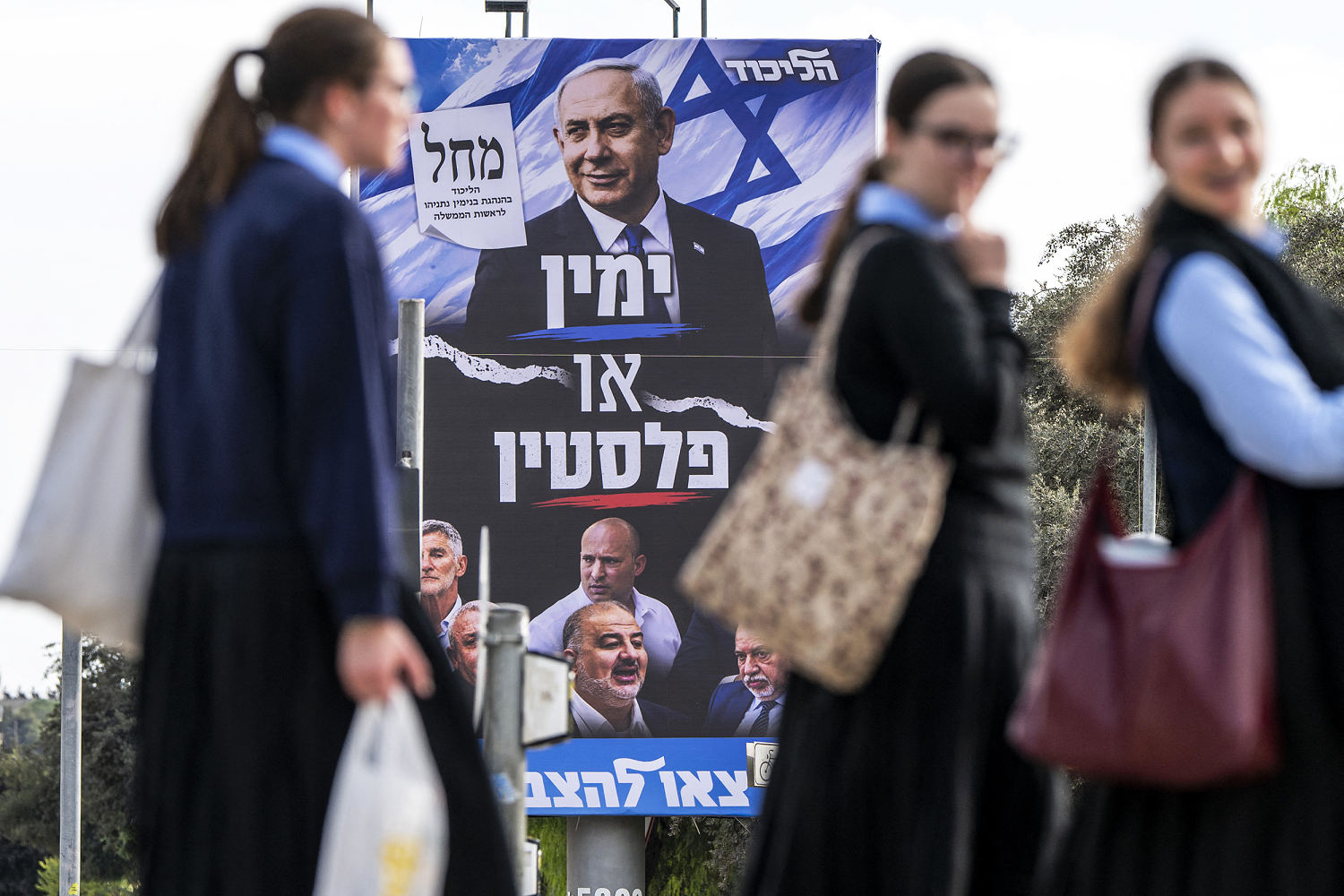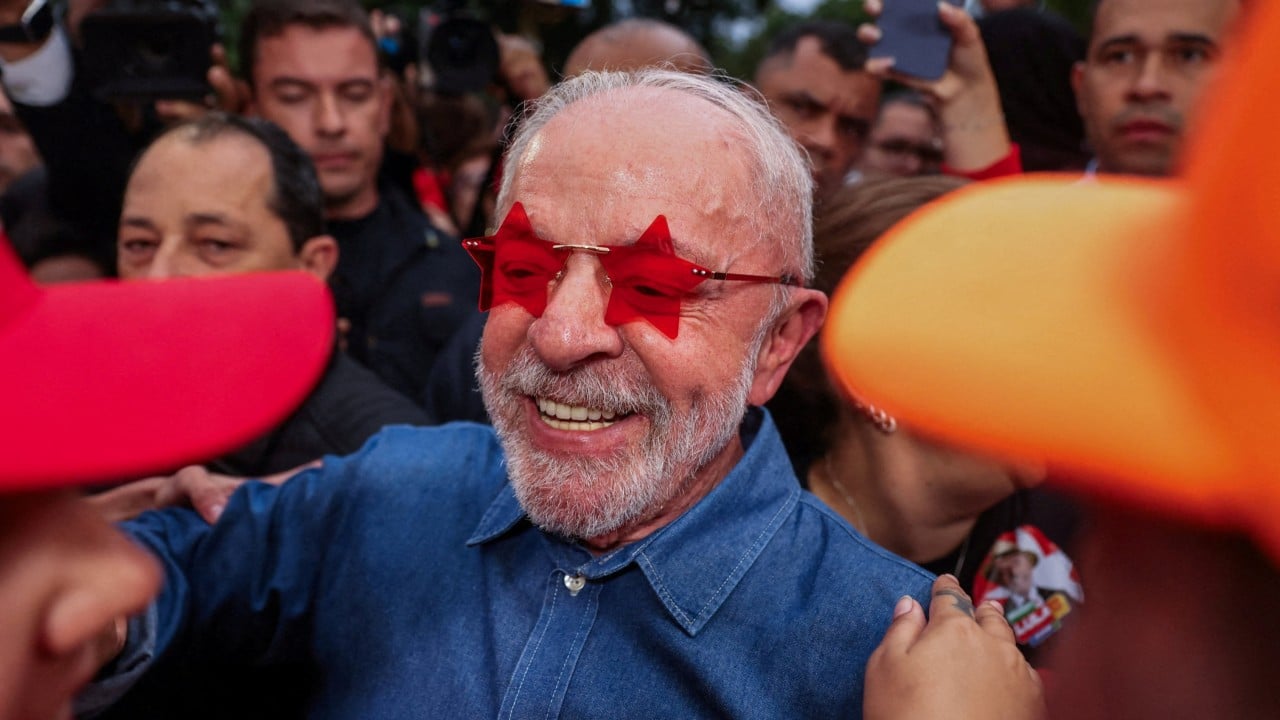
On October 25, 2026, Luiz Inácio Lula da Silva shattered a four-decade rule of Brazilian democracy. Trailing Senator Flávio Bolsonaro by 2.2 million votes after the first round on October 4, the 80-year-old incumbent surged back to win the presidential runoff with 51.79 percent of valid ballots against Bolsonaro's 48.21 percent. Since Brazil's return to civilian rule in 1985, no presidential runner-up from the first round had ever overturned the deficit in the second. By capturing 64.25 million votes to Bolsonaro's 59.82 million, Lula secured an unprecedented fourth non-consecutive term, defeated a Donald Trump-aligned dynastic restoration, and exposed how modern digital mobilization can override stagnant congressional arithmetic.
Most post-election postmortems reduce this result to a simple tale of personality or nostalgic loyalty. That reading misses the mechanics. What unfolded in the three weeks between October 4 and October 25 was a ruthless diagnostic overhaul of a failing campaign, paired with an opponent who mistook a 1.87-percentage-point first-round edge for an inevitable coronation.
The October 4 Wake-Up Call
For months leading into October, conventional political wisdom in Brasília held that Lula's coalition had reached structural exhaustion. In the first round, Flávio Bolsonaro—carrying the political banner of his father, imprisoned former president Jair Bolsonaro—tallied 47.03 percent of the vote. Lula trailed at 45.16 percent.
The numbers looked terminal. Every major polling institute, including DataFolha and Futura, alongside international observers, projected a runoff victory for the 45-year-old senator from Rio de Janeiro.
More troubling for the Workers' Party (PT) than the raw presidential margin was the legislative wave occurring simultaneously on the same ballot. Across the 513-seat Chamber of Deputies, Bolsonaro's Liberal Party (PL) gained 22 seats to reach 121, establishing itself as the single largest bloc in the lower house. In the Federal Senate, where two-thirds of the 81 seats were contested, the PL added 14 seats to reach 29, while the PT remained flat at nine.
On the night of October 4, Lula's campaign appeared trapped in an analog time warp. His messaging leaned heavily on macroeconomic indicators—GDP figures, trade balances, and formal job creation—that failed to register with working-class families feeling squeezed by everyday living costs. As political scientist Nara Pavão of the Federal University of Pernambuco observed, voters' assessments of the national economy remained deeply pessimistic even when their personal household finances showed improvement. Political identity had decoupled perception from data.
Why the Runoff Flipped the Question
To understand how an 80-year-old union veteran reversed a 2.2-million-vote deficit in 21 days, you have to look at how the two rounds functioned as entirely separate elections.
The first round was a referendum on incumbency. Voters angry about prices, frustrated by gridlock, or hungry for institutional disruption used the October 4 ballot to register a protest against the sitting administration. In a multi-candidate field, anti-Lula sentiment had room to breathe without forcing undecided voters to confront the alternative head-on.
The second round stripped away that buffer. Suddenly, the ballot was no longer a report card on Lula's third term; it became a binary choice on whether to hand the Palácio do Planalto back to the Bolsonaro family.
That shift placed Flávio Bolsonaro under an unfamiliar, unforgiving spotlight. During the first round, he had benefited from disciplined message control, pitching himself as a smoother, suit-and-tie heir capable of executing his father's conservative agenda without the chaotic rhetoric. Once he became the frontrunner, that discipline evaporated.
Hubris on the Campaign Trail
Rather than expanding his coalition toward the political center, Flávio Bolsonaro spent the opening days of the runoff behaving like a president-elect. He publicly floated constitutional changes, discussed sweeping privatizations of state-owned enterprises, and speculated on cabinet appointments before a single runoff ballot had been cast.
The rhetoric alienated moderate voters who had backed third-party candidates in the first round. Worse, it revived latent anxieties among swing voters about institutional instability. Jair Bolsonaro was already serving a 27-year prison sentence for plotting a failed coup following his 2022 defeat, and Flávio made little secret of his desire to secure his father's release. Simultaneously, two active federal police inquiries into Flávio himself—centered on alleged corruption, money laundering, and tax evasion—regained traction in national coverage.
Political analysts noted afterward that a more conventional conservative standard-bearer, such as São Paulo Governor Tarcísio de Freitas, would likely have consolidated centrist support and closed out the race. The Bolsonaro surname functioned as both an electoral floor and a rigid ceiling: it guaranteed intense devotion from the base while triggering an equally intense rejection reflex among millions of hesitant voters.
Inside the Digital and Street Overhaul
While Bolsonaro campaigned as though the race were already won, Lula's inner circle executed an emergency transplant of its communication apparatus.
For decades, Lula had famously refused to own a smartphone, relying on basic handsets for voice calls and delegating digital operations to traditional party apparatchiks. Following the October 4 loss, the campaign handed operational control of its online strategy to a younger generation of political operators, led by Gen Z politician Ana Elisa Santos Silva and millennial federal deputy André Janones, both from Minas Gerais.
Their diagnosis was blunt. Bolsonaro's ecosystem dominated algorithmic feeds across WhatsApp, Instagram, and TikTok, framing the race around crime, cultural grievances, and judicial overreach. Lula's team had been bringing policy white papers to a meme fight.
Over the next three weeks, three distinct operational shifts transformed the campaign's reach:
- Direct-to-Voter WhatsApp Infrastructure. The campaign aggressively scaled a WhatsApp broadcast channel dubbed "Lula's Army," which exploded from roughly 60,000 followers to more than 10 million subscribers within three weeks. In the final week before the runoff, Lula acquired his first smartphone and began recording unscripted selfie videos directly for the channel, bypassing traditional media filters to speak conversationally with voters.
- Decentralized Creator Networks. Instead of relying solely on top-down party broadcasts, the campaign mobilized an informal network of independent social media creators and student movements. Crucially, organic student-led protests against a Bolsonaro restoration erupted across university campuses and city centers nationwide—demonstrations that operated independently of the PT's formal apparatus, lending the anti-Bolsonaro push an authentic grassroots energy that party rallies could never manufacture.
- Hyper-Targeted Turnout Ground Game. Rather than chasing entrenched right-wing voters, PT organizers focused relentlessly on reducing abstention in traditional strongholds. First-round turnout had stood at 78.92 percent. By mobilizing low-income voters who had stayed home on October 4—emphasizing concrete threats to social programs like Bolsa Família and public education—the campaign drove second-round turnout up to 80.78 percent, an increase of nearly two percentage points.
That turnout surge translated directly into raw ballot gains. Lula increased his absolute vote total in every single one of Brazil's 26 states and the Federal District between the first and second rounds. Bolsonaro's vote total, by contrast, actually declined in six states.
The Minas Gerais Bellwether
Nowhere was this strategic collision clearer than in Minas Gerais.
Brazil's second-most populous state has served as the country's ultimate political barometer for nearly four decades, backing every winning presidential candidate since 1989. Its electorate mirrors the nation in miniature—combining industrial urban centers around Belo Horizonte, conservative agribusiness belts in the Triângulo Mineiro, and impoverished rural municipalities in the north that resemble the Northeast.
In the first round, Flávio Bolsonaro carried Minas Gerais comfortably, defeating Lula by 48.43 percent to 43.33 percent—a raw margin of roughly 588,000 votes.
Over the final 21 days, Lula's campaign treated Minas Gerais as an existential battleground. Deploying Janones and Santos Silva on their home turf, the coalition paired relentless digital counter-programming with massive street mobilizations in Belo Horizonte. Simultaneously, right-wing missteps hardened local resistance; in northern Minas Gerais, a municipal councilwoman from Lula's party, Iara Pimentel, was hospitalized with facial injuries after Bolsonaro supporters pelted her motorcade with bricks and glass bottles—an incident that dominated local news cycles and underscored warnings about political violence.
When ballots were counted on October 25, Minas Gerais was the only state on the map to flip from blue to red. Lula erased Bolsonaro's 588,000-vote advantage to win the state by less than one percentage point, securing roughly 6.3 million votes. Without that single state's reversal, the national comeback would have fallen short.
Washington's Shadow Over the Ballot Box
Beneath the domestic battle over inflation and crime ran an unusually explicit geopolitical fault line. Flávio Bolsonaro campaigned openly on his proximity to U.S. President Donald Trump, promising to realign Brazilian foreign policy with Washington and negotiate bilateral deals covering rare earth minerals and strategic trade.
For Bolsonaro's base, alignment with Trump signaled ideological kinship and economic pragmatism. For Lula, it offered a potent nationalist weapon.
Throughout the runoff, Lula framed the election as a defense of Brazilian sovereignty. At closing rallies in São Paulo and Rio de Janeiro that drew more than two million combined attendees, the president repeatedly invoked the threat of foreign interference, declaring that Brazil would never accept becoming "anyone's backyard". The message resonated far beyond traditional left-wing circles. Among undecided voters wary of U.S. tariff threats and unilateral pressure across Latin America, Flávio Bolsonaro's eagerness to embrace Washington looked less like statesmanship and more like subordination.
On election night, the ideological contrast between the two camps was stark. While Lula addressed cheering crowds along São Paulo's Avenida Paulista, pledging to govern for all Brazilians regardless of religion or political affiliation, Bolsonaro initially refused to concede, echoing his father's 2022 playbook by questioning the tallying process and vowing legal challenges. Within 48 hours, however, the institutional reality set in: leaders of Bolsonaro's own Liberal Party formally acknowledged Lula's victory, leaving the defeated candidate isolated as he traveled to Florida to address a conservative gathering at Mar-a-Lago.
The Governing Trap Ahead
Winning an election and governing a polarized continent-sized republic are entirely different exercises. While Lula's runoff comeback will be studied in political science departments for decades, the structural map he inherits on January 5, 2027, is arguably more hostile than the one he faced in 2023.
Consider the fundamental contradiction embedded in the October 2026 results. Voters rejected a Bolsonaro presidency by a margin of 4.43 million ballots, yet those same voters handed conservative and center-right parties overwhelming control of both chambers of Congress. With the PL holding 121 seats in the Chamber of Deputies and 29 seats in the Senate—and allied right-leaning blocs like UNIÃO, PP, and Republicanos commanding dozens more—Lula lacks anything resembling a natural legislative majority.
Every major bill, judicial nomination, and budget appropriation will require painstaking transactional bargaining with the Centrão, the ideological-agnostic bloc of pragmatic lawmakers who trade legislative votes for cabinet ministries and discretionary infrastructure funds.
Yet Lula's sharpest constraint is not congressional hostility; it is fiscal arithmetic. As University of São Paulo political scientist Fernando Limongi noted in post-election analysis, Brazil's federal budget is overwhelmingly locked into mandatory spending obligations—pensions, constitutionally mandated health and education floors, and social transfers. Discretionary room to maneuver barely exists. Financial markets, which had rallied briefly after Bolsonaro's first-round lead on hopes of aggressive privatization and spending cuts, remain hypersensitive to any signal that Lula's fourth term will loosen fiscal guardrails to satisfy his base.
This creates a treacherous squeeze. If Lula tightens spending to appease bond markets and secure congressional cooperation, he risks alienating the working-class voters and youth movements whose eleventh-hour mobilization saved his presidency. If he expands public expenditure without offsetting revenue, he invites currency volatility, inflation spikes, and legislative paralysis.
Lula proved on October 25 that at 80 years old, his campaign instincts remain unmatched in Latin American politics—capable of adapting to algorithmic warfare and pulling off a statistical miracle no predecessor ever managed. Beginning in January, he will discover that the coalition required to defeat the Bolsonaro name is far easier to assemble at the ballot box than it is to hold together inside Brasília's halls of power.
For a closer look at how Lula's campaign mobilized voters between rounds, watch How students and social media delivered Lula a historic comeback in Brazil, which breaks down the digital and grassroots shifts that overturned the first-round deficit.