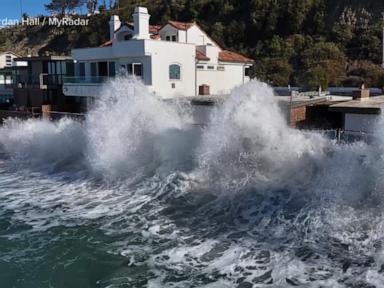
King tides are exceptionally high, predictable tidal events caused by the gravitational alignment of the sun, moon, and Earth when the moon is at its closest point in orbit. While these perigean spring tides occur naturally a few times every year, they have become a dangerous preview of permanent coastal flooding on both the Atlantic and Pacific coasts. Driven by rising baseline sea levels and aging urban drainage systems, what used to be a harmless seasonal curiosity now submerges coastal highways, overwhelms municipal stormwater infrastructure, and erodes multimillion-dollar waterfronts under completely clear skies.
Television news crews love a good spectacle. Every winter and late autumn, local stations send reporters in yellow slickers to stand ankle-deep in saltwater along Miami Beach or the Oregon coast, pointing at waves splashing over seawalls. Those broadcasts treat the event like a passing freak weather phenomenon, something to gawk at for thirty seconds before cutting to sports. That framing misses the real story entirely. In related updates, take a look at: The Cold Math of the Coastline and the People Who Never Come Back.
The water isn't invading because of a sudden storm. There is no hurricane offshore, no atmospheric river dumping inches of rain on the hills. The ocean is simply rising up through the storm drains on a sunny Tuesday afternoon, turning neighborhood streets into brackish canals and saltwater-logging the foundations of homes that were built well above the historical waterline.
The Celestial Mechanics Behind the Surge
To understand why coastal cities are suddenly taking on water during fair weather, you have to look up before you look at the shoreline. Tides are essentially giant, slow-moving waves generated by gravitational pull. On any given day, the moon tugs on Earth's oceans, creating bulges of water that wash onto shore as high tides. NBC News has also covered this important issue in great detail.
Several times a year, three distinct astronomical cycles overlap at the exact same moment. First, the moon reaches perigee, the point in its elliptical orbit where it is closest to Earth. Second, the Earth, moon, and sun snap into a straight line during a new or full moon, combining their gravitational forces into what oceanographers call a spring tide—a term that has nothing to do with the season and everything to do with the water "springing" forth. Third, during the Northern Hemisphere's winter months, the Earth reaches perihelion, its closest annual approach to the sun.
When those three cosmic gears lock together, the gravitational tug reaches its annual peak. The result is a king tide, an unofficial, non-scientific term coined in Australia and New Zealand that has become standard shorthand among coastal planners in the United States. Depending on local geography and the shape of the coastline, a king tide can push water levels one to two feet higher than an average high tide.
In a world with static oceans, that extra foot or two of water would simply wet the upper reaches of the beach, delighting tide-pool explorers and giving surfers bigger swells. That is no longer the world we live in.
Why a Natural Cycle Has Become an Infrastructure Emergency
A king tide does not happen in a vacuum. It rides on top of the baseline ocean level, and that baseline has been steadily creeping upward for decades.
Think of baseline sea level as the floor of a room, and a king tide as someone jumping up and down on that floor. If you raise the floor by eight to twelve inches—roughly the amount global average sea level has risen since the late nineteenth century—that person's head is going to hit the ceiling every single time they jump. Coastal cities built their roads, seawalls, and underground utilities for a lower floor.
Consider a hypothetical coastal town built in the 1950s. Engineers at the time surveyed the highest recorded water marks, added a modest safety margin, and laid down concrete storm pipes designed to drain rainwater downhill into the bay via gravity. Those pipes rely on a simple physical principle: water flows from higher elevation to lower elevation.
During a modern king tide, the ocean rises higher than the mouths of those outflow pipes. Instead of draining water out of the town, the pipes act as conduits that pump seawater backward into the streets. Manhole covers bubble over like miniature geysers. Low-lying intersections flood from the bottom up, trapping commuters whose cars stall out in corrosive saltwater.
The Compounding Threat of Coastal Storms
The danger multiplies exponentially when a king tide coincides with a routine weather system. A modest winter storm that would normally cause minor beach erosion turns into a major flood event when it arrives on the back of a perigean spring tide.
Storm surge—the abnormal rise of water generated by a storm's winds and low atmospheric pressure—stacks directly onto the astronomical tide. On the Pacific Coast, winter low-pressure systems frequently collide with late-year king tides, sending massive waves crashing over jetties, eroding coastal bluffs in California, and undermining Highway 101 in Oregon and Washington. On the Atlantic and Gulf coasts, late-season tropical systems or early nor'easters can push king tide waters miles inland through marshes and tidal creeks, flooding communities that have never considered themselves to be on the waterfront.
Two Coasts Facing Different Versions of the Same Problem
While both coasts experience the exact same gravitational pull from the moon and sun, geography dictates how that water behaves once it hits the continental shelf. The physical vulnerabilities on the East Coast look vastly different from those on the West Coast, yet both regions are hitting their breaking points simultaneously.
| Feature | Atlantic and Gulf Coasts | Pacific Coast |
|---|---|---|
| Continental Shelf | Wide, shallow, and gently sloping | Narrow, steep, and drops off quickly |
| Primary Flood Mechanism | Backflow through storm drains and overland sheet flooding | Massive wave run-up, cliff erosion, and jetty overtopping |
| Land Subsidence Factor | High in regions like Chesapeake Bay and Louisiana | Localized, primarily in river deltas and reclaimed bay lands |
| Infrastructure Vulnerability | Porous limestone bedrock, septic systems, low bridges | Coastal highways, cliffside rail lines, seawalls |
On the Atlantic seaboard, the continental shelf extends far out into the ocean as a broad, shallow plateau. Water pushed toward the shore has nowhere to go except up and over the land. In places like South Florida, the geology makes matters even worse. Miami and Fort Lauderdale sit atop oolitic limestone, a porous rock that resembles Swiss cheese. You cannot simply build a taller seawall to keep the ocean out of Miami Beach because the rising saltwater pushes straight up through the porous ground beneath the wall.
Meanwhile, parts of the Mid-Atlantic—specifically around Norfolk, Virginia, and the Chesapeake Bay—face a double whammy. Not only is the ocean rising, but the land itself is sinking, a geological process known as subsidence caused by groundwater extraction and the ongoing settling of the Earth's crust after the retreat of ancient glaciers. In Norfolk, king tides routinely cut off access to naval facilities and flood residential neighborhoods during clear weather.
Out West, the Pacific Coast features a steep, narrow continental shelf and rugged topography. The water doesn't usually creep miles inland across flat coastal plains; instead, it strikes with kinetic fury. King tides eliminate the sandy buffer of wide beaches, allowing heavy Pacific swells to slam directly into the base of soft sandstone bluffs in places like Del Mar and Pacifica, California. Rail corridors that hug the coast—vital arteries for both passenger transit and freight—are increasingly shut down for emergency boulder placement after king tides undercut the tracks.
The Hidden Financial and Ecological Toll
Local news broadcasts focus on dramatic footage of waves crashing over boardwalks, largely ignoring the slow-motion financial and environmental damage occurring out of sight. Saltwater is extraordinarily destructive to urban environments built for freshwater.
When king tides push brackish water into municipal wastewater systems, it disrupts the delicate biological treatment processes at sewage plants, occasionally forcing utilities to release partially treated waste into local waterways. In coastal communities reliant on septic tanks, high groundwater tables pushed up by king tides saturate drain fields, causing raw sewage to back up into homes or leach into coastal estuaries.
Then there is the silent corrosion of buried infrastructure. Electrical conduits, natural gas pipelines, fiber-optic cables, and water mains sit just a few feet beneath coastal asphalt. Repeated immersion in saltwater accelerates rust and degrades insulation, leading to unexplained power outages, gas leaks, and sinkholes months after the tide recedes.
Drivers who splash through flooded intersections rarely realize they are totaling their vehicles in slow motion. Saltwater forced into wheel bearings, brake lines, and wiring harnesses triggers electrical gremlins and structural rust that manifest long after the streets dry out.
Ecologically, king tides accelerate the salinization of freshwater wetlands and coastal aquifers. Farmers near tidal rivers in the Carolinas and California's Sacramento-San Joaquin Delta watch salt crystals form on agricultural soil, rendering fertile land temporarily sterile. Freshwater marshes, which act as critical nurseries for fish and natural sponges for storm surge, begin to die off when inundated with water too salty for native grasses to tolerate, transforming vibrant ecosystems into barren mudflats.
Why Traditional Engineering Fixes Are Failing
For generations, the standard response to encroaching water was simple: pour more concrete. Municipalities raised seawalls, armored shorelines with massive granite boulders known as riprap, and installed bigger pumps. Today, civil engineers and coastal managers are openly admitting that hard armoring has hard limits.
Building a seawall protects the property directly behind it, but it does so at the expense of neighboring properties. Waves hitting a vertical concrete wall bounce off with undiminished energy, scouring away the sand at the base of the wall and redirecting the water's force laterally onto unprotected shorelines nearby. Over time, seawalls destroy the very beaches people moved to the coast to enjoy.
Pump stations and one-way check valves—devices installed inside storm drains to allow rainwater out while blocking seawater from flowing in—offer temporary relief, not permanent immunity. Miami Beach spent hundreds of millions of dollars installing massive electric pumps and elevating roadways. While those systems keep streets dry during moderate king tides, they fail when a heavy rainstorm hits at the exact peak of the tide. If the pumps shut down due to a power failure, or if the sheer volume of rainwater exceeds pump capacity while the ocean blocks natural gravity drainage, the city floods anyway.
Furthermore, elevating roads creates a treacherous legal and physical dilemma for homeowners. When a city raises a street by two feet to stay above the king tide, the adjacent houses suddenly sit in a bowl. Rainwater and tidal runoff flow straight off the newly elevated crown of the road and into people's front yards and living rooms.
The Quiet Retreat Nobody Wants to Put in Writing
Behind closed doors in city halls from Maine to Washington, the conversation has shifted from protection to managed retreat—a politically toxic phrase that essentially means paying people to move away from the water and letting nature reclaim the land.
Nobody wants to be the mayor who tells waterfront taxpayers that the city can no longer afford to maintain their road or insure their neighborhood. Yet insurance markets are already forcing the issue where politicians hesitate. Private insurers have pulled back dramatically from coastal markets in Florida, Louisiana, and California, leaving homeowners reliant on state-backed insurers of last resort that charge skyrocketing premiums for shrinking coverage.
As king tides turn into chronic nuisance flooding, municipal bond rating agencies have begun scrutinizing how coastal cities plan to pay for climate adaptation. A city that ignores recurring tidal flooding risks seeing its credit rating downgraded, making it vastly more expensive to borrow money for schools, police, or basic road repairs.
Some communities are experimenting with hybrid solutions. Instead of vertical concrete walls, engineers are constructing living shorelines—restored oyster reefs, salt marshes, and mangrove forests that absorb wave energy naturally and actually grow taller over time by trapping sediment. In parts of the Pacific Northwest and New England, municipalities are buying out repeatedly flooded properties, demolishing the structures, and converting the lots into coastal parks designed to flood safely during peak tides.
How Coastal Residents Can Actually Use King Tides
You do not need an oceanographic degree to see the future of your coastline; you just need a tide chart and a camera. Because king tides are driven by celestial mechanics rather than unpredictable weather, the National Oceanic and Atmospheric Administration publishes exact dates and times for peak tides months in advance.
Coastal planners, universities, and state agencies actively rely on citizen scientists to document these events. When you photograph a king tide lapping against the foundation of a waterfront restaurant or creeping up a specific boat ramp, you are creating a visual timestamp of where normal high tide will sit thirty to fifty years from now.
For anyone living, working, or shopping for real estate near the coast, king tide weekends are the ultimate stress test. Ignore the glossy real estate brochures photographed at low tide on a calm afternoon. Visit the property during the peak of a winter king tide. Watch the storm drains at the end of the block, check the ground beneath the crawlspace for dampness, and see if the only road leading out of the neighborhood turns into a saltwater river.
The moon and the sun will continue their gravitational dance regardless of zoning laws, seawall budgets, or local news coverage. King tides are not a freak anomaly to watch on television from the comfort of your couch; they are a scheduled, recurring audit of how badly our coastal infrastructure is out of sync with a rising ocean.