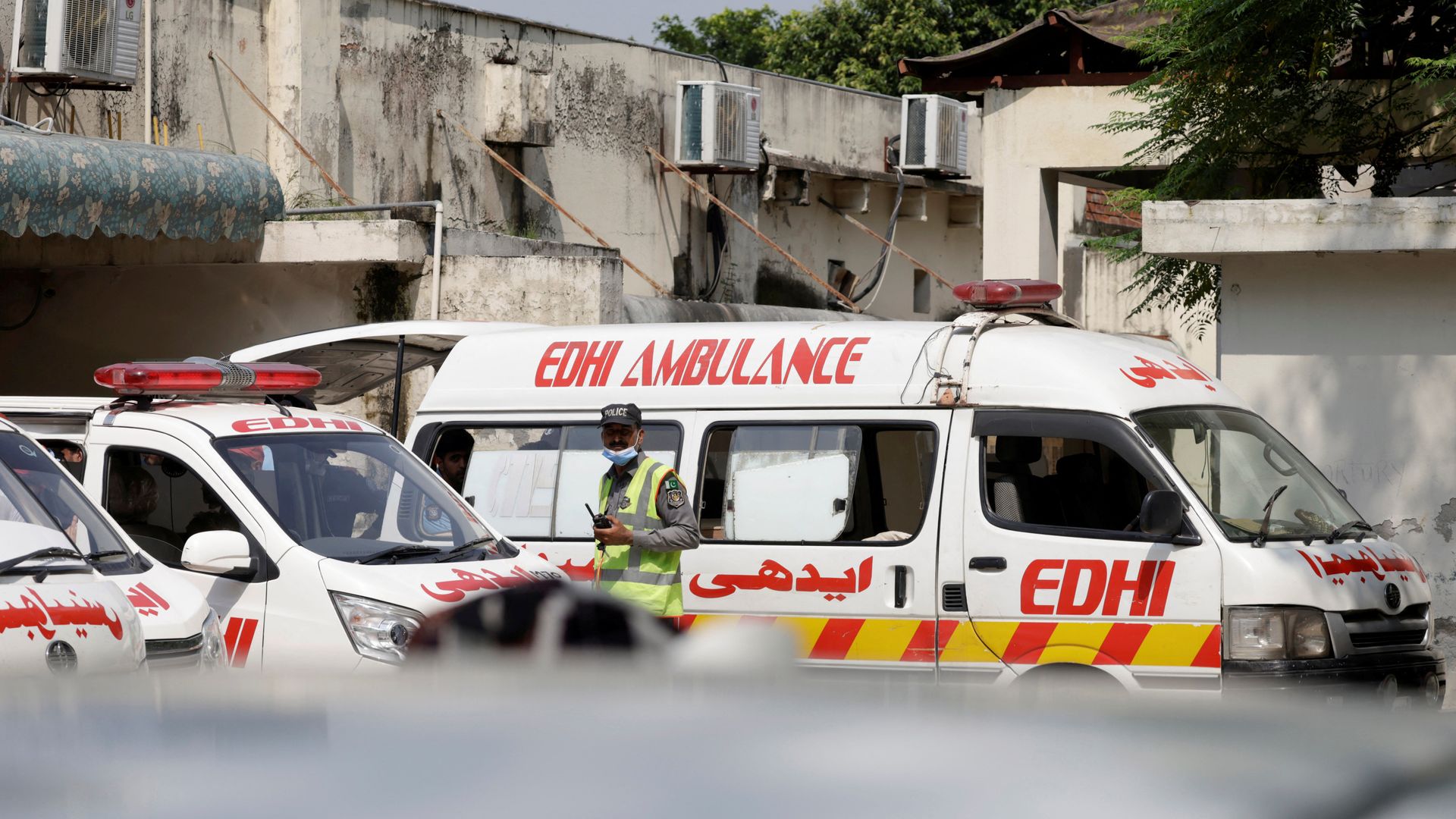
At least fourteen newborn babies died after a devastating fire swept through the neonatal nursery of the Pakistan Institute of Medical Sciences in Islamabad. The tragedy unfolded on the third floor of the Mother and Child Health ward, transforming a state-run medical facility into a site of unimaginable grief. While initial official reports point to an air-conditioning compressor explosion or an electrical short circuit, the underlying failure extends far beyond a mechanical malfunction. It exposes a systemic breakdown in emergency preparedness, equipment maintenance, and basic oversight within critical public infrastructure.
The blaze ignited shortly before dawn, trapping vulnerable infants who relied entirely on external life support and regulated environments. Out of sixteen newborns housed in the unit, rescue workers managed to pull only a single infant from the smoke and flames. The remaining children succumbed to severe burns and asphyxiation. Prime Minister Shehbaz Sharif quickly announced a high-level inquiry, yet families of the victims and medical professionals demand to know how a premier federal institution in the capital allowed a routine climate control unit to become an instrument of mass fatality. In related updates, read about: Inside the Tokyo Power Play Behind Sanae Takaichi s Impending Cabinet Shakeup.
The Anatomy of a Preventable Disaster
Hospitals are engineered to be sanctuaries, yet neonatal intensive care units represent exceptionally volatile environments. These spaces combine high concentrations of supplemental oxygen with continuous electrical loads from incubators, monitors, and ventilation systems. When infrastructure lacks rigorous preventive maintenance, disaster follows a predictable trajectory.
An air conditioner compressor failure does not happen in a vacuum. It is usually the endpoint of deferred maintenance, substandard replacement parts, or overloaded circuits running on aging grids. In many public healthcare facilities across developing urban centers, technical staff face severe budgetary constraints. Routine safety audits are routinely delayed, and fire suppression systems often fail to meet international standards. Reuters has also covered this critical subject in extensive detail.
When the smoke cleared at the Islamabad facility, investigators found an absence of immediate automatic suppression mechanisms within the enclosed nursery. Without compartmentalized fire barriers or direct chemical suppression triggered by smoke detection, flames moved through the confined space faster than human responders could react.
Structural Neglect in Public Healthcare
Public sector hospitals shoulder an overwhelming patient volume, stretching physical infrastructure far beyond design capacity. The Mother and Child Health ward at the facility regularly operates at multiple times its intended occupancy. Hallways overflow with patients, and specialized units like the neonatal nursery are forced to crowd incubators closer together to accommodate desperate demand.
This overcrowding introduces critical hazards. Extension cords, improvised wiring, and overloaded wall sockets become common workarounds when infrastructure fails to keep pace with clinical needs. Every added connection increases resistance and heat generation inside walls and ceiling panels.
[Aging Electrical Grid]
       │
       ▼
[Overloaded Circuits & Substandard AC Units]
       │
       ▼
[Rapid Ignition in Oxygen-Rich Neonatal Ward]
       │
       ▼
[Delayed Manual Response & Zero Compartmentalization]
When an electrical fault sparks inside a room sealed to protect fragile infants from outside pathogens, smoke accumulates instantly. The architectural design of many older government hospitals lacks dedicated smoke evacuation shafts or specialized positive-pressure ventilation valves that could prevent toxic fumes from blanketing intensive care beds.
The Accountability Vacuum
Every major institutional fire triggers a familiar ritual of state grief, immediate suspensions, and promises of systemic reform. High-ranking officials issue statements condemning the loss as an irreparable catastrophe, while investigative committees are given strict deadlines to file reports.
Yet, historical precedent shows that accountability rarely extends beyond low-level administrative scapegoats. Maintenance contractors, procurement officers who cleared substandard electrical hardware, and oversight bodies that skipped mandatory safety certifications often escape rigorous prosecution.
For the parents standing outside the gates waiting for news, bureaucratic inquiries offer cold comfort. True reform requires shifting safety protocols from reactive investigations to continuous, independent monitoring. Independent third-party safety audits must possess the legal authority to shut down hazardous wards immediately, regardless of political pressure or patient volume constraints.
Protecting the Most Vulnerable
Preventing future tragedies requires a fundamental redesign of neonatal architecture. Modern standards mandate fire-resistant building materials, thermal-break doors, isolated electrical zoning, and automated gaseous fire suppression systems that extinguish electrical fires without depleting the ambient oxygen needed for manual resuscitation.
Furthermore, evacuation protocols for non-ambulatory infants must be practiced with the same rigor as fire drills in high-risk industrial plants. Staff members need specialized rapid-extraction pods capable of shielding newborns from radiant heat and smoke during transit out of danger zones.
As political leaders review the findings of the latest inquiry committee, the core question remains whether systemic funding will finally target foundational safety upgrades. Until infrastructure modernization matches the advanced medical care provided inside hospital walls, neonatal wards will remain vulnerable to the catastrophic failures of the very buildings designed to protect them.


