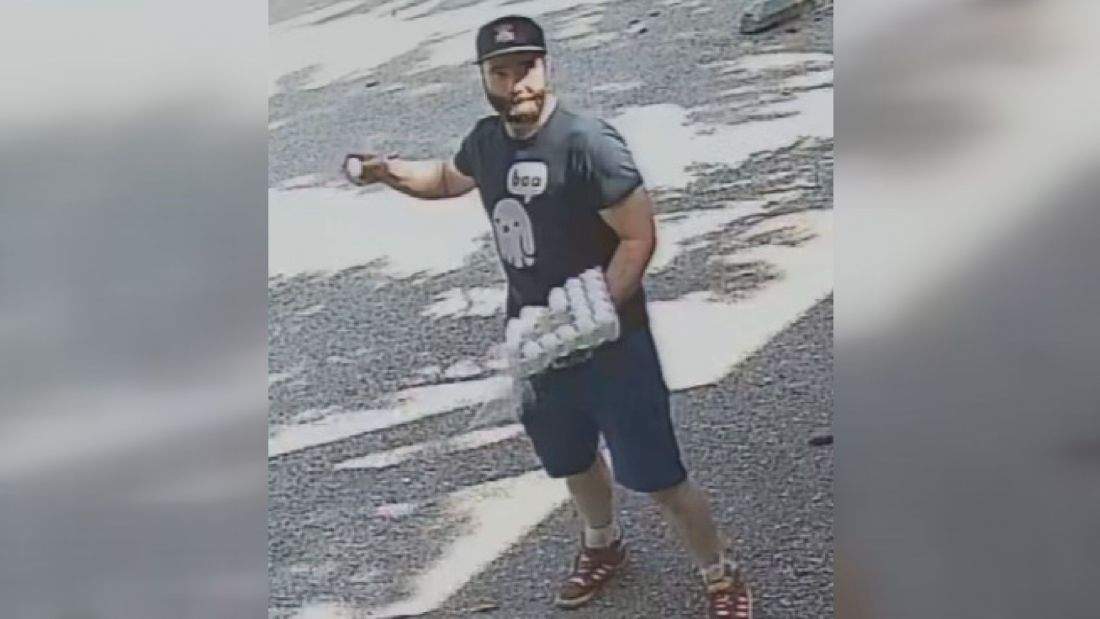
The security camera footage from Congregation Agudas Israel in Saskatoon captures a mundane act weaponized into intimidation. Around 11:30 a.m. on Saturday, August 1, 2026, while congregants gathered inside for their Shabbat prayer service, a man approached the building on the 700 block of McKinnon Avenue South with a carton of eggs. He proceeded to hurl them directly at sections of the structure and multiple vehicles parked outside. Days later, the Saskatoon Police Service released surveillance images of the suspect in an effort to identify him, laying bare the vulnerability faced by faith-based institutions operating in an increasingly hostile climate.
The public release of the suspect's photo offers a distinct window into the mechanics of modern localized investigations. Law enforcement waited several days after reviewing the footage before making the imagery public, a standard investigative delay often utilized to exhaust internal database checks or run preliminary tips quietly. Investigators describe the suspect as a man with short brown hair and a dark-coloured beard. At the time of the incident, he wore a black baseball cap alongside a black graphic t-shirt featuring a white ghost and the word "boo". This specific visual identifier—the graphic tee—represents the kind of tangible detail detectives rely upon when digital footprints run cold.
Community leaders, however, argue that reducing the incident to a simple act of late-morning mischief misses the broader atmospheric pressure bearing down on religious minorities. Rabbi Claudio Jodorkovsky, who was leading the active service inside when the property was struck, faced an immediate community fallout that extends far beyond the physical cleanup of eggshells on glass windows. When places of worship transform from sanctuaries of quiet reflection into crime scenes requiring police tape, the psychological toll outlasts the physical damage.
Vandalism directed at religious infrastructure rarely occurs in a vacuum. According to statistical indicators compiled across Canadian law enforcement reporting over recent cycles, a disproportionate percentage of religiously motivated hate incidents target the Jewish community specifically. While property damage like egging or spray painting is often legally categorized under mischief, criminologists note that targeting an active congregation during a holy day service alters the intent. It shifts the act from random urban disorder to targeted harassment designed to maximize visibility and fear among those inside.
The response from Congregation Agudas Israel has been measured yet resolute. Leadership confirmed plans to bolster physical security measures in the wake of the long weekend disruption, an unfortunate economic and logistical necessity for modern synagogues, mosques, and churches alike. Upgrading closed-circuit camera networks, reinforcing perimeter defenses, and coordinating directly with municipal police intelligence units have become baseline operational costs for institutions that previously prided themselves on open, welcoming doors.
Police are urging anyone with relevant information, dashcam footage from the surrounding neighborhood, or knowledge matching the suspect description to contact the Saskatoon Police Service or submit an anonymous tip through Crime Stoppers. As the investigation continues to unfold on the prairies, the primary question remaining for local authorities is whether this individual acted as a lone agitator responding to broader social frictions or part of a coordinated local nuisance pattern. Until an arrest is made, the security cameras rolling on McKinnon Avenue remain the primary witness to an escalation that local residents never expected to reach their doorstep.