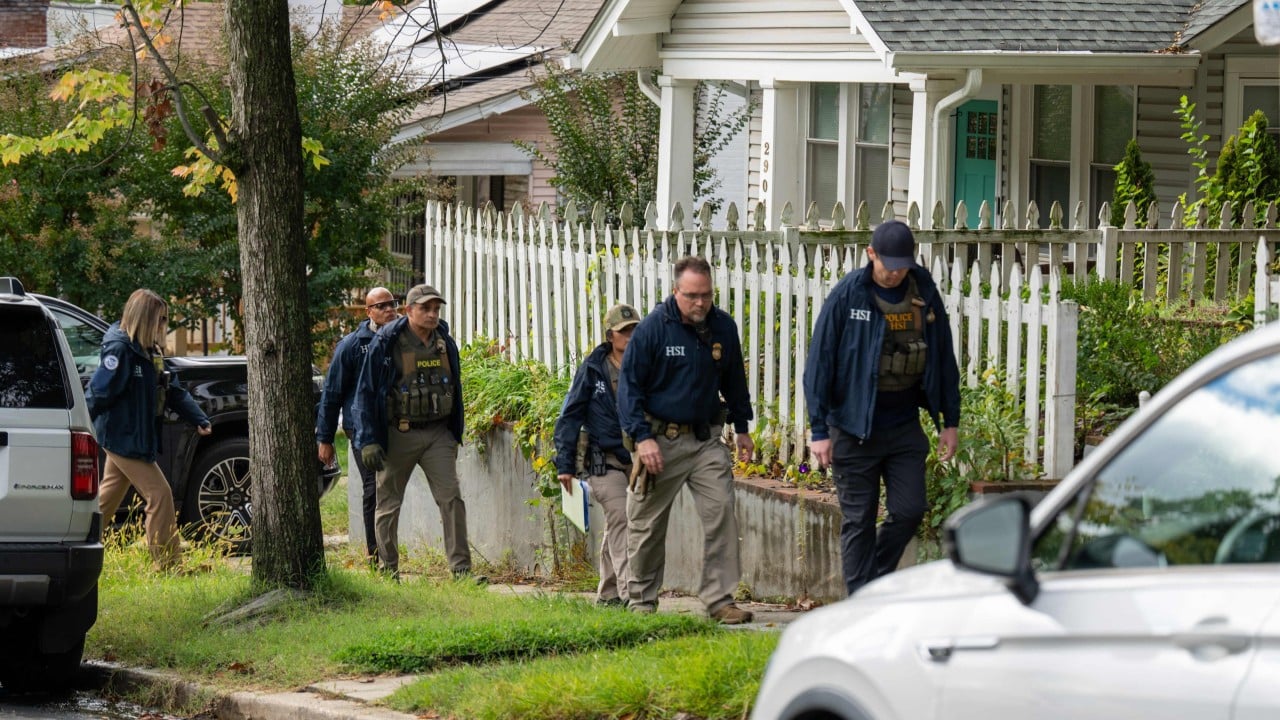
Federal agents with Homeland Security Investigations searched Representative Ilhan Omar's Washington, D.C. residence on October 12, 2026, three weeks before the midterm elections. The operation was part of an ongoing Justice Department criminal investigation reportedly focused on childhood immigration paperwork, yet Omar has not been charged with a crime.
Anyone who has covered federal enforcement long enough recognizes the anatomy of a high-profile search. When agents block off a street in the early morning hours and carry out boxes of electronics, notebooks, and personal documents, the headline writes itself. What gets lost in the rush to file breaking alerts is the quiet collision between criminal procedure, congressional protections, and electoral timing.
A search warrant is not a conviction. It is a judicial finding of probable cause based on a one-sided presentation by investigators. Treating a raid as proof of guilt is lazy journalism; treating it as pure political theater without examining the legal mechanics is just as careless.
What Happened Behind Closed Doors on October 12
According to reporting on the operation, up to two dozen agents spent four to five hours inside the home. Investigators seized devices and physical items—including cell phones, a laptop, notebooks, a passport, and other materials logged in the seizure inventory.
Omar has pushed back sharply on the scope and necessity of the search. She argued in subsequent interviews that sending a large team to raid a residence primarily to collect electronic devices made little sense, calling the early-morning execution obnoxious and asserting that she has done nothing wrong.
From an investigative standpoint, however, large-team searches of residences are often driven by chain-of-custody and digital forensics rules rather than sheer manpower needs. Agents must document every room, maintain continuous observation so evidence cannot be altered or claimed as planted, and secure devices while they are powered down or locked. That administrative rigor looks dramatic from the sidewalk, even when the underlying warrant targets specific categories of records.
Why Timing Before an Election Draws Scrutiny
Executing a high-profile search on October 12 put the Justice Department squarely inside the traditional 60-day window preceding the November midterms. For decades, informal department norms discouraged overt investigative moves against political candidates during that stretch unless specific operational justifications existed.
Department filings stated that the attorney general approved the search and denied that election timing motivated the action. Omar easily won reelection anyway, which blunted any immediate electoral impact in her Minnesota district.
Still, timing matters for institutional credibility. When senior administration figures—including President Donald Trump and Vice President JD Vance—have publicly accused Omar of immigration fraud, any overt step near an election invites suspicion that politics and prosecution are running on the same track. Even when a warrant is legally valid, optical missteps erode public trust in prosecutorial independence.
Congressional Guardrails and Legal Friction
Searching the home of a sitting member of Congress introduces friction that rarely appears in ordinary white-collar or fraud probes. U.S. Magistrate Judge Matthew Sharbaugh authorized the warrant with specific restrictions tied to Omar's status as a lawmaker.
Those guardrails are designed to prevent executive branch overreach from chilling legislative work or exposing privileged communications. Disputes quickly emerged over whether those rules were respected—Omar's legal team alleged that the government failed to provide required notices and initially blocked her from reaching counsel as the search began, allegations the Justice Department rejected as false.
When executive investigators and defense counsel offer flatly contradictory accounts of what happened at the threshold of a lawmaker's home, unsealed court records become the only reliable referee.
In federal court, judge-imposed search protocols exist for a reason. If investigators step outside authorized boundaries, defense attorneys can move to suppress seized evidence or challenge the handling of digital media during taint or privilege reviews.
The Battle Over Unsealing the Warrant Records
More than a month after the search, news organizations pressed for access to the warrant and related filings, invoking the public's right to understand how federal power was exercised against an elected official. Chief U.S. District Judge James Boasberg signaled that portions of the search warrant records would be unsealed with proposed redactions, while keeping the underlying affidavit sealed for now.
Justice Department lawyers argued that the warrant was not yet fully executed because agents were still reviewing seized materials, warning that premature disclosure could compromise an active probe. Judge Boasberg pushed back on aspects of that resistance, noting that several filings dealt with legal questions rather than witness identities or raw investigative evidence.
He also pointed to a glaring tension in the government's posture. Prosecutors declined to share basic details such as the statutes under investigation in court, even while top officials in the administration spoke openly about alleged immigration fraud in public remarks. Government attorneys replied that career prosecutors do not control what senior officials say outside court.
That exchange captures the central contradiction of modern high-profile inquiries. Leaks and political commentary run hot in public, while formal court filings remain tightly guarded behind claims of investigative secrecy.
Childhood Paperwork and the Burden of Proof
Reports surrounding the probe have pointed toward immigration records from when Omar was a child. Evaluating any allegation involving childhood documentation requires looking past partisan talking points to the actual legal standards.
To sustain a criminal charge in federal court, prosecutors must prove specific statutory elements beyond a reasonable doubt—not merely point to discrepancies, confusion, or old family records. Decades-old paperwork often involves third parties, parents or guardians who made decisions when a child was a minor, and agency files that are incomplete or inconsistent.
Hypothetical example: Suppose an investigator reviews a naturalization or entry packet from the 1990s and spots a conflicting date or spelling variation. Standing alone, an inconsistency is a lead, not a crime; prosecutors still have to establish knowing misrepresentation or fraud under the applicable statute and statute-of-limitations rules.
Omar's camp has dismissed the allegations behind the inquiry as fabricated and politically driven, while administration officials have argued that no one is above scrutiny. Until charging decisions are made—or the case closes without charges—the public is left watching a tug-of-war between aggressive enforcement and unproven accusations.
What to Watch Next
A search warrant is a chapter in an investigation, not the final word. Watch the docket closely as proposed redactions are submitted and reviewed, because even heavily edited court orders can clarify the legal disputes over congressional protections and search limits.
Pay close attention to whether federal prosecutors ever bring formal charges or quietly let the matter fade once digital reviews conclude. In Washington, the loudest raids often end with the quietest outcomes, and only the court record tells the whole story.