When military installations designed for global superpower projection intersect with domestic counter-terrorism investigations, the friction exposes deep structural vulnerabilities in how host nations manage foreign forces on their soil. British air bases utilized by the United States Air Force sit at the center of a complex web of international security friction, heightened counter-intelligence scrutiny, and regional escalation involving Iran. These facilities are not isolated islands of allied cooperation. They are high-value targets operating within sovereign European territory, creating profound legal, operational, and security challenges that extend far beyond standard base defense.
The core question centers on how strategic staging posts used for long-range air power and refueling missions during Middle East contingencies become focal points for domestic security probes. When counter-terrorism investigators turn their attention toward the perimeter fences of these installations, it reveals a systemic clash between allied military necessity and local law enforcement oversight. Foreign military personnel operate under specific jurisdictional frameworks that often complicate rapid domestic threat assessment, leaving gaps that hostile intelligence services and non-state actors actively probe.
The Architecture of Allied Basing
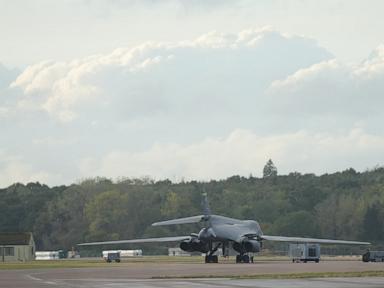
Understanding why these facilities attract intense security scrutiny requires examining the foundational architecture of the Anglo-American defense relationship. Decades of mutual strategic alignment have embedded United States Air Force units deep inside British military infrastructure. Stations such as Royal Air Force Lakenheath and Royal Air Force Mildenhall in Suffolk, along with Royal Air Force Fairford in Gloucestershire, function as forward-operating nodes for strategic bombers, aerial refueling tankers, and tactical fighter wings.
These locations are chosen for their proximity to European theaters and Middle East operational zones. Yet, their operational tempo creates an extraordinary logistical footprint. Thousands of American service members, civilian contractors, and dependents live and work in these communities. This creates an open environment where classified logistics, maintenance schedules, and deployment patterns intersect with civilian populations.
The legal bedrock governing these installations is rooted in historical agreements, primarily the NATO Status of Forces Agreement and bilateral understandings dating back to the Cold War. Under these frameworks, criminal jurisdiction and base security responsibilities are divided between the Ministry of Defence Police and United States Air Force security forces. This division is not always clean. When a security breach occurs, or when intelligence agencies intercept communications pointing toward a domestic threat actor targeting a military installation, jurisdictional handoffs can introduce dangerous delays.
The Middle East Shadow War and European Exposure
Regional flashpoints thousands of miles away directly shape the threat matrix facing British domestic security. When tensions flare in the Middle East involving Iran and its network of regional proxies, the operational status of these British-hosted air bases shifts immediately. Long-range bomber deployments and tanker sorties launch from British runways to project power across distant theaters.
This operational reality transforms quiet rural counties in England into critical nodes in active geopolitical conflicts. Hostile states and transnational militant networks recognize this dynamic. Intelligence services linked to adversary nations maintain active surveillance networks across Europe, constantly seeking to map the vulnerabilities of allied military assets.
Counter-terrorism investigators looking into threats against these air bases typically focus on three distinct vectors: electronic espionage, physical penetration of restricted zones, and insider recruitment. The vast supply chains supporting modern tactical aircraft involve numerous private contractors and civilian workers. Monitoring every individual with access to sensitive areas presents an immense challenge for intelligence services. When an investigation uncovers suspicious surveillance activity, unauthorized drone flights over restricted airspace, or attempts to probe base perimeters, it signals that adversary states view these installations as soft flanks in the broader Western security apparatus.
The Mechanics of Perimeter Defense and Jurisdictional Friction
Securing a modern military airfield is an exercise in managing infinite variables. Vast acreage, long runways, and extensive weapons storage areas require continuous monitoring. Yet, the boundary between military jurisdiction and civilian law enforcement remains a persistent weak point.
When Ministry of Defence Police officers patrol the outer perimeter, they operate under British law. Step inside the gate, and American military law enforcement takes primary responsibility. Adversaries and threat actors study these seams. Coordinated activist groups have frequently tested these boundaries through direct action protests, highlighting perceived deficiencies in perimeter security. While activists use civil disobedience to draw attention to foreign policy decisions, their actions inadvertently expose the exact tactical blind spots that sophisticated state-sponsored saboteurs or terror cells might exploit.
Furthermore, the rise of commercial drone technology has transformed base defense into a constant guessing game. Unidentified unmanned aerial systems frequently trigger security protocols near sensitive installations. Determining whether a drone flight is operated by an inquisitive hobbyist, a corporate intelligence gatherer, or a hostile operative conducting pre-operational surveillance requires immediate, resource-intensive investigation. Local police forces and military intelligence often find themselves stretched thin responding to multiple false alarms while real threats probe elsewhere.
The Human Element and Insider Threats
Beyond physical perimeters and electronic surveillance lies the most persistent vulnerability in military security: the human factor. Modern air bases rely on complex hierarchies of enlisted personnel, officers, intelligence analysts, and civilian contractors. The pressure cooker of high-tempo deployments during active international crises creates psychological strain, financial vulnerability, and operational fatigue.
Counter-terrorism probes involving military installations frequently originate from digital footprints. Encrypted messaging applications, radicalization pathways, and unauthorized data exfiltration represent modern security nightmares. An individual with legitimate security clearance who becomes disaffected or compromised can bypass physical perimeter defenses entirely.
Intelligence agencies dedicate significant resources to vetting personnel, but absolute security is an illusion. The sheer volume of data processed daily at major air bases means that anomalous behavior can easily hide in plain sight. When investigators trace a security breach or a potential terror plot back to an insider connection, it forces a painful internal reckoning within both the United States military hierarchy and British law enforcement agencies.
The Strategic Price of Global Power Projection
Hosting foreign strike assets carries an inherent security tax. For the British public, the presence of powerful allied air wings offers strategic deterrence and reinforces international alliances. However, it also imports foreign conflicts directly onto domestic soil.
The intersection of a terror probe with a strategically vital air base serves as an uncomfortably clear reminder that geographical distance from a conflict zone offers little protection in an interconnected world. Adversaries do not need to strike primary theaters to disrupt military operations; targeting the logistics, intelligence nodes, and staging posts in allied nations achieves similar strategic disruption.
As long as global power competition dictates the continuous operation of forward-deployed air bases, the delicate balance between openness and security will remain under severe strain. The investigations that occasionally break into public view are merely the visible tip of an ongoing, silent conflict fought along the perimeter fences and within the data networks of installations that shape the balance of international power. The vulnerabilities are structural, permanent, and resistant to simple fixes