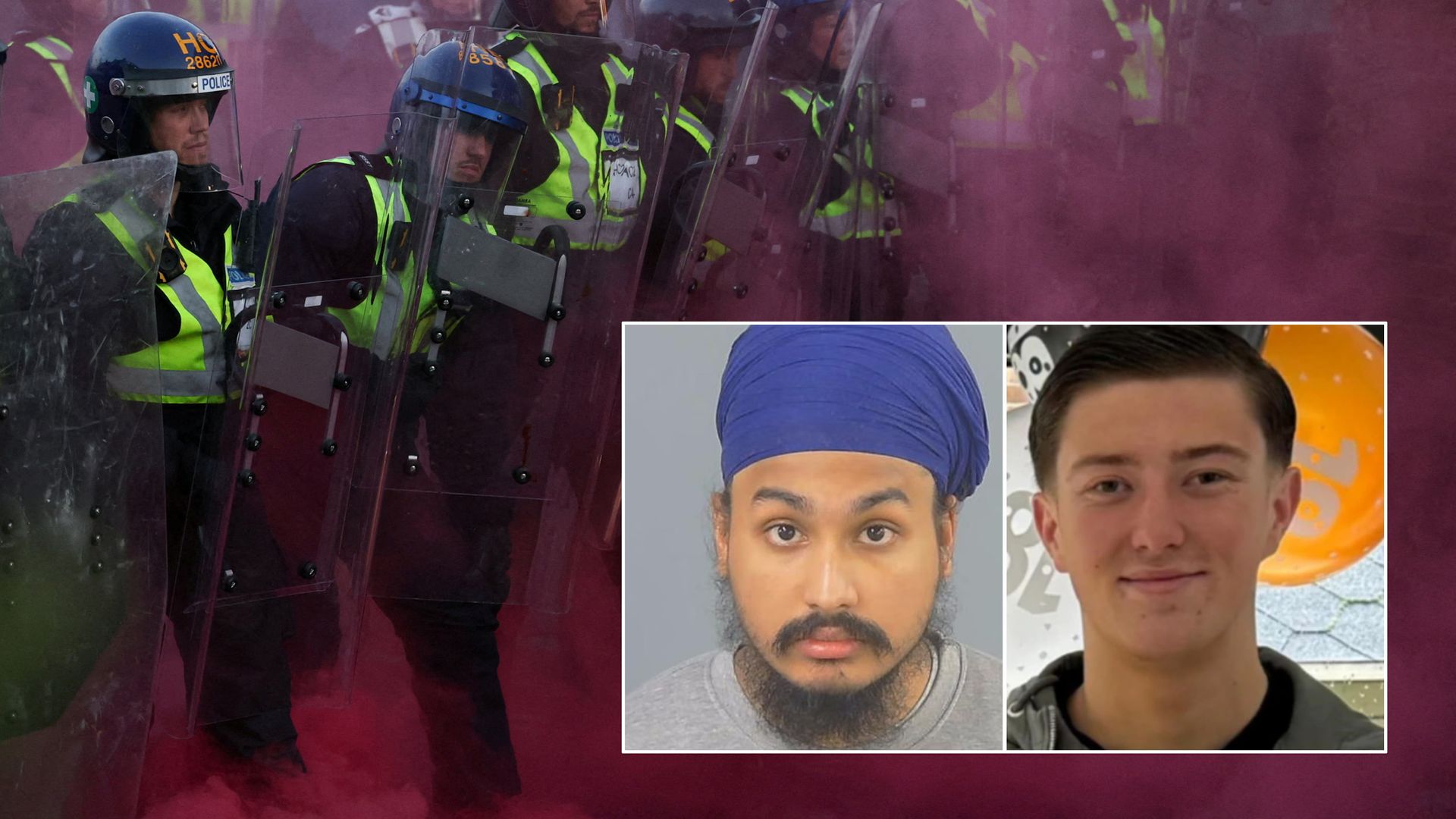
The fatal stabbing of 18-year-old finance student Henry Nowak in Southampton did not end when his heart stopped beating in the mud. It escalated into an institutional disaster the moment the Hampshire and Isle of Wight Constabulary pressed steel handcuffs onto the wrists of a dying boy while his killer, Vickrum Digwa, stood by unsearched, unhandcuffed, and entirely believed.
This is not a simple story of a street fight gone wrong or a routine operational error. The release of damning police bodycam footage has exposed something far deeper: a systemic paralysis within modern British policing, where tactical judgment has been entirely sublimated by a fear of racial controversy. The primary failure occurred because frontline officers accepted a fabricated allegation of racism from a compliance-obsessed suspect, transforming a clear-cut murder scene into an upside-down reality where the victim was treated as the criminal.
The Fatal Inversion of Reality
When responding officers arrived at the residential street in December 2025, they found a chaotic scene. They did not arrive with an open, analytical mind. They arrived under the influence of a narrative frame established by the initial emergency call, which was weaponized by Digwa’s family.
Digwa, 23, had used a 21-centimeter ceremonial kirpan to stab Nowak five times. Yet, as Nowak lay on his back bleeding internally, Digwa calmly told officers that he was the actual victim. He claimed Nowak was an aggressive drunk who had shouted racial slurs and torn off his turban.
The bodycam footage captures a terrifying display of cognitive bias.
- Nowak states nine separate times: “I’ve been stabbed.”
- He gasps that he cannot breathe.
- A male officer dismisses him entirely, responding: “Don’t think you have, mate.”
Instead of administering immediate first aid or checking for wounds, officers pulled Nowak along the ground, forced his hands behind his back, and read him his rights. While Nowak lost consciousness—his hands turning deathly pale from catastrophic blood loss—Digwa was escorted to a kitchen to choose what he wanted to eat.
The contrast is obscene. It represents a total collapse of basic investigative tradecraft. Officers allowed an unverified verbal accusation to completely override observable, physical distress.
The Institutional Fear Factor
To understand why these officers ignored a dying man's pleas, one must look at the culture under which they are trained. For more than a decade, British police forces have been battered by justified criticisms of institutional bias. However, the pendulum has swung into a dangerous territory where the fear of being labeled racist has created tactical paralysis.
Digwa knew exactly how to exploit this vulnerability. By instantly framing the altercation as a racially motivated hate crime directed at his Sikh faith, he triggered a psychological tripwire in the responding officers. To question Digwa’s story on the spot required a level of professional confidence that modern, micro-managed officers simply do not possess. It was safer for their careers to immediately secure the alleged "racist aggressor" than to rigorously cross-examine the minority complainant.
The Independent Office for Police Conduct (IOPC) is currently investigating whether a fear of racial blowback directly influenced the officers' decisions. But the street-level reality is already clear. The officers prioritized ideological protocol over basic medical assessment. They were so busy managing the optics of a potential hate crime that they failed to notice a teenager was bleeding to death right in front of them.
The Weaponization of Cultural Exemptions
Beyond the failures of the police, the Nowak case exposes a massive legal gray area that UK politicians have avoided for decades: the public carrying of bladed articles under religious exemptions. Under current British knife laws, exceptions are carved out for the kirpan, a ceremonial dagger carried by baptized Sikhs as an article of faith.
The trial shattered the defense that this was a peaceful religious observance. Prosecutors proved that Digwa was obsessed with weapons and viewed his blade not as a holy symbol, but as a tactical advantage. He used a sacred exemption to walk the streets of Southampton with a lethal 8-inch weapon.
+-----------------------------------+-----------------------------------+
| Pro-Exemption Argument            | Counter-Exemption Argument        |
+-----------------------------------+-----------------------------------+
| Centuries of peaceful tradition   | Proliferation of knife crime      |
| protected by religious freedom    | demands zero-tolerance policies   |
| laws.                             | for all public bladed weapons.    |
+-----------------------------------+-----------------------------------+
| Stripping the right punishes an    | Public safety must supersede      |
| entire community for the crimes   | religious privilege when lethal   |
| of one rogue individual.          | weapons are involved.             |
+-----------------------------------+-----------------------------------+
This legal loophole has now become an explosive political flashpoint. Political factions are capitalizing on the tragedy to demand an outright ban on all public blades, regardless of religious context. The challenge is that changing the law does nothing to address the core issue: a violent individual will always find a way to secure a weapon. The real failure was the state's inability to protect a citizen when that weapon was used.
Anatomy of a Political Hijacking
The street violence that erupted outside Southampton Central Police Station shows how quickly institutional incompetence can be converted into civil unrest. Activists and political figures flooded the city, turning a profound systemic failure into a binary racial war.
Protesters marched into residential neighborhoods, throwing bricks, bottles, and wheelie bins at police lines. They chanted Nowak’s final words, "I can't breathe," deliberately mirroring global anti-police movements but reversing the racial dynamics to claim that white citizens are now "second-rate" in their own country.
This reaction is exactly what Henry Nowak’s family begged the public to avoid. His father, Mark Nowak, explicitly stated that his son's death should not be used to sow division or hatred. Yet, the political machinery of the hard right does not care about a grieving father's wishes. They recognize that the bodycam footage is the most potent recruiting tool they have received in years.
When the state fails so completely to provide basic justice and protection on the street, it creates a vacuum. That vacuum is never filled by moderate voices; it is filled by the loudest, most radical elements of society.
The Path to Rebuilding Street Authority
Hampshire police command has retreated behind the defensive shield of medical technicalities. Deputy Chief Constable Robert France pointed to forensic pathology reports showing that Nowak's wounds were internal and extensive, meaning he likely would have died regardless of the handcuffs.
This argument is an insult to the public's intelligence. It misses the entire point of the crisis. The issue is not whether Nowak could have been saved by a thoracic surgeon; the issue is that his final moments of life were stripped of all basic human dignity by the very people paid to protect him. He died treated as a violent criminal while his murderer was treated like a guest.
To fix this, police forces must abandon the culture of defensive box-ticking. Frontline officers must be retrained to prioritize immediate, objective physical evidence over verbal narratives. If a man says he has been stabbed, you look for blood; you do not check his identity or analyze his speech for potential microaggressions.
The Independent Office for Police Conduct must deliver an unvarnished verdict on the role that identity politics played in the Southampton tragedy. Anything less than total transparency will confirm the public's worst suspicion: that the British state is more concerned with managing racial optics than enforcing the law equally on its streets.