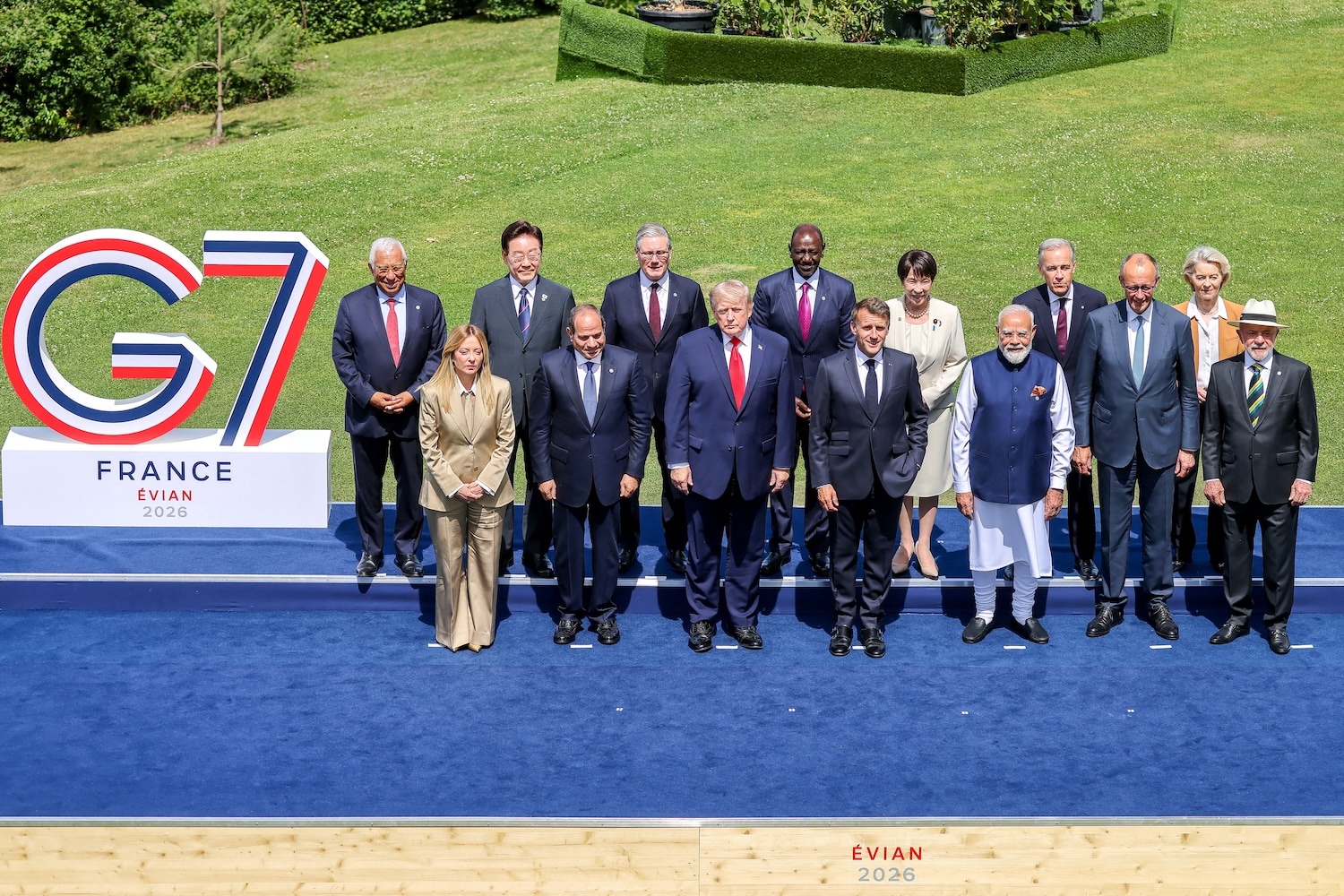
Prime Minister Narendra Modi used the G7 Outreach Session in Evian, France, to confront a escalating geopolitical contradiction directly, sitting right next to US President Donald Trump to demand accountability for the deaths of Indian seafarers killed by US military strikes in the Gulf of Oman. The primary tension here is clear: while Washington views its maritime blockades as essential foreign policy enforcement against Iran, New Delhi views the resulting collateral damage—specifically the killing of its civilian mariners—as an unacceptable breach of global trade security. This direct confrontation on the summit floor signals that India will no longer allow the human cost of Western blockades to be treated as mere fine print in regional conflicts.
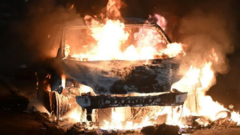
The confrontation comes after US Central Command forces disabled three commercial merchant vessels in early June: the Marivex, the Settebello, and the Jalveer. Washington alleged these ships were violating an American blockade by transporting Iranian oil. However, the operational reality of global shipping meant that while the capital or cargo might have been tangled in geopolitical crosshairs, the human labor on board was overwhelmingly Indian. When US forces struck the Palau-flagged Settebello, three Indian crew members died.
This turned a bureaucratic enforcement action into a diplomatic flashpoint.
The Illusion of the Safe Lane
Global supply chains rely on a legal fiction: that merchant sailors are neutral actors insulated from the ideological wars of nation-states. The reality dictates otherwise. India provides a massive percentage of the global seafaring workforce, meaning that whenever a choke point like the Strait of Hormuz becomes militarized, Indian nationals are effectively placed on the front lines.
[Global Shipping Flow]
       │
       ▼
[Strait of Hormuz / Gulf of Oman] ───► (Militarized Blockade Zone)
       │                                         │
       ▼                                         ▼
[Civilian Indian Seafarers] ◄──────────── [US Navy Strike Target]
   (Collateral Damage)                       (Sanctions Enforcement)
By bringing this issue directly to the G7 table, Modi exposed a fundamental friction within the current US-India strategic partnership. Washington routinely praises India as the linchpin of its Indo-Pacific strategy, a counterweight designed to keep sea lanes open and free. Yet, simultaneously, unilateral American military actions in West Asia are actively making those same sea lanes lethal for Indian citizens.
The Ministry of External Affairs in New Delhi had already summoned senior American diplomats twice to register formal protests before the summit. By escalating the matter to a personal, face-to-face intervention with Trump, Modi signaled that tactical maritime security cannot be separated from high-level diplomatic alignment.
Blue Collar Workers in Billion Dollar Crossfires
The mechanism causing this crisis is the structure of modern maritime commerce. A vessel might be owned by a European shell company, registered under a flag of convenience in Palau or Panama, carry cargo destined for East Asia, and be manned entirely by a crew from South Asia.
When the US Navy enforces an American blockade, the immediate targets are the physical hull and the economic value of the cargo. But the immediate victims are the crew members who have zero say in a ship’s routing or its compliance with unilateral Western sanctions. The US military argued its actions were necessary to disable vessels defying restrictions on Iranian ports. Trump later countered by accusing Iran of attempting drone attacks on shipping, trying to shift the blame for regional instability back to Tehran.
This rhetoric fails to address the underlying systemic vulnerability. Indian mariners are not political combatants. They are commercial workers operating under standard employment contracts. Treating their presence as acceptable collateral damage in a economic blockade undercuts the very rules-based order the G7 claims to defend.
The Hypocrisy of Global Trust
During his address, titled "Forging New Partnerships and Rebuilding International Solidarity," Modi focused heavily on the erosion of mutual trust among global powers. He argued that the international community is suffering from a trust deficit, where technology, supply chains, and maritime passages are increasingly weaponized rather than treated as shared global infrastructure.
This critique cuts deep into the current state of Western diplomacy. The G7 nations frequently call for unified international action to protect commercial shipping from non-state actors, such as insurgent drone strikes. Yet, when a G7 member state uses kinetic military force against merchant ships in international waters, the mechanism of international law remains silent.
┌───────────────────────────────────────────────────────────┐
│              The Choke Point Contradiction                │
├─────────────────────────────────────┬─────────────────────┤
│ Western Diplomatic Rhetoric         │ Operational Reality │
├─────────────────────────────────────┼─────────────────────┤
│ Protect freedom of navigation       │ Unilateral military │
│ and secure global supply chains.    │ enforcement zones.  │
├─────────────────────────────────────┼─────────────────────┤
│ Treat democratic allies as          │ Civilian crew treated│
│ essential strategic partners.       │ as collateral.      │
└─────────────────────────────────────┴─────────────────────┘
For India, this is an unsustainable double standard. New Delhi has refused to blindly endorse unilateral Western sanctions that harm its economic interests or jeopardize the lives of its citizens. The deaths of thirteen Indian nationals in West Asia since late February highlight the real-world cost of this policy divergence.
Beyond the Security Dichotomy
The standard diplomatic narrative framing India’s participation at the G7 focuses on trade deals and photo opportunities. Media coverage highlighted Modi’s bilateral encounters with UK Prime Minister Keir Starmer regarding the India-UK Vision 2035 roadmap, and his discussions with UAE President Sheikh Mohamed bin Zayed Al Nahyan over the brief closure of the Strait of Hormuz.
However, these economic agendas cannot function in a vacuum. A free trade agreement or an investment linkage is meaningless if the physical transport architecture connecting the nations is subject to unpredictable military strikes by allies.
Modi’s strategy at Evian indicates a shift toward a more transactional and defensive foreign policy. By using a high-profile global forum to challenge the US president on a sensitive military issue, India is drawing a clear red line. It will participate in global security frameworks, but it will not subsidize Western geopolitical blockades with the lives of its civilian workforce.
The future of Indo-US maritime cooperation depends on establishing strict operational guardrails that protect civilian mariners from unilateral enforcement actions. Until Washington acknowledges that its economic warfare has real, human consequences for its strategic partners, the rhetoric of a free and open Indo-Pacific remains a corporate slogan rather than a geopolitical reality.