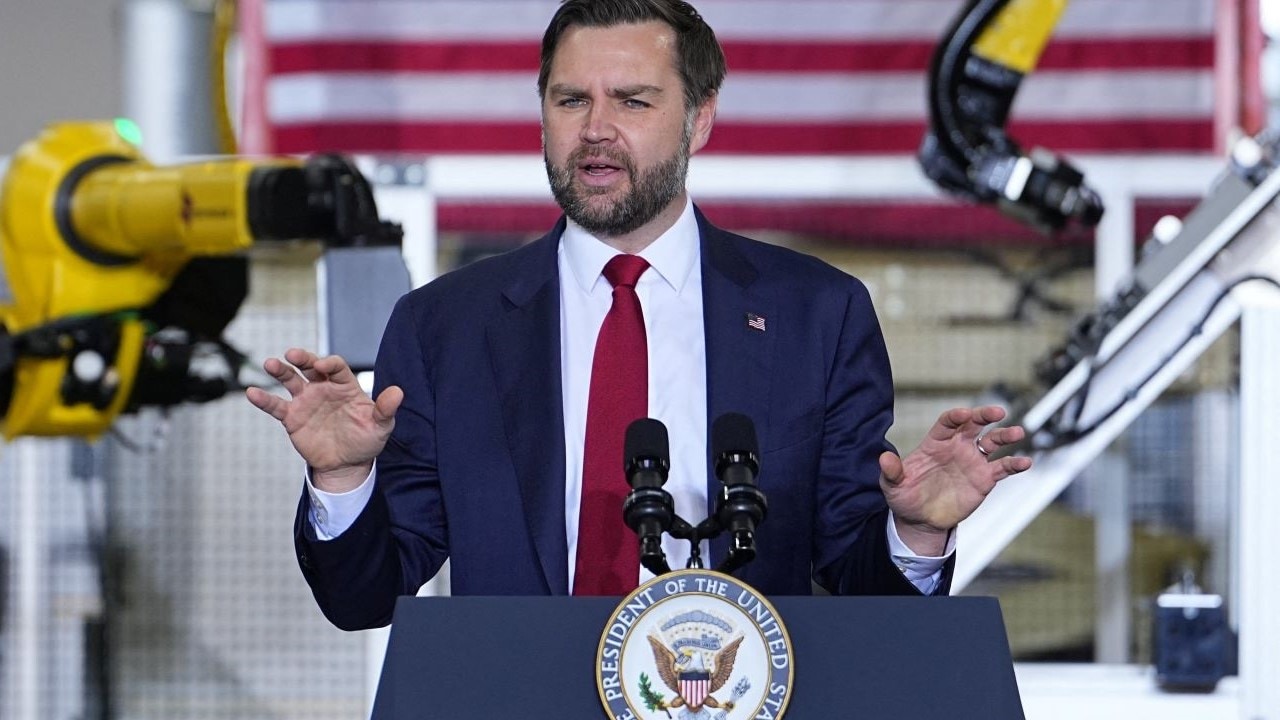
Vice President JD Vance and Energy Secretary Chris Wright are descending on the American Petroleum Institute this Thursday for a closed-door summit with the world’s most powerful oil executives. The objective is blunt and immediate: find a way to stop the bleeding at the gas pump before the 2026 midterms become a referendum on a domestic energy crisis. With gasoline prices jumping nearly 30 percent in a single month and Brent crude hovering near $110, the administration is effectively operating in a war-room capacity.
This is not a routine policy briefing. It is a desperate huddle triggered by the fallout of Operation Epic Fury, the U.S.-led strikes against Iran that have turned the Persian Gulf into a maritime graveyard. The logic of the meeting suggests the White House has realized that "drill, baby, drill" is a slogan, not a short-term logistical solution for a global supply chain that is currently physically blocked.
The Hormuz Chokepoint Reality
The math of the current crisis is dictated by a single, narrow stretch of water. Approximately 20 percent of the world’s liquid energy—crude oil and liquefied natural gas (LNG)—passes through the Strait of Hormuz. Following the February 28 strikes on Iranian soil, Tehran’s retaliation has been surgically focused on making this waterway impassable for commercial tankers.
The result is a stranded surplus in the Middle East and a vacuum in the West. While the administration has signaled a temporary 60-day waiver of the Jones Act to allow foreign-flagged ships to move fuel between U.S. ports, this only addresses domestic distribution. It does nothing to replace the millions of barrels of heavy crude currently stuck behind an Iranian naval blockade.
The Venezuela Gambit and the Infrastructure Lag
During the API meeting, Vance is expected to press for a status report on the administration's aggressive pivot toward Venezuela. Earlier this year, the White House outlined a $100 billion plan for American companies to rebuild the dilapidated infrastructure of PDVSA, Venezuela’s state-owned oil firm.
The strategy was simple: replace hostile Middle Eastern oil with geographically "safe" South American oil. However, as industry analysts have noted, you cannot simply flip a switch on a refinery that hasn't seen a spare part in a decade. The "total safety and security" promised by the administration in Caracas hasn't yet translated into a single extra gallon at a station in Michigan or Ohio.
Why the API Board is Hesitant
While the public narrative focuses on "cooperation," the relationship between the administration and the oil majors is transactional and tense. Executives from ExxonMobil, Chevron, and ConocoPhillips are expected to present Vance with a list of demands that go far beyond temporary shipping waivers.
- Long-term Regulatory Certainty: Companies are wary of committing billions to emergency production if the rules change after the next election cycle.
- Infrastructure Permitting: There is a massive bottleneck in pipeline capacity. Increasing production in the Permian Basin matters little if the oil is trapped in West Texas.
- The Refining Bottleneck: The U.S. is currently running at near-maximum refining capacity. Even if the U.S. produced an extra 2 million barrels tomorrow, the country lacks the physical hardware to turn it into gasoline quickly enough to lower prices by next week.
The Inflationary Spiral
The Federal Reserve is watching this API meeting as closely as the White House is. Energy costs are the primary driver of "sticky" inflation. When the cost of diesel spikes, the cost of moving every pallet of groceries in America spikes with it.
Market traders have already begun pricing in the possibility of Brent crude hitting $150 per barrel if the conflict in the Gulf extends into the summer. This would mirror the 1973 oil crisis, potentially forcing the Fed to raise interest rates at a time when the administration is demanding they be cut to stimulate the economy.
The Midterm Shadow
Politics is the silent participant at the table. Vance told a crowd in Michigan this week that the price spike is a "temporary blip," but the data suggests otherwise. AAA reports that the national average for regular gas has climbed to $3.84, up from under $3.00 just a year ago.
The administration’s "couple of things" to be announced in the next 48 hours likely include another massive release from the Strategic Petroleum Reserve (SPR). However, the SPR is a finite tool. You can only drain the reservoir so many times before you are left with an empty tank and a more dangerous world.
The meeting on Thursday will determine if the U.S. oil industry is willing to step into the gap or if they will continue to prioritize shareholder buybacks over risky, rapid-expansion drilling. If Vance cannot secure a firm commitment for a production surge, the "rough road ahead" he mentioned may lead straight to a shift in congressional power this November.
Would you like me to analyze the specific impact of the Jones Act waiver on U.S. coastal shipping rates?