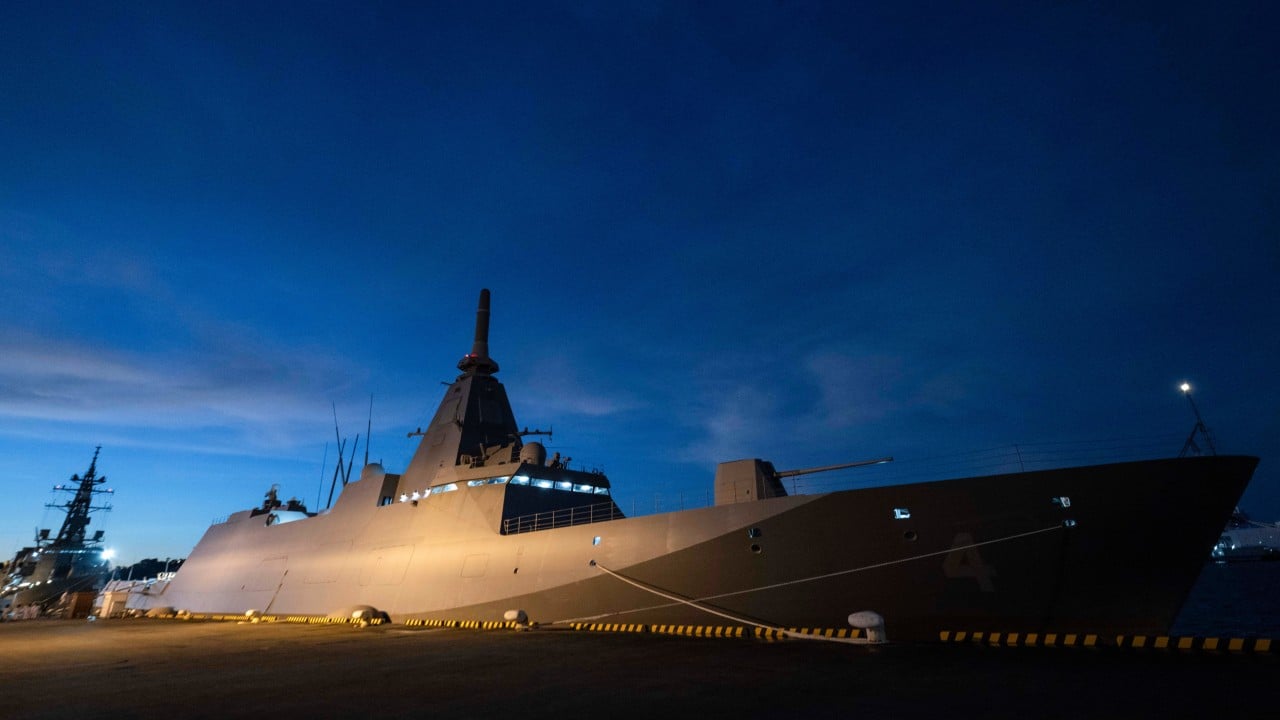
The United States Navy faces a mathematical crisis that no amount of rhetoric can conceal. Domestic shipyards, choked by chronic labor shortages, material bottlenecks, and a multi-year maintenance backlog, can no longer churn out surface combatants at the tempo required to match a rapidly expanding rival fleet. Out of this desperation, a radical policy shift has taken root. Washington is seriously weighing the unthinkable, which is purchasing major warships designed and initially built by foreign allies. At the center of this unprecedented transition sits Japan, whose advanced naval architecture and industrial precision have made it a primary contender to supply the U.S. surface fleet with a new generation of frigates.
This is not a casual procurement exercise. It is a calculated gamble born from the structural collapse of the domestic shipbuilding pipeline, highlighted most visibly by the premature truncation of the troubled Constellation-class frigate program. When a superpower known for ruling the high seas must look overseas for combatants, the baseline reality of modern maritime defense has fundamentally shifted.
The Anatomy of a Broken Industrial Base
Decades of consolidation have left the United States with a handful of major shipyards incapable of surging production during a strategic emergency. Yards that once built fleets with relative ease are now bogged down by acute skilled labor deficits and bloated procurement cycles. Warships linger in repair facilities for months past their scheduled completion dates, creating a crippling readiness deficit for the fleet.
The math is unforgiving. China's naval shipbuilding capacity operates at a scale that dwarfs American output, utilizing modern commercial-military integration to add hulls at an alarming rate. Washington cannot simply wish away this capacity gap. Throwing more money at domestic yards that lack the physical throughput has proven ineffective.
Recognizing this operational blind spot, the Pentagon initiated formal evaluations of allied frigate designs under a unique procurement framework. The strategy relies on a specialized technology transfer model. Up to two lead ships would be constructed in an allied shipyard to fast-track operational testing and fleet introduction, while the manufacturing blueprint, proprietary methods, and workforce training simultaneously transition to American soil for subsequent hulls.
Why Tokyo Fits the Blueprint
Among the contenders evaluated by naval planners, Japan’s 5,500-ton Mogami-class frigate stands out for several distinct operational advantages. Mitsubishi Heavy Industries and other Japanese defense contractors have mastered a serial production rhythm that American yards currently struggle to replicate. Keel-to-delivery timelines in Japan demonstrate a disciplined efficiency rooted in high levels of shipyard automation and modular construction techniques.
Consider the human element. The Mogami-class architecture requires a remarkably small crew, operating effectively with roughly 90 sailors compared to the 125 or more required for comparable legacy platforms. Multiply that manpower savings across a dozen hulls, and the reduction in personnel strain becomes a strategic asset for a U.S. Navy continuously grappling with recruitment shortfalls.
Furthermore, Japan offers proven interoperability. Because Tokyo has already established manufacturing momentum and secured international interest—including agreements to supply regional partners—its production lines are active, hot, and predictable. Importing the structural DNA of a Japanese design allows Washington to bypass years of preliminary design risks that routinely sink domestic defense acquisition programs.
The Political Minefield and Legislative Roadblocks
Yet, bridging the gap between operational logic and political reality remains a formidable hurdle. Federal law traditionally erects massive legal barriers against constructing naval warships on foreign soil unless specific national security waivers are invoked. Capitol Hill is predictably divided.
Key congressional committees have already pushed back against the initiative. Proposed legislative language in draft defense authorization bills seeks to block or strictly limit the allocation of federal funds toward foreign-built combatants, reflecting intense pressure from domestic labor unions and protective lawmakers. Critics argue that outsourcing even the lead hulls threatens domestic manufacturing capabilities and exposes sensitive defense technologies to international supply chain vulnerabilities.
Proponents of the foreign procurement model, however, point to recent precedents like the administration's icebreaker agreements with Finland and strategic foreign acquisitions in the commercial shipping sector as viable templates. The core argument rests on a stark ultimatum. If domestic yards cannot deliver hulls on time and within budget, relying on allied industrial powerhouses is the only remaining option to prevent a catastrophic erosion of American maritime dominance.
The Road Ahead for Pacific Deterrence
The timeline for this transition leaves very little room for bureaucratic delay. Assessments and budgetary allocations are moving forward, but the friction between executive branch urgency and legislative protectionism will dictate whether this foreign frigate framework survives its infancy.
If successful, the initiative will permanently alter how the world's premier naval power procures its instruments of war. It signals a shift from isolationist industrial pride toward a distributed allied ecosystem where shared capability matters more than domestic origin. The machinery is ready in shipyards across the Pacific, waiting for Washington to decide whether survival outweighs tradition.
The U.S. Navy is evaluating Japan's Mogami-class frigate alongside South Korean and Turkish designs to rapidly restore surface fleet capacity through an overseas-to-domestic technology transfer model.
US Navy eyes three foreign frigate designs to rapidly match China's