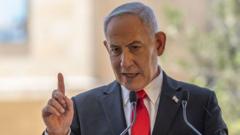
Israel moved quickly to honor six civilian passengers who helped avert catastrophe aboard FlyDubai Flight FZ1073, awarding them the Presidential Award for Civilian Heroism eight days after the September 30, 2026 midair attack. President Isaac Herzog presented the medals at the President's Residence in Jerusalem to Tali Manes, Zvika Manes, Yaniv Hayun, Dr. Shota Musayev, Asaf Rejwan, and Or Pardilov after a co-pilot attacked the captain on the Dubai-to-Tel Aviv route and sent the jet plunging.
Ceremonial medals make clean television. They flatter national pride and turn terrified travelers into folklore overnight. Yet the deeper story behind the FlyDubai flight incident sits uncomfortably beneath the applause, exposing hard truths about modern aviation security, cockpit vetting, and the bureaucratic lag between praising civilians and protecting them. You might also find this connected coverage insightful: The Anatomy of a Breakdown When Silence Fails the Room.
What Actually Happened Inside Flight FZ1073
Public summaries often flatten midair emergencies into a single heroic leap. Flight FZ1073 was far messier.
When the Omani co-pilot turned on Indian Captain Smit Machchhar on September 30, 2026, the aircraft lost stability and dropped sharply, subjecting the cabin to sudden G-forces while passengers heard shouting from the front of the cabin. Machchhar, despite being stabbed, managed to unlock the reinforced cockpit door so help could get in. As discussed in recent coverage by NBC News, the results are significant.
Ordinary passengers rushed forward into a space no civilian is trained to enter. Yaniv Hayun, a plumber from Ness Ziona, helped wrestle and restrain the attacker, then briefly grabbed controls in a manner he later said resembled television air-crash episodes before crew members took over. Dr. Shota Musayev, a dentist, moved in to tend to the wounded captain while Asaf Rejwan, Or Pardilov, Tali Manes, and Zvika Manes joined the physical struggle to subdue the assailant. Two off-duty pilots traveling on the jet then stepped in to fly the aircraft to an emergency landing in Tabuk, Saudi Arabia, saving all 174 people aboard.
Notice the chain of survival. No single passenger saved that airplane. A wounded captain opened the door. Six civilians piled into a confined space and absorbed physical risk. Off-duty pilots brought a battered operation back under control. Saudi ground personnel in Tabuk received a distressed jet and provided immediate medical care. Stripping that ecosystem down to a tidy national highlight reel distorts how survival actually worked at 30,000 feet.
The Insider Threat Problem Airlines Avoid Discussing
For more than two decades, post-9/11 aviation doctrine treated the cockpit door as an absolute boundary. Steel reinforcements, deadbolts, and strict access protocols were engineered to keep hostile outsiders out of the flight deck.
Flight FZ1073 exposed the blind spot in that architecture. The threat did not breach the door from the cabin. The threat already held the keys from the inside.
Insider attacks in commercial aviation are rare, which is precisely why airlines and regulators underinvest in continuous behavioral monitoring compared to perimeter screening. Background checks at hiring clear an applicant once. They do not track ideological drift, personal grievances, or radicalization months or years later—especially on regional routes linking different political and security environments.
Even more revealing was what happened after the jet landed. Israeli officials, including Prime Minister Benjamin Netanyahu and Defense Minister Israel Katz, rapidly framed the attack as a jihadist plot aimed at crashing the airliner. Meanwhile, UAE authorities opened a formal investigation, and Israeli President Herzog praised the UAE's inquiry while warning that a threat targeting Ben Gurion Airport could just as easily target any major international hub.
Two governments cooperating publicly on a shared nightmare still face an awkward structural reality. Cross-border aviation along newly normalized or politically sensitive corridors relies on shared trust, yet intelligence sharing, psychological screening standards, and prosecutorial transparency do not operate under a single rulebook. When an insider attack occurs on a foreign carrier serving a high-alert destination, finger-pointing is always waiting just offstage.
Medals Came Fast, Benefits and Accountability Lagged
Watch how states behave when a crisis hits. Political leaders love a photo op; bureaucracy hates liability.
Within days of the incident, Netanyahu met with Hayun and hailed him and Captain Machchhar. Eight days later, Herzog placed the Presidential Award for Civilian Heroism around the necks of the six Israeli passengers, even pledging to present the same honor to Machchhar once he recovered.
Yet behind the scenes, the machinery of state support stalled. Israel's National Insurance Institute initially told media outlets it could not extend assistance to survivors until the Defense Ministry formally classified the event as a hostile action. Defense officials said they were waiting on investigative findings before making that call. Only in early November—more than a month after the flight—did the Defense Ministry formally recognize the passengers as victims of a hostile incident, clearing the administrative hurdle for state benefits.
That gap matters. A civilian who wrestles a knife-wielding attacker inside a plunging cockpit does not experience trauma on a bureaucratic schedule. Medical bills, lost income, and psychological fallout arrive the week the plane lands.
Passengers also began pushing back on the institutional side. Roughly 100 travelers moved toward a potential class-action effort targeting FlyDubai and relevant Israeli and Emirati authorities over alleged security lapses that permitted the attack. Whether that litigation succeeds or stalls in jurisdictional disputes, it points to a growing demand among flyers: gratitude is not a substitute for verifiable oversight.
Why "Heroism" Can Mask Systemic Failure
There is a recurring trap in crisis coverage. When civilians improvise their way out of a disaster, commentators treat the outcome as proof of resilience rather than evidence of near-failure.
Think about what had to go right on Flight FZ1073 for 174 people to walk away. The captain had to survive an initial stabbing and still have the presence of mind to unlock the door. Passengers sitting near the front had to hear the commotion and react in seconds. Off-duty pilots had to be on that specific rotation. An airport in Saudi Arabia had to coordinate an emergency diversion smoothly.
Remove any single link in that chain and the headlines would have been written in past tense.
Aviation safety built its reputation over the last fifty years not by relying on brave passengers, but by designing systems so ordinary people never have to storm a cockpit. Two-person rules in the flight deck were introduced in several jurisdictions after past insider tragedies, yet implementation remains uneven across carriers and regulators, and debates persist over whether keeping doors locked from inside creates new vulnerabilities when a pilot is incapacitated or hostile.
Netanyahu ordered authorities to tighten security across Israeli and foreign carriers flying into Israel following the incident. Tighter checks at boarding gates and stricter escort protocols make sense politically. Still, gate screening does not solve the core question raised by Flight FZ1073: how do aviation authorities detect an acute threat sitting in the right-hand seat before the aircraft pitches nose-down?
The Uncomfortable Checklist for Regulators and Flyers
Honoring the six passengers in Jerusalem was right. They stepped into danger when chaos stripped away every norm of passenger behavior. Captain Machchhar deserves the same recognition for refusing to surrender control when his life was on the line.
Still, awards do not close cockpit vulnerabilities. If regulators and airlines want more than a commemorative ceremony, several hard steps have to follow:
- Publish independent root-cause findings on crew vetting, cockpit access protocols, and cabin-to-flight-deck communication without letting diplomatic sensitivities bury technical flaws.
- Standardize rapid victim classification so civilians injured during midair security incidents receive immediate medical and financial coverage rather than waiting weeks for inter-agency sign-off.
- Audit dual-pilot monitoring practices across regional routes, examining where two-person rules or behavioral red-flag reporting fall short in practice.
FlyDubai Flight FZ1073 proved what ordinary people can do when every institutional safeguard fails at once. The real test for aviation authorities is making sure no passenger ever has to find out what they are capable of doing in a diving jet.
For a closer look at how the incident unfolded and the immediate reaction in Israel, watch the Israel honors six heroes who saved FlyDubai flight from disaster report. This video shows President Isaac Herzog presenting the Presidential Award for Civilian Heroism to the passengers and highlights the broader public recognition surrounding the flight.