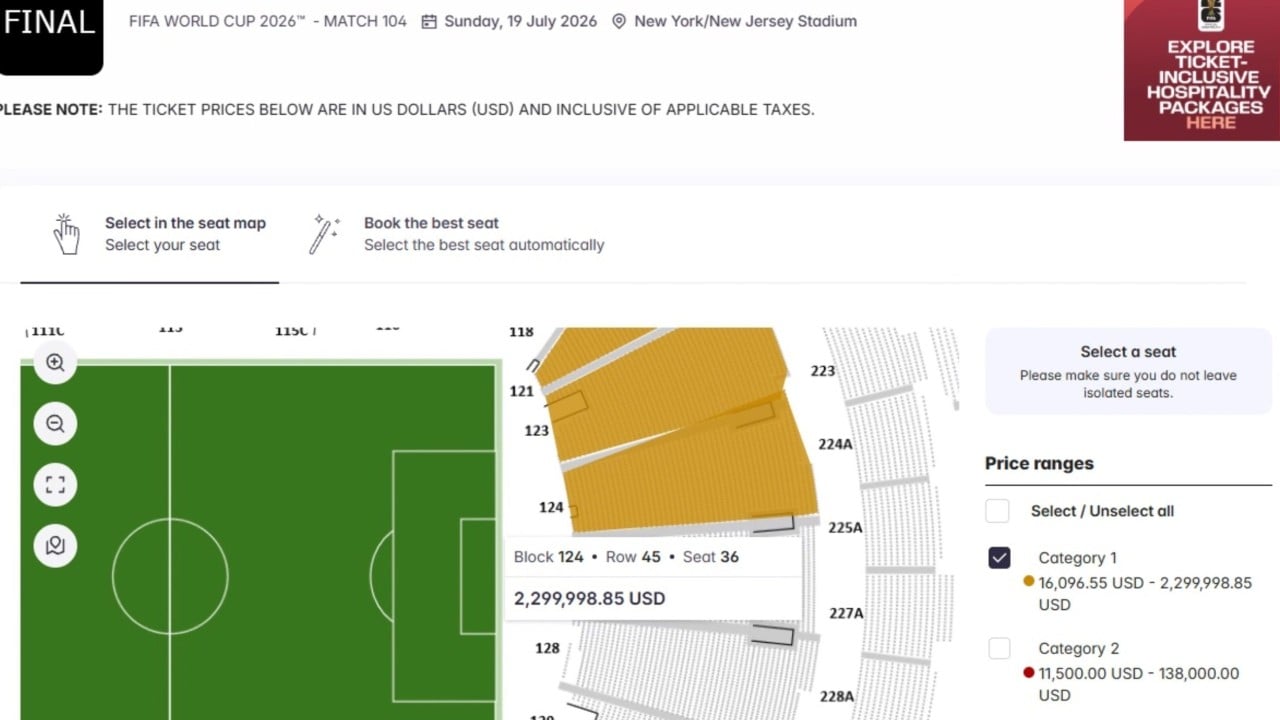
The listing was as precise as it was obscene: $2,299,998.85. For that price, a buyer could acquire a high-end property in most American suburbs, a fleet of luxury vehicles, or, apparently, a single "Category 1" seat at MetLife Stadium for the 2026 World Cup final. This isn't a dark-web auction or a back-alley deal. This is happening on FIFA’s official resale platform, a digital marketplace that has effectively sanctioned the most aggressive price gouging in the history of global sport.
While the $2.3 million figure represents the extreme fringe of the market, it isn't an isolated glitch. It is the logical conclusion of a deliberate strategy. For the 2026 cycle, FIFA has discarded the traditional "fan-first" price caps that defined previous tournaments in favor of a North American model of hyper-monetization. By allowing sellers to set their own prices on the official exchange while pocketing a massive percentage of the transaction, world soccer's governing body has transformed from a regulator into a high-stakes broker.
The Thirty Percent Kickback
To understand why a two-million-dollar ticket exists, you have to follow the money back to Zurich. In previous World Cups, official resale platforms were designed as "fair value" exchanges. If a fan couldn't attend, they sold the ticket back at face value to another fan. The 2026 tournament has demolished this precedent.
In the United States and Canada, FIFA has enabled a "market-clearing" system. There is no ceiling. If a speculator believes a billionaire will pay seven figures to sit behind a goal in East Rutherford, FIFA provides the infrastructure to facilitate that dream. The incentive for FIFA to allow these astronomical listings is found in the fee structure.
The math is brutal. FIFA currently levies a 15% fee on the seller and an additional 15% fee on the buyer. When a ticket moves through the official platform, the organization captures a combined 30% of the total transaction value. On a $2.3 million sale, FIFA stands to net approximately $690,000 in service fees for a single seat. This is more than the total gate revenue of many professional league matches, earned simply by moving a digital barcode from one wallet to another.
The Death of the International Fan
For decades, the World Cup was the great equalizer. It was the one time every four years when a teacher from Buenos Aires and a shopkeeper from Munich could sit next to a corporate executive from New York. That social contract is currently being shredded.
The 2026 price tiers represent a radical departure from the 2022 Qatar tournament.
- Qatar 2022 Final: Category 1 seats averaged roughly $1,600.
- USA 2026 Final: Face value for Category 1 started at $6,730, with some "dynamic" phases opening as high as $10,990.
When the floor for a championship match starts at $6,000 and the ceiling is non-existent, the "World" Cup becomes the "Wealth" Cup. The average international supporter, already facing thousands of dollars in travel and lodging costs, is being priced out before the first whistle. Even the "Supporter Entry Tier" of $60—a token gesture toward affordability—is restricted to a tiny fraction of tickets allocated through national federations. For the general public, the entry fee is a barrier designed to filter for the elite.
The Illusion of Supply and Demand
Critics argue that these prices are merely a reflection of "market demand." This is a convenient half-truth. Demand for a World Cup final is infinite, but the supply is strictly controlled by a monopoly. By integrating a high-fee resale market directly into their ecosystem, FIFA has created a closed-loop economy.
When tickets are listed at $2 million, it serves as a psychological anchor. It makes a "bargain" resale ticket at $20,000 look reasonable by comparison. This is price signaling at its most cynical. Even if the $2.3 million tickets never sell, their mere presence on the official site justifies the continued inflation of "standard" resale prices, ensuring FIFA’s 30% cut remains as large as possible.
Mexico as the Outlier
Interestingly, the 2026 tournament is a tale of two philosophies. In Mexico, legal protections and different local agreements have forced a more traditional approach. The Mexican resale platform generally restricts listings to face value or below. It is the only corner of the tournament where a semblance of the old "fan-friendly" model survives.
This creates a bizarre disparity. A fan in Mexico City might pay a few hundred dollars for a knockout match, while a fan in Los Angeles or New Jersey is expected to pay ten times that for the same experience. This isn't a result of "market forces"; it is a result of FIFA choosing to exploit the unregulated secondary market landscape of the United States.
The Specter of the Empty Seat
The risk for FIFA isn't just bad PR. It is the soul of the event itself. The most memorable World Cups are defined by the noise, the color, and the raw passion of "real" supporters—the ones who save for four years to make the trip. If the stands at MetLife Stadium are filled only with corporate guests and the ultra-wealthy who viewed their seat as a capital investment, the atmosphere will be sterile.
We have seen this before in high-end sports. When prices reach a certain threshold, the stadium becomes a backdrop for networking rather than a cauldron of sport. By treating tickets as speculative assets rather than access to a cultural moment, FIFA is gambling with the very product they are trying to sell.
The $2.3 million listing isn't just a number. It is a warning. It is the sound of a gate slamming shut on the global game.
Fans who still hope to attend without liquidating their retirement accounts have only one real option: wait. History shows that these "ego listings" often crash as match day approaches and the reality of a 100,000-seat stadium set against actual demand sets in. But the fact that the governing body of soccer is the one holding the door open for these prices tells you everything you need to know about where their priorities lie.
The beautiful game has a new price tag, and for most of the world, it’s unaffordable.