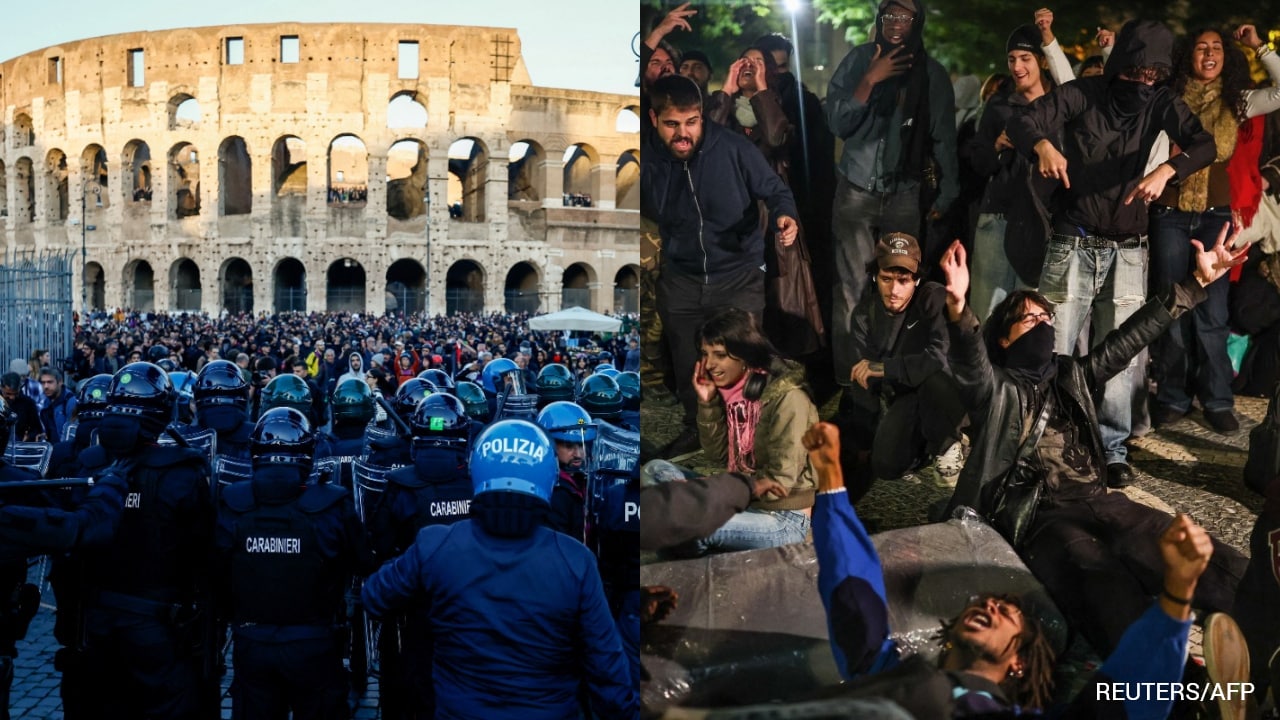
European capitals are burning again, and most coverage reduces the chaos to a predictable loop of smashed windows, water cannons, and riot police. That framing misses the real story. According to data from the Armed Conflict Location & Event Data Project and various European interior ministries, the surge in street demonstrations across France, Germany, Spain, Greece, and the Netherlands is not a single unified rebellion, nor is it simply a reaction to isolated police tactics. It is the collision of structural economic contraction, green transition friction, and a profound collapse in institutional trust that has left millions of working-class and middle-class Europeans feeling politically homeless.
When tear gas fills the boulevards of Paris or tractors blockade highways outside Berlin, television cameras capture the spectacle of state force meeting public rage. What those lenses rarely show is the quiet, years-long erosion of purchasing power and local autonomy that pushed ordinary people onto the asphalt in the first place. Don't miss our recent coverage on this related article.
The Anatomy of Modern European Dissent
To understand why protests in Europe have turned sharper and more frequent, you have to look past the immediate spark in any given city. A pension reform bill in France, agricultural subsidy cuts in Germany, housing shortages in Spain, or austerity measures in Greece act as detonators. The explosive charge, however, was packed years ago.
After a decade defined by sovereign debt crises, pandemic lockdowns, and an energy shock triggered by the war in Ukraine, household balance sheets across the European Union remain fragile. Eurostat figures consistently show that while headline inflation has cooled from its 2022 and 2023 peaks, cumulative price increases for food, rent, and utilities have permanently reset the cost of living. Wages, particularly in public sector roles and traditional manufacturing, have struggled to catch up. To read more about the context here, NBC News provides an informative summary.
The street has become the default negotiating table. In countries with strong labor traditions, strikes and marches were once orchestrated by disciplined trade unions that acted as intermediaries between workers and the state. Today, those unions often find themselves chasing behind decentralized, leaderless movements organized through encrypted messaging apps. When there is no central leadership to negotiate a compromise with the government, protests last longer, splinter into radical factions, and end more frequently in clashes with riot squads.
Why State Responses Escalate Friction
Interior ministries across the continent face an impossible mandate. They must protect critical infrastructure and public order while respecting constitutional rights to assembly. Yet police doctrine in several European nations has shifted toward preemptive containment—kettling crowds, deploying tear gas early, and utilizing rubber bullets or sting-ball grenades.
Human rights monitors, including the Council of Europe's Commissioner for Human Rights and Amnesty International, have repeatedly warned that heavy-handed policing often transforms peaceful marches into violent standoffs. When a student, a nurse, or a farmer inhales tear gas during an otherwise orderly demonstration, the state inadvertently radicalizes the moderate middle.
At the same time, law enforcement agencies point to a genuine tactical shift among protest fringes. Small, mobile groups using black-bloc tactics—dressed identically to evade facial recognition and equipped with fireworks, cobblestones, and incendiary devices—regularly infiltrate broader demonstrations. Police commanders argue that waiting until property is destroyed or officers are injured leaves them unable to regain control of dense urban grids. Both realities exist simultaneously, creating a feedback loop where aggressive policing and aggressive protest tactics justify each other.
The Urban-Rural Divide and the Green Backlash
One of the most significant blind spots in mainstream coverage of European unrest is the geographic shift in who is protesting. For decades, major European demonstrations were predominantly urban affairs led by students, civil servants, and industrial workers. Over the past few years, the epicenter has moved to the countryside and the peri-urban ring.
Agricultural protests from Poland to Portugal illustrate this friction with stark clarity. European farmers operate inside one of the most tightly regulated markets in the world, bound by the EU’s Common Agricultural Policy alongside national environmental mandates. When Brussels and national capitals introduced stricter rules on nitrogen emissions, pesticide reductions, and fallow land requirements—while simultaneously removing diesel tax exemptions and allowing cheaper agricultural imports—rural communities saw an existential threat to their livelihoods.
For a farmer in Lower Saxony or Brittany, environmental regulations drafted in urban ministries feel less like climate stewardship and more like economic erasure. Tractors blocking distribution centers and parliament squares represent a potent form of asymmetric leverage. Unlike office workers, farmers possess heavy machinery capable of paralyzing supply chains within hours. Governments that routinely send riot police against urban demonstrators have shown far greater reluctance to forcefully clear forty-ton tractors, exposing a glaring double standard in how state power is applied.
The Cost of Decarbonization Without Compensation
The tension extends well beyond agriculture. Across Europe, ambitious climate targets are colliding with household budgets. Mandates to phase out gas boilers, restrict older diesel vehicles from entering city centers through Low Emission Zones, and raise carbon taxes on heating fuel fall disproportionately on citizens who cannot afford electric vehicles or home retrofits.
Policy analysts at European think tanks such as Bruegel have noted that the green transition suffers from a severe distributional problem. Wealthier urban residents can absorb higher energy taxes, utilize dense public transit, and claim subsidies for heat pumps or solar panels. Working-class commuters living thirty miles outside major cities have no viable train lines and no spare capital to replace a fifteen-year-old car. When governments impose environmental penalties before building affordable alternatives, protests cease to be ideological debates about climate change; they become basic fights over economic survival.
The Erosion of Democratic Intermediaries
A healthy democracy absorbs public anger through institutional channels. Voters elect representatives, unions negotiate sector-wide contracts, local councils resolve zoning and infrastructure disputes, and courts check executive overreach. Across much of Europe, those shock absorbers are failing.
Voter turnout in national and European parliamentary elections fluctuates wildly, while trust in traditional center-left and center-right parties has plummeted. Many citizens view national governments as administrative middlemen who execute directives from Brussels or bond markets rather than responding to domestic voters. When parliaments bypass standard legislative debate—such as the French government’s repeated use of Article 49.3 of the constitution to push through pension reforms without a final lower-house vote—citizens conclude that the ballot box is broken.
Once people believe institutional politics cannot deliver relief, direct action becomes rational. Blocking a roundabout, occupying a university hall, or shutting down a refinery produces immediate, visible disruption that forces ministers onto television screens within hours. The danger for European democracies is that disruption works faster than legislation, training a generation of citizens to view street coercion as the only effective political tool.
Security Apparatus Versus Civil Liberties
As demonstrations multiply, European legislatures have quietly expanded police powers and tightened public order laws. In the United Kingdom, the Public Order Act introduced new criminal offenses for locking-on to infrastructure and granted police broader authority to stop and search protesters without suspicion. In France, administrative bans on specific demonstrations and expanded surveillance powers—including algorithmic video monitoring tested around major events—have drawn sharp scrutiny from civil liberties groups. Germany and Italy have similarly debated harsher penalties for climate activists who block roads or target cultural landmarks.
Governments argue these measures are necessary to protect the rights of the silent majority who simply want to commute to work, keep their shops open, and live without constant disruption. That argument carries weight among business owners whose storefronts are boarded up every Saturday and commuters stranded by rail strikes or road blockades.
Yet criminalizing disruptive protest carries severe long-term risks. Historically, the labor rights, voting expansions, and civil liberties Europeans take for granted were won through disruptive, often illegal direct action. When the state narrows the legal space for dissent, it does not eliminate anger. It drives opposition underground, fractures movements into smaller, less predictable cells, and erodes the moral authority of the state itself.
What Comes After the Tear Gas Clears
Watching riot lines clash in European capitals gives the impression of imminent systemic collapse. That impression is wrong. European states remain wealthy, administratively capable, and backed by resilient legal institutions. Protests rarely topple modern Western governments directly.
Instead, they hollow them out from the inside. Every weekend of street battles deepens polarization, drains municipal budgets, hardens attitudes between police and citizens, and pushes voters toward populist extremes on both ends of the political spectrum. Centrist coalitions survive the tear gas only to find themselves governing an increasingly ungovernable public, forced into reactive concessions that blow holes in national budgets without fixing underlying structural flaws.
Until European policymakers address the root mechanics driving people into the streets—unequal burdens in the green transition, stagnant real wages, housing scarcity, and executive detachment from working communities—riot shields and water cannons will remain standard fixtures of the European streetscape, treating the symptoms of a crisis that no amount of policing can solve.