The global electric vehicle race has shifted permanently. BYD has recaptured the global sales lead from Tesla, delivering 557,090 pure battery electric vehicles in the second quarter of 2026, leaving the American pioneer trailing by more than 150,000 cars in a single three-month window. Yet, behind the triumphant announcements emanating from Shenzhen lies a dark reality that the auto industry is reluctant to admit. China's domestic market has devolved into an existential meat grinder. An unprecedented wave of oversupply, falling margins, and aggressive price-slashing is threatening to destroy dozens of domestic brands in a brutal battle for survival.
The numbers tell only half the story. To understand how the global automotive order is being dismantled, one must look past the raw delivery charts and examine the structural cracks forming within the world’s largest automotive market.
The Myth of the Clean Victory
Tesla did not simply lose the sales crown. It walked away from the traditional volume race to pursue a completely different corporate identity. For years, Wall Street valued the Texas-based automaker as a high-growth manufacturing juggernaut. That thesis has evaporated. With global deliveries down year-on-year and a product portfolio anchored by the aging Model 3 and Model Y, Elon Musk has anchored his company’s multi-trillion-dollar valuation to artificial intelligence, humanoid robotics, and autonomous driving.
BYD took the opposite path. It chose absolute industrial scale. By counting its massive plug-in hybrid business alongside its pure electric offerings, the Chinese manufacturer moved more than one million electrified vehicles in a single quarter. It took the company more than a decade to build its first million vehicles. Now, it builds that many every ninety days. In July 2026, the company rolled its 17-millionth new energy vehicle off the assembly line, less than three months after hitting its previous million-unit milestone.
This growth is unsustainable for the broader industry. The domestic market where BYD secures its foundation is utterly saturated. Chinese consumers, facing broader economic anxieties and a cooling property sector, have become deeply conservative about big-ticket purchases. They are buying cars, but only when dangling on the hook of historic discounts. The result is a toxic environment where every single sale is extracted through corporate bloodletting.
A Do or Die Crisis of Excess
The sheer volume of choices available to the consumer has reached a point of absurdity. More than 150 new electric and hybrid models are scheduled to flood the Chinese market in the final six months of 2026 alone. Think about that number. No market on earth, regardless of its size or state subsidies, can healthily absorb that much fresh hardware in such a compressed timeframe.
The market cannot breathe. Smaller manufacturers are trapped in a vice. Companies like Leapmotor and Zeekr have managed to post occasional monthly delivery records by deploying hyper-advanced software and aggressive pricing, but these victories are fleeting. They are purchasing market share with money they do not have. For every mid-tier brand that celebrates a short-term spike in deliveries, three others are watching their order books dwindle as cash reserves drain toward zero.
The price war has stripped away the financial cushion of the entire supply chain. Dealers are losing money on every vehicle rolled off the lot. Manufacturers are demanding deeper cost reductions from their tier-one suppliers, who in turn are squeezing raw material providers. This is not a healthy competitive environment. It is an industrial purge designed to starve out the weak.
The Structural Trap of Vertical Integration
Why is BYD winning this war of attrition while others choke on their own inventory? The answer lies in an aggressive strategy of vertical integration that western legacy automakers dismissed as antiquated decades ago.
BYD began life as a battery company. It did not evolve from an internal combustion heritage, nor did it rely on external mega-suppliers to build its electric drivetrains. The company manufactures its own semiconductors, winds its own electric motors, and builds its own proprietary lithium-iron-phosphate Blade batteries. When global supply chains broke down, BYD kept rolling. When commodity prices fluctuated, BYD absorbed the shock in-house.
Consider the newly launched Seal 08 sedan. It features standard high-voltage platforms and rapid charging speeds across all variants at a starting price under 200,000 yuan. A western automaker attempting to match those specifications would have to source components from three different continents, paying a premium at every stage of assembly. BYD simply moves components from one factory floor to another within the same industrial zone.
This internal ecosystem creates a terrifying cost advantage. Estimates suggest BYD enjoys a cost benefit of up to 30 percent over traditional European and American competitors. For a domestic rival in China without this level of scale, matching BYD's retail prices is a form of corporate suicide. They are forced to sell their vehicles below cost, relying on local government bailouts or venture capital lifelines that are rapidly drying up.
The Illusion of the Solid State Salvation
For the companies unable to compete on raw manufacturing costs, the long-term strategy has always been to leapfrog the competition with next-generation technology. Solid-state batteries have been held up as the ultimate holy grail. The promise of double the range, non-flammable chemistry, and lightning-fast charge times kept investors patient.
That patience was dealt a severe blow. Robin Zeng, the head of Contemporary Amperex Technology Co. Limited, the world’s undisputed king of battery manufacturing, cooled expectations on the technology. He indicated that a true commercial inflection point for mass-market solid-state batteries will not occur until 2030.
The timeline shift changes everything. It means automakers cannot rely on a sudden technological breakthrough to rescue them from the current market dynamics. They must survive the rest of the decade using variations of existing lithium-ion and sodium-ion chemistries. The technological plateau means the battle will be won or lost on manufacturing efficiency, purchasing power, and raw financial stamina. There is no magic battery coming to save under-capitalized startups.
The Overseas Escape Hatch is Closing
With the domestic market locked in a deadly squeeze, Chinese automakers have looked to international expansion as their ultimate salvation. The strategy was simple. Build cars cheaply at home, ship them across the oceans, and sell them at higher margins in foreign markets where local manufacturers have been slow to electrify.
That window is slamming shut. Governments across the globe have recognized the existential threat posed by this industrial export wave. The European Union has implemented defensive tariffs on Chinese-made electric vehicles. The United States has erected even higher trade barriers, effectively locking Chinese brands out of the North American market entirely.
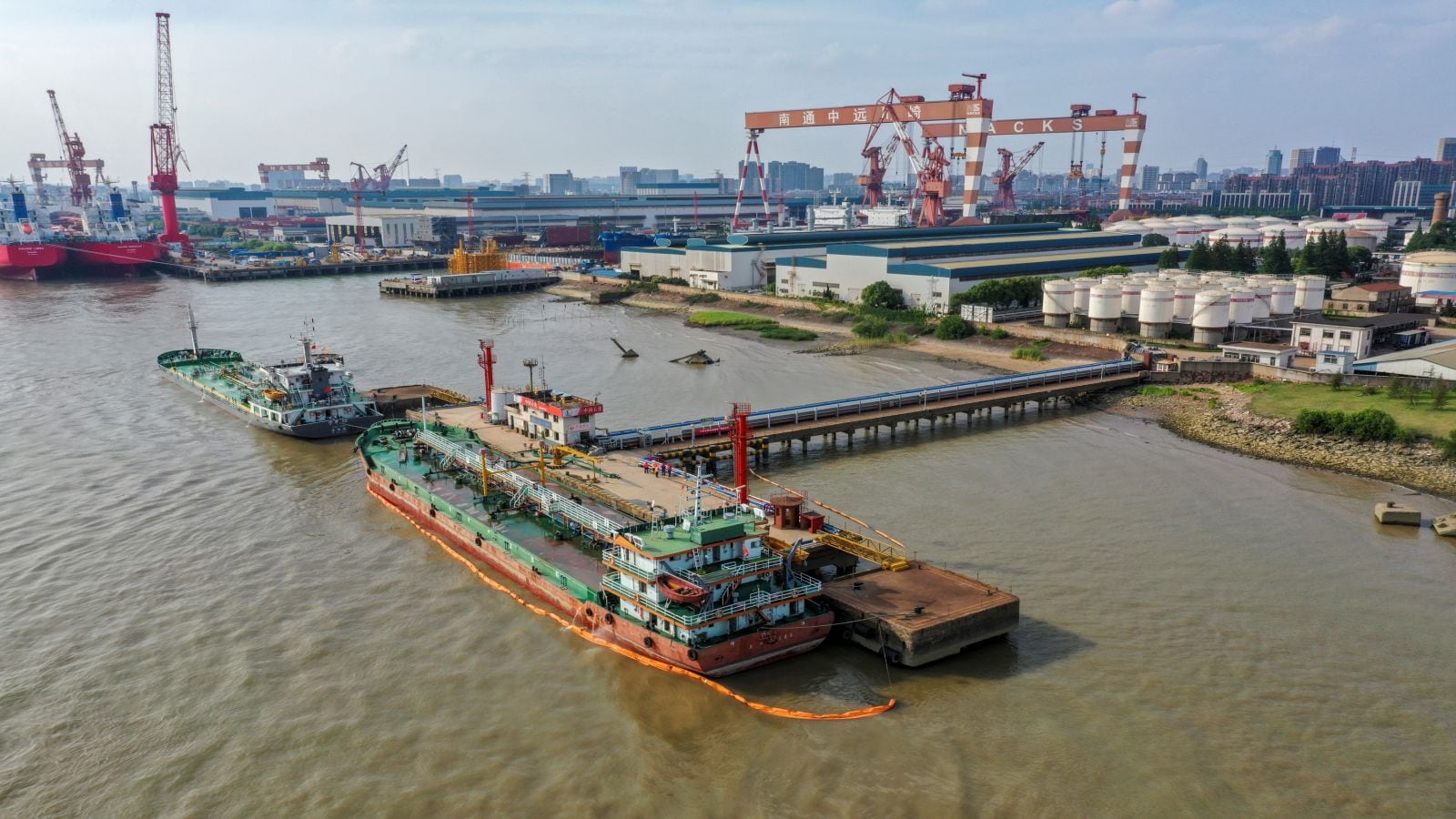
The retaliatory measures have forced a rapid pivot. Instead of merely shipping finished vehicles from ports like Shanghai and Shenzhen, Chinese companies are transforming into true multinational entities by building local manufacturing hubs. BYD is constructing assembly plants in Hungary, Brazil, and Turkey. These facilities are incredibly capital-intensive and take years to achieve optimal efficiency.
Shipping costs have also skyrocketed. To bypass the reliance on global maritime cartels, BYD took the extraordinary step of commissioning its own fleet of massive car-carrying vessels. These charter ships, capable of carrying thousands of vehicles at once, are moving across the oceans to supply markets in Southeast Asia, Latin America, and the Middle East. But managing a global shipping line is vastly different from managing a factory floor. The operational complexity and geopolitical risks are compounding by the day.
The Legacy Auto Mirage
While Chinese companies fight each other in the mud, traditional Detroit, German, and Japanese automotive giants are watching from what they believe is a safe distance. They are miscalculating. Many legacy brands have responded to the slowing global EV adoption rate by pulling back on their electrification targets, reviving investment in internal combustion engines, and leaning heavily on hybrid vehicles.
This strategy offers short-term profitability but long-term disaster. By slowing down their electric development, western legacy brands are allowing Chinese manufacturers to widen their engineering lead. The vehicles coming out of China are no longer cheap, derivative knock-offs. They are highly integrated, software-defined machines with advanced driver-assistance systems that operate on a fraction of the computing budget used by western rivals.
When a consumer in Europe or South America compares a legacy European crossover with a freshly exported Chinese alternative, the value proposition is stark. The Chinese vehicle offers superior range, better software, and a lower price tag, even with tariffs factored into the final invoice. Traditional automakers are surviving on brand equity and protective legislation. History proves that protective tariffs can delay an industrial transition, but they cannot stop it.
The global car industry is entering a period of forced consolidation that will mirror the early twentieth century, when hundreds of automotive pioneers were compressed into a handful of surviving conglomerates. The sales crown held by BYD is not a symbol of static dominance. It is a warning sign that the industrial velocity of the automotive world has migrated permanently eastward, and those who cannot match that speed will simply cease to exist.