The radar screens in western Russia did not simply light up. They saturated. Over eight hundred unmanned aerial vehicles sliced through the early morning sky in a coordinated assault that exposed the fragile geometry of modern air defense networks.
When the Russian Ministry of Defence announced that 822 Ukrainian drones had been intercepted or neutralized across seventeen regions, the numerical shockwave overshadowed the actual tactical shift taking place. Kyiv is no longer just probing the perimeter. It is executing a structural overload of Moscow's airspace management, turning quantity into an independent operational weapon.
This was not a random swarm. It was a calculated exercise in exhaustion.
The Logistics of Saturation
Air defense economics remain stubbornly asymmetric. A surface-to-air missile costs millions of dollars. A long-range, plywood-and-fiberglass strike drone can be manufactured for a fraction of that price. When hundreds of these platforms converge simultaneously on a capital city, the defending military faces an immediate triage crisis.
Moscow Mayor Sergei Sobyanin noted that roughly six hundred of the incoming systems targeted the capital corridor alone, with approximately a third shredded over the surrounding region. Yet, debris fields tell a different story than official interception tallies. When interceptors detonate targets directly over densely populated areas or major distribution hubs, the collateral wreckage carries its own destructive momentum.
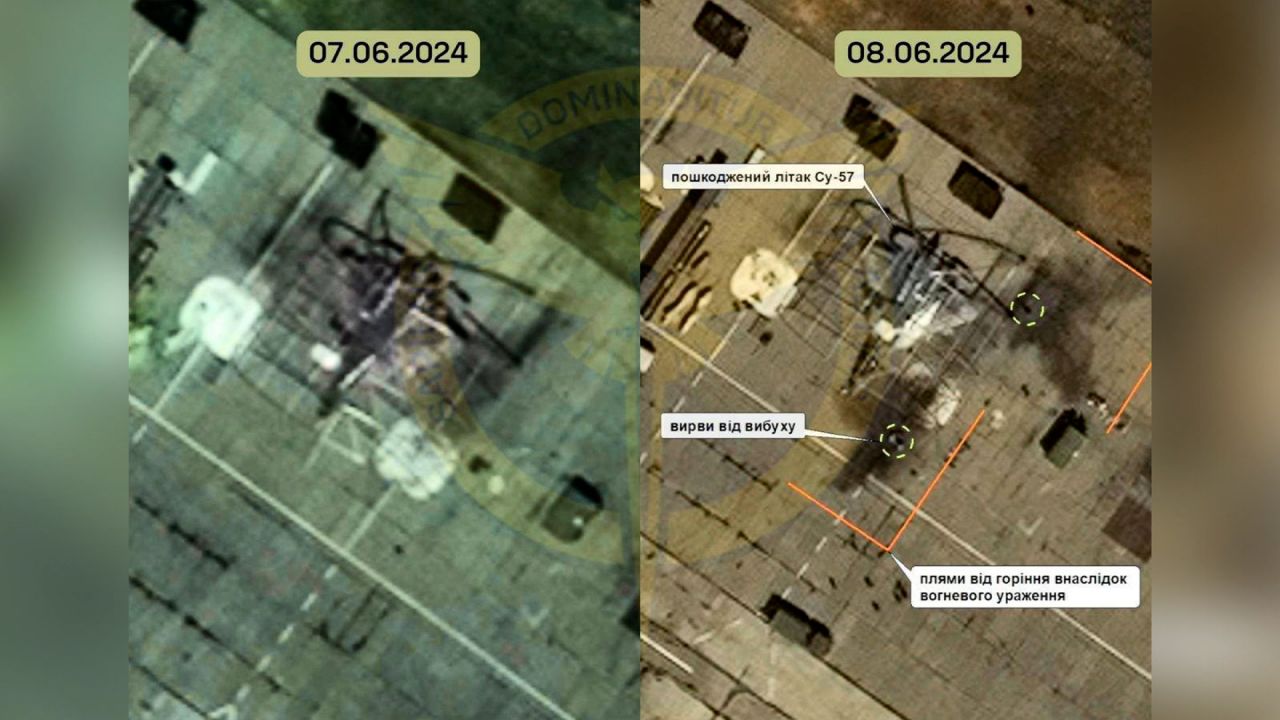
A massive fire tore through the giant Wildberries logistics facility in Podolsk, sending a dense plume of black smoke visible for miles. This marks another structural blow to Russia's commercial supply chain, following similar depot destructions earlier in the cycle. Kyiv has systematically expanded its target list beyond traditional military bases. Retail distribution networks, solid rocket propellant manufacturing plants, and regional railway junctions are now treated as front-line assets.
The strategy aims at a specific vulnerability. Russia spans eleven time zones, but its economic and political gravity is tightly coiled around a few urban centers. By forcing air defense batteries to continuously rotate, reload, and expend finite interceptors across seventeen different oblasts, the attacking force manufactures systemic gaps.
The Human Toll and the Wider Spillover
Strategic calculations always translate into localized tragedy. In the Moscow region, an elderly resident was killed when a stray platform struck a private residential structure. Further south in the Rostov region, over one hundred and fifty drones converged on three distinct towns, leaving five dead and multiple residential blocks damaged.
At the same time, Moscow retaliated with its own heavy package of ballistic missiles and aerial bombs. Ukraine's industrial heartland absorbed the counter-blow. ArcelorMittal Kryvyi Rih, the country's largest steel producer, confirmed critical damage to its power generation and blast furnace sectors after a direct hit. Capital infrastructure inside Kyiv caught fire, destroying public markets and injuring civilians.
The violence refused to stay neatly bounded within the two belligerents. Across the border in Romania, a Spanish Air Force F-18 fighter jet operating under a NATO air-policing mandate scrambled to intercept an airspace intruder. Tracking systems registered the aerial vehicle crossing from neighboring Moldovan airspace before the jet engaged and brought it down. Debris ultimately scattered into the Black Sea near Constanta.
This marks a dangerous operational creep. As drone volumes scale into the high hundreds per engagement, guidance systems drift, electronic warfare spoofing alters flight paths, and the margin for error shrinks to zero. NATO's eastern flank is increasingly forced to react to stray hardware drifting off course from the primary engagement zones.
Shifting Thresholds of Endurance
Military analysts often look at gross production numbers to gauge the sustainability of a campaign, but the true metric is friction. Ukraine's domestic development of long-range strike options, including systems like the Flamingo missile alongside high-volume aerial drones, indicates an industrial base that has decentralized under fire.
Russia retains overwhelming long-range strike capabilities, regularly launching thousands of munitions weekly across Ukrainian urban centers. Yet, the psychological contract between the Kremlin and its domestic populace is changing. When central logistics hubs burn and air raid sirens echo through the streets of the Moscow oblast on a weekly basis, the distant abstraction of a foreign military operation dissolves.
Air defense commanders on both sides are finding that depth is no longer a shield. Every additional hundred drones added to a barrage forces an exponential increase in the cost of protection, turning the skies above Eastern Europe into a permanent test of attrition where absolute security is mathematically impossible