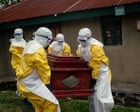
The Silent Mutation Threatening Central Africa
A virus does not negotiate. It adapts. When health officials in the Democratic Republic of Congo quietly raised alarms about unusual patterns in a localized Ebola virus outbreak, the global response followed a familiar, bureaucratic script. Reactive statements. Promised shipments of experimental vaccines. Brief flashes of media attention before the news cycle shifts elsewhere. But behind closed doors in Kinshasa and inside the regional laboratories tracking genomic sequences, epidemiologists are tracking something far more concerning than a standard flare-up. The pathogen driving this massive outbreak in the DRC is showing signs of genetic drift.
This is not just another chapter in a decades-long struggle against a notorious filovirus. It is a fundamental shift in how the virus interacts with human hosts, evades established diagnostic parameters, and challenges the very countermeasures that ended previous epidemics. For a different perspective, see: this related article.
To understand the gravity of the current situation, we have to look past the aggregate case counts reported by international agencies. Numbers tell us how many people are infected, but they hide the operational friction on the ground. They hide the broken cold chains in remote equatorial provinces. They hide the deep-seated community mistrust born from decades of political instability, broken promises, and heavy-handed public health interventions.
When a viral outbreak occurs in a region fractured by conflict and economic marginalization, biology and sociology collide. The virus thrives in the spaces where the state cannot reach. Every delay in contact tracing gives the pathogen another replication cycle. Every community burial tradition performed without safe protocols acts as a bridge to new transmission chains. And when the virus itself begins to alter its genetic coat, those bridges become much harder to burn. Related coverage on the subject has been published by Psychology Today.
The Genomic Reality Behind the Headlines
Genomic surveillance has advanced light-years since the West African epidemic of 2014 to 2016. We can now sequence a viral genome in hours rather than weeks. That capability has provided a window into the micro-evolution of the Ebola virus in real time.
What researchers are seeing in the DRC is a series of non-synonymous mutations in the glycoprotein gene. In plain terms, the outer shell of the virus is shifting. This outer shell is what the human immune system recognizes and what monoclonal antibody treatments are designed to target. If the spike proteins drift far enough from the baseline strains used to develop therapeutics, the efficacy of our best medical countermeasures drops significantly.
Hypothetically, imagine a lock and key. For years, medical science built a key that fit the specific tumbler configuration of the Ebola virus strains identified in past Equateur or North Kivu outbreaks. Now, the virus is filing down certain teeth on that key. The lock is changing shape.
This evolutionary pressure is largely driven by incomplete transmission chains and population-level immunity from previous infections or vaccination campaigns. When a virus encounters a semi-immunized population, variants that can partially evade immune responses gain a survival advantage. They outcompete the ancestral strains.
Public health officials are reluctant to use terms like "strain enhancement" in public briefings because panic is a poor epidemiological tool. Yet, among virologists, the concern is palpable. The mutations identified in recent samples do not magically transform Ebola into an airborne pathogen—that remains a physical impossibility given the fundamental biology of filoviruses. Instead, these changes affect virulence markers, incubation periods, and the clinical presentation during the crucial first forty-eight hours of infection.
Patients are presenting with symptoms that deviate from textbook case definitions. Early gastrointestinal distress is occasionally superseding the classic hemorrhagic manifestations, leading local clinicians to misdiagnose early-stage cases as severe malaria or typhoid. That delay in correct triage is lethal. By the time a patient is isolated in a treatment unit, secondary and tertiary transmission has already occurred within the household and the broader neighborhood.
The Infrastructure Trap
Biology rarely operates in a vacuum. The most sophisticated viral mutation in the world cannot spark a national crisis without a vector of vulnerability. In the DRC, that vector is infrastructure, or the catastrophic lack thereof.
Consider the geography of the outbreak zones. Dense equatorial rainforest, unpaved roads that turn into impassable mud tracks during the rainy season, and a near-total absence of reliable electrical grids. Maintaining a cold chain for vaccines that require ultra-low temperature storage is an engineering nightmare under these conditions. Solar-powered refrigerators help, but they are vulnerable to hardware failure, component theft, and fuel shortages for backup generators.
When an alert sounds, epidemiologists must deploy into the field. That deployment requires transport, fuel, satellite communication gear, personal protective equipment, and security escorts. In regions controlled by various armed militias or plagued by generalized lawlessness, simply moving a team from a provincial capital to a rural health zone can take days of delicate negotiation.
Local health workers bear the brunt of this structural failure. These doctors, nurses, and community volunteers are the frontline defense. Many of them worked through previous outbreaks without receiving hazard pay or adequate psychological support. When a new wave hits, burnout is immediate.
During a recent site assessment in a rural health district, a veteran nurse described a reality that international reports routinely sanitize. There was no running water in the clinic. Staff washed their hands from stationary plastic buckets using chlorinated water mixed by hand. Disposal systems for contaminated waste consisted of open burn pits located a few dozen yards from the maternity ward.
This is the baseline reality of healthcare delivery in large parts of the DRC interior. Pumping millions of dollars in international aid funds into high-level coordination meetings in Geneva or Kinshasa does little to fix a broken well or supply a rural dispensary with basic soap and gloves. Until global health architecture shifts its funding models to prioritize localized, durable infrastructure over flashy emergency deployments, every outbreak will remain a high-stakes gamble.
The Cost of Mistrust
Epidemics are ultimately contests of social cohesion. The best therapeutics and the most accurate diagnostic tests are useless if a community refuses to let health workers cross their threshold.
Decades of historical neglect have forged a profound, entirely rational skepticism toward central authorities and foreign aid organizations among rural Congolese populations. When people see fleets of white UN Land Cruisers rolling through impoverished villages while local schools lack roofs and basic medicines, resentment festers.
Rumors fill the vacuum left by transparent communication. During past outbreaks, dangerous falsehoods circulated rapidly through local markets and peer networks. Some whispered that the treatment centers were death camps where organs were harvested. Others claimed that foreign doctors brought the disease with them to justify military intervention or resource extraction.
While these claims sound absurd to an outsider, they make complete sense within a historical context of exploitation, colonial trauma, and contemporary state failure.
Addressing viral mutations requires laboratories and genomic sequencers. Addressing community resistance requires listening, humility, and power-sharing.
Successful interventions in recent years have relied almost entirely on local leadership. When traditional chiefs, religious leaders, and respected community elders are brought into the response structure as decision-makers rather than mere mouthpieces, compliance rises. People want to protect their families. They do not want their relatives to die in agony. But they need to trust the people holding the syringe.
When international agencies bypass local networks to implement top-down edicts—such as mandatory safe burials that violate deeply held cultural mourning practices—they trigger violent pushback. Riots destroy treatment centers. Contact tracers are attacked. The virus wins not because it is biologically invincible, but because the human response fractured along lines of distrust.
The Looming Horizon
As global attention fractures across multiple geopolitical crises, funding for neglected tropical diseases is quietly shrinking. Donor fatigue is real. Governments that once opened their treasuries to combat emerging pathogens are turning inward, cutting foreign assistance budgets, and prioritizing domestic economic anxieties.
This is a profound miscalculation. Pathogens do not respect national borders, and viral evolution does not pause for political convenience.
If the mutating strains currently circulating in the DRC develop further adaptations that enhance transmissibility or reduce the effectiveness of current monoclonal antibody treatments, the containment math changes entirely. An epidemic that remains localized through aggressive, resource-intensive containment could spill across porous national borders into densely populated urban centers in neighboring countries. Once a filovirus establishes a foothold in a major metropolitan area with high population mobility, conventional containment protocols collapse under the sheer volume of contacts.
The signs are visible now, hiding in plain sight within genomic sequencing data and field reports from exhausted rural clinicians. The virus is testing our defenses. It is finding the weak points in our supply chains, our political systems, and our social contracts.
We can continue to treat each successive outbreak as an isolated, freak occurrence requiring a temporary emergency response. Or we can accept the structural reality: that endemic viral reservoirs in Central Africa require permanent, resilient public health infrastructure, continuous genomic surveillance, and deep, respectful engagement with the communities living on the front lines.
The mutation of the Ebola virus in the DRC is not a distant scientific curiosity. It is an early warning klaxon. How the global health community responds in the coming months will determine whether this outbreak is contained or whether it becomes the crucible that tests the limits of modern epidemiological defense.