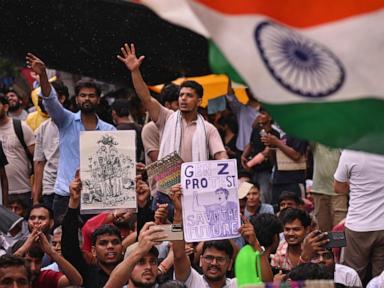
India’s political landscape was built on the premise that Prime Minister Narendra Modi is unshakeable, a towering nationalist figure immune to the traditional vulnerabilities of democratic office. But over the past few weeks, a generation born entirely into the digital age punctured that invincibility. Operating under the satirical banner of the Cockroach Janta Party (CJP), a mass youth movement forced the resignation of Union Education Minister Dharmendra Pradhan, marking a rare capitulation by an administration that has governed with an iron fist for over a decade.
This is not a traditional story of ideological opposition parties trading blows in parliament. Instead, it is a hard look at how structural failures in India’s educational bureaucracy collided with an alienated youth demographic, creating an insurgent political pressure group that weaponized irony against a state apparatus unaccustomed to being mocked.
The Anatomy of a Systemic Breakdown
To understand how a movement adopting the insect nickname "Cockroaches" managed to dent the political aura of India’s most dominant leader since Indira Gandhi, one must examine the tinderbox of Indian higher education.
For millions of young Indians, competitive exams are the single narrow gateway out of generational poverty. When national medical and professional entrance exam papers leaked repeatedly, destroying the aspirations of candidates who had spent years studying in grueling isolation, the social contract snapped. The immediate catalyst for the unrest was twofold: the systemic corruption rotting India’s testing infrastructure, and an infamous judicial remark by the Supreme Court Chief Justice that likened certain groups of unemployed youth to parasitic insects.
Instead of retreating into quiet despair, a public relations student in Boston, Abhijeet Dipke, seized on the insult. He weaponized the rhetoric, forming an online parody organization called the Cockroach Janta Party.
A cockroach is resilient, difficult to eradicate, and multiplies in the dark corners where institutional neglect thrives. By embracing the slur, the organizers stripped the state of its power to demean them.
Digital Insurgency Meets Real-World Asphalt
Movements in the past required massive organizational wings, entrenched trade unions, or party patronage to sustain momentum. The CJP bypassed these requirements entirely.
Operating primarily through encrypted messaging apps, Instagram reels, and viral meme formats, the protesters converted discontent into a decentralized spectacle. When thousands gathered at New Delhi's Jantar Mantar, they did not carry standard partisan flags. They carried copies of B.R. Ambedkar’s autobiography, volumes of Japanese manga, and signs depicting superhero tropes.
This cultural fluency baffled the ruling Bharatiya Janata Party’s media machinery. Mainstream television networks—frequently aligned with the government narrative—struggled to frame a leaderless cohort of meme-literate youth as violent urban naxals or foreign agents. The optics were completely inverted. Here were middle-class graduates and medical aspirants sitting on police barricades, holding smartphones, and broadcasting their own revolution live to millions of viewers who felt equally disenfranchised.
An extremely short sentence. Fear evaporated.
For twelve years, political analysts have pointed out that the primary pillar of the Modi administration’s longevity was not just economic policy or Hindu majoritarianism, but a pervasive climate of deterrence. People simply stayed home because opposing the state carried a heavy personal cost. The CJP broke that psychological threshold. When the government realized that detaining student organizers only amplified online outrage, the iron armor cracked.
The Limits of Concession and the Next Phase
The resignation of the education minister was a tactical retreat by an administration that rarely yields an inch. Yet, concessions in authoritarian political structures rarely solve the underlying pathology.
Even as the minister stepped down, the state’s security apparatus pivoted toward legal retribution. Police registered criminal cases against vocal participants, targeting activists under broad cybercrime laws for alleged online defamation of the prime minister. Meta executives found themselves summoned by IT ministries over restricted posts and automated moderation glitches that temporarily choked the prime minister's defensive social media responses.
This friction highlights a deeper truth about contemporary governance in South Asia. Digital-first populations can mobilize faster than traditional bureaucracies can adapt, but the state retains a monopoly on the penal code. The CJP leadership insists they are a watchdog, not an electoral alternative. They do not want to form a government; they want to haunt the conscience of the existing one.
As the smoke clears from the barricades of New Delhi, the political reality has shifted permanently. The invincible image has been exposed to the elements. Millions of young citizens watching from Tier-2 and Tier-3 cities have learned a vital lesson about collective leverage.
The insects are no longer hiding in the cracks. They are out in the open, and they are watching every move the administration makes.
India's cockroach protests: Modi breaks silence and hunger strike ends
This video provides direct news coverage and visual context regarding the student-led protests and the political fallout that shook the central government in New Delhi.
http://googleusercontent.com/youtube_content/1