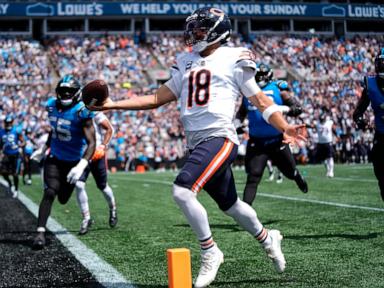
Fifty-nine points on opening day alters the math for an entire franchise. When a team puts up nearly sixty points in a season opener, the celebration usually echoes from the locker room all the way to the front office. Yet, the analytical autopsy of the Chicago Bears offensive blowout reveals a stark reality. The scoreboard flashed an astonishing fifty-nine points, but the primary receiving targets remained surprisingly quiet.
This mismatch between overall offensive output and individual stardom raises urgent questions about distribution, scheme adjustments, and long-term sustainability.
Football fans across the country witnessed a rare scoring display. The Chicago Bears dismantled their opponent through a combination of relentless defensive turnovers, short fields, and an opportunistic ground game. But looking past the massive point total uncovers a fascinating tactical puzzle. While the team rolled up an imposing offensive performance, major weapons in the passing game barely touched the ball.
The Mechanics of a Lopsided Box Score
Offensive explosion usually translates to monster statistics for primary receivers. Analysts expect the top targets to feast when a team pushes toward sixty points. Sunday defied that convention. The opposing defense schemed specifically to take away deep threats and primary perimeter options. Defensive coordinators live in fear of the big play, so they rolled coverage, doubled elite wideouts, and forced the offense to win with auxiliary pieces.
Quarterback Caleb Williams managed the game with composure, taking what the defense surrendered rather than forcing throws into heavy coverage. When a defense tilts the field to lock down your best weapons, smart signal-callers look elsewhere. Checkdowns, tight end seams, and heavy rushing volume took over the afternoon.
The strategy worked on the scoreboard. It failed to satisfy fantasy football managers or individual stat sheets.
Football is ultimate team sport disguised as an individual showcase. When a group scores fifty-nine points, individual touches become secondary to operational efficiency. The offensive line controlled the line of scrimmage, creating running lanes that kept the chains moving. Special teams chipped in with field position. The defense turned stops into sudden-change opportunities. Williams did not need to throw for four hundred yards because the game script demanded ball control and clock management by the second half.
Adjusting to Defensive Focus
Defenses around the league watched the film and adjusted immediately. Star receivers command respect because they alter game plans before the first whistle blows. Opponents dedicated extra resources to neutralize them, effectively daring the rest of the roster to beat them.
That gamble backfired catastrophically.
When you allocate two defenders to a premier wide receiver, you leave single coverage or light boxes elsewhere. The supporting cast stepped into the vacuum. Secondary receivers caught timely passes. Running backs found daylight. The offense functioned like a well-oiled machine operating on backup parts because the primary engine was heavily guarded.
This dynamic exposes a vital truth about modern football scouting. Teams cannot defend every blade of grass. If an opponent sells out to stop your top options, your offensive coordinator must trust the system and distribute the football. Chicago did just that. The quiet day for star targets is not a sign of failure or regression. It is a testament to defensive respect and offensive adaptability.
The Long-Term Outlook for Chicago
Sustaining a high-powered offense requires more than one dominant playmaker. Opponents will study this tape endlessly. They will try to find answers for how an offense scores fifty-nine points while the marquee names are neutralized.
Future opponents face a nightmare scenario. If they sell out to stop the top receivers, the supporting cast can win the game. If they play straight-up coverage, those elite targets will break loose for explosive plays.
The coaching staff faces a different challenge moving forward. Keeping ego and morale managed when a star receiver catches two passes in a fifty-nine-point win requires veteran leadership. Winning cures most locker room friction, but competitive athletes always want the ball. Translating this opening-week anomaly into a balanced, repeatable formula remains the definitive task for the weeks ahead.
The scoreboard does not care who crosses the goal line. As the season progresses, defenses will be forced to pick their poison, and those quiet targets will inevitably get their numbers called when the stakes grow higher.


