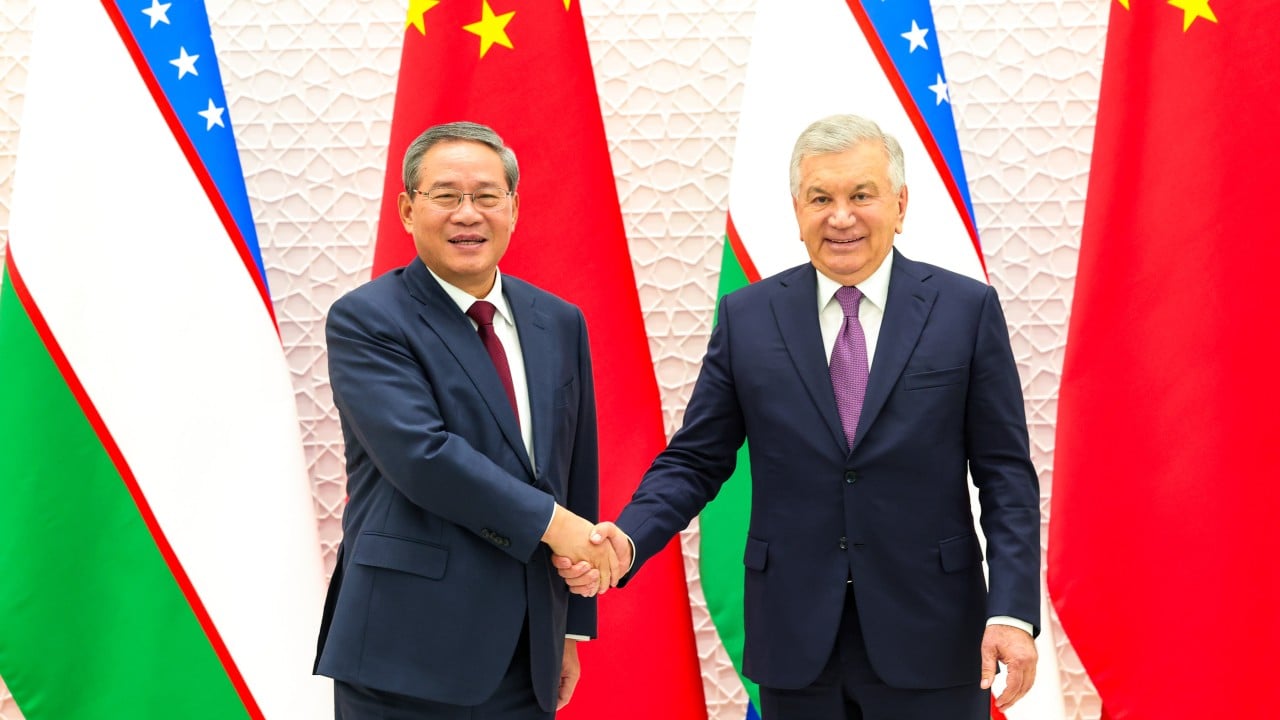
Beijing is tightening its grip on Tashkent through rail corridors, energy deals, and industrial credit lines while Washington tries to counter with diplomatic summits and targeted investment. That friction sits at the heart of the Central Asian influence contest over Uzbekistan, a country that has spent three decades turning geography and caution into statecraft.
Casual observers treat this rivalry like a cold war remake. It isn't. Washington and Beijing are playing completely different games on the same board, and Tashkent knows how to extract value from both without handing over its sovereignty.
Why Tashkent Sits on the Fault Line
Uzbekistan is the demographic anchor of Central Asia. It borders every other republic in the region plus Afghanistan, meaning almost no cross-border trade, water management deal, or security corridor works smoothly without Tashkent's sign-off.
After years of economic insularity under its first post-Soviet president, Islam Karimov, the country opened up under Shavkat Mirziyoyev. Reform brought foreign attention. It also exposed old vulnerabilities.
Landlocked twice over, Uzbekistan depends on neighboring transit routes to move goods to global markets. Historically, Moscow controlled the pipes, rails, and security guarantees. That architecture has frayed as Russia's strategic bandwidth has been consumed elsewhere, leaving an opening that Beijing has moved swiftly to fill and Washington has tried to keep from hardening into a monopoly.
A small state rarely wins by picking a side early. It wins by making itself indispensable to everyone bidding for access.
Consider a hypothetical example to see how leverage works on the ground in Tashkent. Suppose a state-backed Chinese consortium proposes a high-voltage transmission line or a logistics hub linked to cross-border rail, while a Western development finance institution offers technical assistance, governance standards, and a smaller equity slice. Tashkent does not have to choose one and reject the other in a vacuum. Officials can take the fast capital and physical track from Beijing while using Washington's backing to diversify technical standards, attract European or American corporate partners, and keep single-vendor pricing honest.
That balancing act is harder in practice than on paper. Debt terms, procurement rules, and geopolitical pressure tests can turn a neat hedging strategy into a tightrope walk overnight.
How Beijing Builds Leverage Without Firing a Shot
China's approach in Uzbekistan is methodical, patient, and commercial first. Beijing rarely arrives with lectures on judicial reform or press freedom. It arrives with balance sheets, engineering crews, and long-term off-take agreements.
Trade volumes between China and Uzbekistan have expanded dramatically over the past decade, driven by manufactured goods, machinery, solar and wind equipment, agricultural products, and natural gas flows. Chinese firms are deeply embedded in Uzbek construction, telecoms, mining, and renewable power.
Rail Corridors and Border Chokepoints
Infrastructure is Beijing's sharpest instrument. By funding roads, tunnels, logistics parks, and regional rail links—including long-discussed trans-regional routes aimed at connecting Chinese western provinces to Central Asia and onward toward the Middle East and Europe—China reshapes physical trade gravity.
Physical links create sticky dependencies. Once a factory, power grid, or rail spur is built to specific technical standards and financed through state-linked lenders, switching suppliers later becomes expensive and slow.
Energy, Critical Minerals, and Debt Math
Uzbekistan holds substantial natural gas reserves alongside deposits of copper, gold, uranium, and other minerals vital to modern industry and green energy supply chains. For China, securing diversified overland energy and raw material sources reduces reliance on maritime chokepoints like the Strait of Malacca.
Yet China and Uzbekistan ties carry real friction beneath the ribbon-cuttings. Local labor tensions sometimes flare on large construction sites when wages, subcontracting chains, or hiring ratios disappoint nearby communities. Sovereign debt sustainability is another quiet watchpoint. Even when loans are structured carefully, accumulating obligations tied to large infrastructure projects narrows a borrower's fiscal room when global interest rates or commodity prices swing.
Where Washington Competes and Where It Stalls
The United States cannot match Beijing's sheer state-backed lending volume in Central Asia, nor does Washington run its foreign policy through state-owned construction conglomerates. Instead, American strategy leans on diplomatic engagement—including the C5+1 format bringing Washington together with the five Central Asian states—alongside private-sector dealmaking, sanctions compliance enforcement, and institutional support.
Washington has clear selling points when it shows up consistently. American technology firms, aerospace suppliers, agribusinesses, and financial institutions bring deep capital markets, high-value equipment, and legal predictability that appeal to Uzbek reformers trying to modernize state enterprises and join global trade bodies like the World Trade Organization.
The Credibility Gap in Distant Capitals
Still, Tashkent often sees a gap between Washington's rhetoric and its follow-through. Attention in Washington frequently shifts toward crises in Europe, the Middle East, or East Asia, leaving Central Asia feeling like a secondary theater between high-profile visits.
Sanctions enforcement adds another layer of tension. As Western governments tighten export controls and financial restrictions targeting war-related supply chains and evasion networks, Central Asian banks and trading companies face heightened compliance scrutiny. Tashkent wants to avoid secondary sanctions without crippling legitimate regional trade, creating delicate negotiations behind closed doors.
| Dimension | China's Approach in Uzbekistan | US Approach in Uzbekistan |
|---|---|---|
| Primary Leverage | State-backed financing, trade volume, physical infrastructure | Diplomatic weight, market access, tech and governance standards |
| Execution Speed | Fast, centralized state-to-state and enterprise deals | Slower, reliant on private capital, regulations, and congressional cycles |
| Core Appeal to Tashkent | Immediate capital, grid and transit buildout, huge buyer market | Diversification, high-end tech, WTO and investment credibility |
| Main Vulnerability | Debt and dependency concerns, local labor friction | Sporadic bandwidth, sanctions friction, smaller direct capital scale |
The Overlooked Player Inside the Room
Most coverage frames Central Asian influence as a two-man chess match between Beijing and Washington. That misses the most consequential actor in the room: the Uzbek state itself.
Tashkent is not passive clay. President Mirziyoyev's administration has spent years dismantling legacy monopolies, courting Gulf states, Turkey, the European Union, South Korea, and Japan alongside China and the United States. Multi-vector diplomacy is not a slogan in Tashkent; it is a survival reflex.
A country wedged between major powers learns early that over-reliance on any single patron invites political strings. Too much dependence on Moscow once limited room to maneuver. Too much dependence on Beijing risks turning economic partnership into structural asymmetry. Too little engagement with Washington deprives Tashkent of diplomatic balance and high-end western investment.
Domestic Reforms as a Geopolitical Shield
There is a hard truth that outside strategists often gloss over. Foreign influence thrives where domestic institutions are weak or opaque.
If Uzbekistan strengthens rule of law, improves property protections, curbs corruption, and broadens domestic private enterprise, it becomes far more resilient against external pressure from any capital. Transparent procurement and competitive bidding let Tashkent play Chinese, American, European, and regional firms against one another for better terms rather than taking whatever single offer lands on the table.
Conversely, if state-directed deals bypass competition or leave heavy off-balance-sheet liabilities, outside leverage grows—regardless of which flag is on the investor's passport.
What This Rivalry Really Means for Business and Security
For international executives and policymakers, Uzbekistan is neither a closed outpost nor a guaranteed Western sphere. It is a contested, fast-moving market where commercial strategy and geopolitics collide at every border crossing and ministry desk.
Companies looking at Tashkent have to read incentives clearly. Chinese suppliers will remain formidable in heavy infrastructure, solar and grid hardware, and cross-border logistics. Western companies will find their strongest openings in specialized machinery, aviation, software, consulting, green standards, and joint ventures where technical edge matters more than rock-bottom state subsidies.
Security dynamics add another layer. Instability in neighboring Afghanistan, cross-border extremism, water stress across the Amu Darya and Syr Darya basins, and shifting regional alliances all shape how Tashkent weighs outside partners. No foreign power can police Central Asia's interior stability from afar without local buy-in.
Watch the unglamorous details rather than summit communiques. Track rail gauge agreements, customs modernization, power-grid interconnectors, and local subcontracting rules. Those quiet mechanics reveal who is actually locking in long-term presence in Tashkent—and where Tashkent is deliberately keeping the door propped open for someone else.