Medical isotopes dictate the speed of modern oncology. When a shipment fails to arrive from a aging nuclear reactor across an international border, treatment schedules fracture. Hospitals scramble. Patients wait. The structural fragility of the global supply chain for diagnostic and therapeutic radiopharmaceuticals remains an open secret in healthcare, rarely discussed until a shortage delays a critical scan.
Calgary is attempting to rewrite that equation.
By 2029, a new cyclotron facility slated for Alberta's largest city aims to domesticate the production of these vital radioactive compounds. The initiative promises to turn Western Canada from a passive consumer at the end of a long logistical chain into an independent producer. Yet, building a localized particle accelerator and navigating the labyrinth of regulatory approvals, high-purity supply sourcing, and clinical integration is an immense undertaking. The timeline stretches across years for a reason. Physics moves at the speed of engineering, but bureaucracy moves slower.
The Fragility of the Current Pipeline
Most medical isotopes rely on aging nuclear reactors. These facilities operate on decades-old infrastructure prone to unexpected maintenance halts. When a major reactor goes offline for repairs, the shockwaves hit oncology departments worldwide. Diagnostic scans for metastatic cancer are postponed. Targeted radioligand therapies, which deliver radiation directly to tumor cells while sparing healthy tissue, face sudden rationing.
This vulnerability stems from a fundamental mismatch. Short half-lives define medical isotopes. Lutetium-177 decays quickly. Fluorine-18 vanishes in hours. Transporting them requires precise timing, dedicated courier networks, and absolute geopolitical stability. A blizzard in the Midwest or a customs bottleneck can render a multi-thousand-dollar batch of medicine entirely useless before it reaches a syringe.
Regional autonomy solves this geographic penalty. A Calgary cyclotron changes the arithmetic by shortening the physical distance between production and patient. When the particle accelerator sits down the road from the treatment center, the decay clock matters less.
What a Cyclotron Actually Does
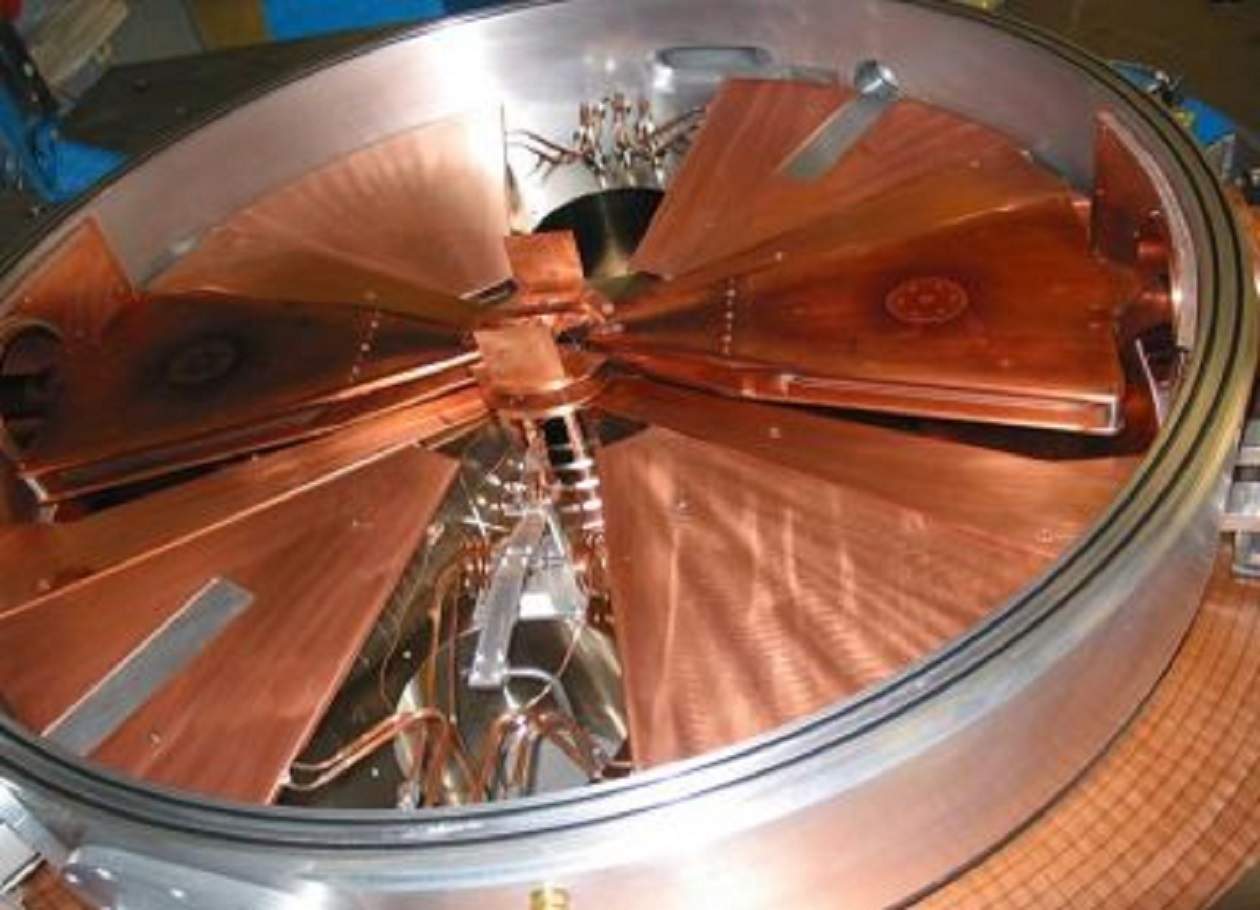
A cyclotron is not a reactor. It does not split uranium. Instead, it uses electromagnetic fields to accelerate charged particles—such as protons or deuterons—in a spiral outward from the center of a vacuum chamber. When these high-energy particles smash into a target material, they induce nuclear reactions that transform stable atoms into radioactive isotopes.
The physics are elegant, but the execution requires industrial muscle. Building a medical cyclotron facility demands thick concrete radiation shielding, specialized cooling systems, and heavily automated hot cells where technicians manipulate radioactive materials via remote robotic arms.
Furthermore, production is only half the battle. Quality control must happen in real time. Every batch of radiopharmaceuticals destined for human injection undergoes rigorous sterility, purity, and radioactivity testing before clearance. If a batch fails, the production run is lost, and the schedule slips. Localizing production removes transit delays, but it places the burden of technical execution squarely on local institutions.
The 2029 Horizon and Regulatory Realities
Announcing a target date of 2029 for a major medical infrastructure project generates headlines, but industry veterans know the hidden friction points. Licensing a nuclear-adjacent medical facility in Canada involves the Canadian Nuclear Safety Commission. Every structural wall, exhaust filter, and waste management protocol undergoes forensic scrutiny.
Capital funding represents another hurdle. Cyclotron facilities demand substantial upfront investments with long-term payoffs. Equipment is expensive, specialized, and subject to rapid technological iteration. Securing provincial backing and private partnerships is necessary, but maintaining operational funding once the ribbon is cut requires sustainable reimbursement models from public health systems.
Beyond the hardware, workforce constraints pose a quiet threat. Operating a cyclotron and compounding radiopharmaceuticals requires a rare intersection of nuclear physicists, radiochemists, radiopharmacists, and specialized technologists. Training this talent pipeline takes years, mirroring the construction timeline of the facility itself. Without qualified personnel to run the equipment, a multi-million-dollar accelerator remains an expensive paperweight.
Beyond the Capital City
The impact of the Calgary installation extends beyond city limits. Regional health centers across Alberta and neighboring provinces currently rely on commercial imports flown in from distant urban nodes. A dedicated Western Canadian source creates redundancy for the national healthcare network.
Consider the logistical transformation for rural and remote patients. When diagnostic agents are produced locally, regional hospitals gain reliable access to advanced PET tracers that detect microscopic disease recurrence far earlier than conventional imaging. Early detection shifts treatment from palliative management to curative intervention.
The ambition is clear. The execution path is narrow. Between now and 2029, the project must navigate supply chain bottlenecks, regulatory milestones, and talent acquisition without missing a beat. If successful, Calgary will no longer be hostage to foreign reactor schedules, setting a blueprint for how mid-sized jurisdictions can secure their own medical future.