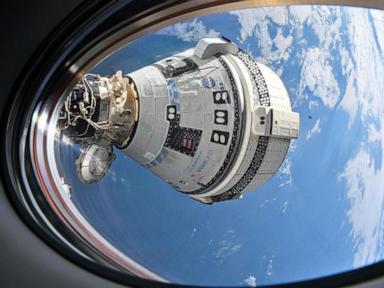
The corporate architecture of American spaceflight rests on a fragile fiction. For a decade, Washington preached the gospel of commercial competition, betting that fixed-price contracts would spur innovation, slash budgets, and transition low-Earth orbit to corporate hands. It worked brilliantly for one contractor in Hawthorne. It turned into a slow-motion industrial tragedy for another in Houston and El Segundo.
When NASA administrators recently shifted from arm's-length oversight to hands-on technical intervention for Boeing's troubled crew vehicle, they did not announce a rescue. They acknowledged a systemic vulnerability. The agency cannot afford to let the Starliner program fail, yet it can no longer afford to watch Boeing try to fix it alone. This is the anatomy of a multibillion-dollar miscalculation, built on corporate hubris, engineering drift, and a broken contracting model that rewards shareholder returns over propulsion physics.
The Fixed-Price Trap
To understand how a legacy titan stumbled, one must look at the math of the Commercial Crew Program. In 2014, NASA awarded Boeing $4.2 billion to develop, test, and fly the CST-100 Starliner capsule to the International Space Station. SpaceX received $2.6 billion for the same operational scope. The disparity fueled early corporate bragging rights inside legacy boardrooms, where executives believed their historic pedigree justified the higher price tag.
That pedigree turned out to be an anchor. Boeing treated the contract like a traditional cost-plus government program disguised in commercial clothing. They assumed the federal paymaster would absorb engineering changes, schedule slippage, and manufacturing oversights. They were wrong. Fixed-price means the contractor eats every dollar of cost overrun once the initial milestone funds are exhausted.
By the time Starliner limped back to Earth empty in late 2024—having stranded astronauts Butch Wilmore and Suni Williams on the station for months—Boeing had accumulated over $1.8 billion in out-of-pocket losses on the development contract. Every subsequent test failure added millions more in red ink. When a corporation faces catastrophic financial losses on a fixed-price venture, engineering priorities inevitably shift from absolute safety to cost containment. Teams get hollowed out. Experienced leadership rotates off the program to protect margins. Institutional memory vanishes. NASA watched this deterioration accelerate, realizing that leaving a bleeding contractor to self-police its orbital hardware was no longer an option.
The Physics of a Thruster Failure
Orbital mechanics are unforgiving of administrative shortcuts. The root causes of the Starliner fiasco are not mysteries hidden in deep space; they are mundane failures of materials science and fluid dynamics that should have been caught during rigorous qualification testing.
During the troubled Crew Flight Test, the spacecraft's reaction control system experienced multiple thruster doghouse failures and helium manifold leaks. The culprit was deceptively simple: doghouse oxidizer isolation valves failed to open fully because teflon seals swelled when exposed to nitrogen tetroxide propellant vapors. In simple terms, the chemical interaction between the seal material and the oxidizer restricted the flow path, starving the thrusters of the thrust needed for precision orbital maneuvers.
Why did this escape detection on the ground? Because ground test configurations often fail to replicate the complex thermal soakback environments experienced during atmospheric entry and orbital insertion. When a spacecraft sits in the blazing vacuum of low-Earth orbit, solar radiation bakes the exterior structure. Propulsion pods heat up unevenly. Materials expand, tolerances shrink, and chemical reactions accelerate in ways that static bench tests on Earth cannot fully simulate.
Boeing's validation protocols missed these interactions because the program relied too heavily on computer simulations and component-level testing rather than full-up integrated hot-fire testing under realistic thermal loads. When you cut corners to meet an aggressive launch schedule, reality eventually collects its debt with interest. The universe does not care about corporate quarterly earnings reports.
Cultural Drift on the Shop Floor
Engineering culture is fragile. Once lost, it takes generations to rebuild. Boeing's aerospace division spent decades perfecting the Space Transportation System and various defense platforms through a rigid, hierarchical command structure. Over time, that culture calcified into a bureaucratic labyrinth where middle managers prioritized schedule adherence over raising uncomfortable engineering flags.
When talent migrated away from traditional aerospace hubs toward newer, more agile competitors, Boeing struggled to attract and retain top-tier propulsion engineers. Young aerospace graduates gravitated toward companies where hardware flew every few weeks rather than every few years. The institutional veterans who built the Apollo and Shuttle guidance systems retired, taking their tacit knowledge with them. What remained was a workforce bound by rigid compliance documents rather than deep physical intuition.
When anomalies appeared during early uncrewed flight tests, the corporate response was often defensive rather than inquisitive. Instead of tearing apart the propulsion system to understand why software cutouts occurred or why parachutes showed unexpected wear, program leadership attempted to rationalize the anomalies as acceptable deviations within risk matrices. This is how major aerospace disasters happen. A series of minor, unexplained anomalies are normalized until they compound into a catastrophic failure mode. NASA's recent decision to embed its own technical experts directly into Boeing's engineering review boards is a direct indictment of this internal culture. The agency had to inject external skepticism back into a system that had forgotten how to doubt its own designs.
The Monopoly Risk
The uncomfortable truth driving NASA's intervention is the monopoly problem. American human spaceflight currently suffers from a dangerous single-point-of-failure dependency. SpaceX's Falcon 9 and Crew Dragon architecture carry the entirety of NASA's human transportation load to the International Space Station.
Monopolies breed complacency and vulnerability. If an anomaly grounds the SpaceX fleet due to a booster mishap, pad fire, or regulatory suspension, American access to the orbiting laboratory halts completely. The United States would once again be forced to purchase seats from foreign partners or abandon the station.
National security and geopolitical prestige require redundancy. Congress and the White House understood this when they originally funded two parallel commercial crew providers. Letting Boeing fail would permanently surrender that redundancy, leaving the American space program at the mercy of a single commercial entity. Therefore, NASA is forced into the uncomfortable role of corporate partner and bailout supervisor. They are providing not just moral support and advisory oversight, but active engineering muscle, software validation support, and test range resources that Boeing's depleted balance sheet can no longer sustain alone.
Rebuilding Trust One Valve at a Time
Fixing Starliner is no longer just about redesigning teflon seals or modifying helium isolation valve manifolds. It is an exercise in cultural reconstruction.
Boeing must prove to an exhausted flight safety community that it can execute rigorous qualification testing without cutting corners. This means re-running hot-fire tests on entire propulsion modules under simulated thermal loads that mirror actual flight profiles. It means rewriting software flight control algorithms to handle degraded thruster performance without throwing the spacecraft into safe mode. It means empowering line engineers to halt testing when data looks anomalous, regardless of what the schedule demands.
The next uncrewed flight test will be the ultimate referendum on this turnaround effort. If the capsule performs flawlessly, NASA's aggressive intervention will be hailed as a masterclass in public-private partnership stewardship. If it fails again, the political fallout will be swift, and the pressure to cancel the program entirely will become insurmountable.
There are no shortcuts through the vacuum. Every pound of payload, every pound of thrust, and every millisecond of burn time must be earned through meticulous empirical validation. Boeing is finally learning that lesson, but the tuition has cost billions of dollars, immense reputational damage, and the peace of mind of astronauts who waited months for a ride home that never came on the ship they trusted.