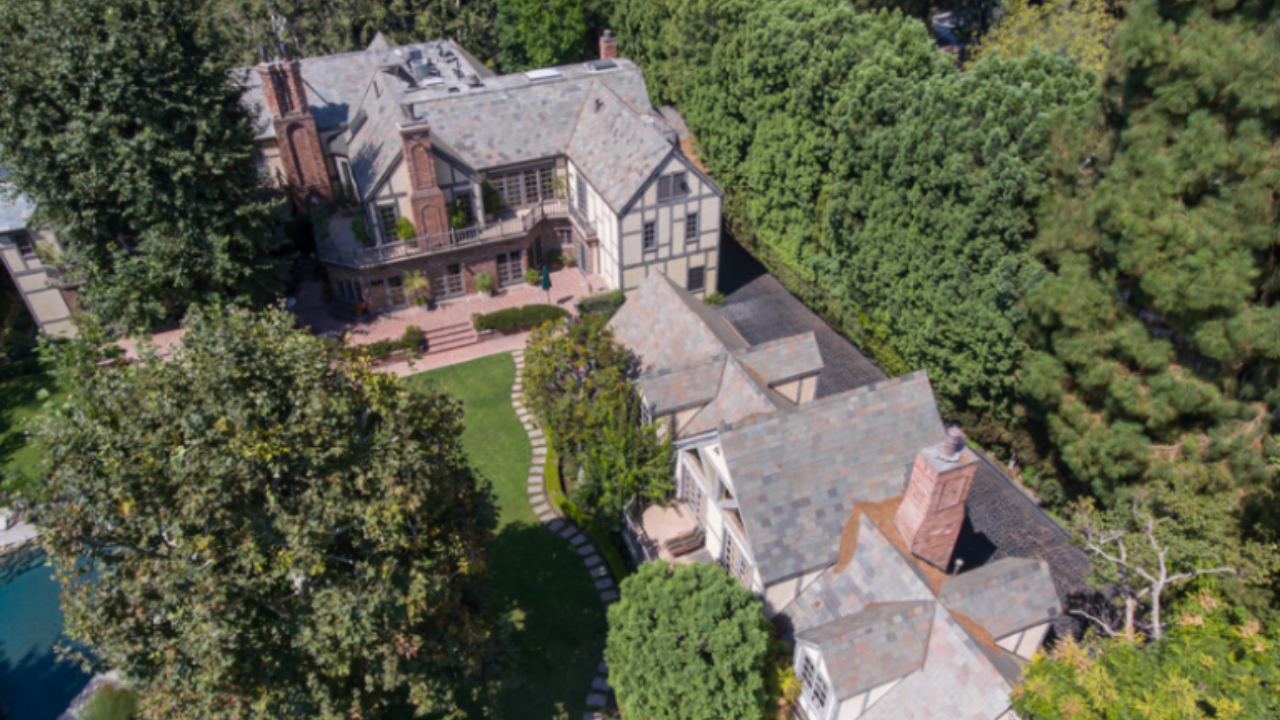
A historic Beverly Hills mansion once owned by Warner Bros. co-founder Harry Warner has closed for $27.25 million, ending a protracted saga that exposed the friction between Hollywood pedigree and modern luxury real estate economics. At first glance, a nearly thirty-million-dollar sale in Southern California looks like business as usual for ultra-prime property. Look closer at the pricing history, carrying costs, and buyer psychology behind the transaction, and a far less glamorous story emerges about what old studio money actually buys today.
Most property coverage treats a closing price like a trophy. In ultra-luxury Beverly Hills real estate, a final number only tells half the story unless you measure how long the property sat waiting for a buyer, how much asking prices were trimmed along the way, and what a new owner must spend after closing to make a century-old estate fit twenty-first-century expectations.
Why Trophy Pedigree Cuts Both Ways
Name recognition sells tickets. It does not always clear escrow.
When a home carries a connection to Harry Warner, one of the brothers who helped build Warner Bros. into a studio powerhouse during the transition to sound film, brokers lean heavily on narrative. Buyers are invited to picture deals struck in quiet rooms, studio executives gathering after screenings, and a bygone era of Los Angeles clout. That story gives a listing immediate press appeal and separates it from anonymous spec builds constructed five minutes ago.
Yet pedigree is a double-edged sword in high-end Beverly Hills transactions. Buyers shopping near the thirty-million-dollar mark rarely want a museum piece that forces them to live around awkward room layouts, dated mechanical systems, or strict preservation trade-offs. They want privacy, flat usable grounds, security, modern climate control, and spaces built for contemporary entertaining. If a historic home delivers romance without effortless livability, the buyer pool shrinks fast.
Consider a hypothetical example to see how the math works on an aging trophy estate. Suppose a buyer acquires a legacy property for $27.25 million and immediately sets aside another $5 million to $8 million for seismic upgrades, electrical and plumbing modernization, pool or guest-house work, and landscaping refreshes. Once closing costs, transfer taxes, and ongoing property taxes are factored in, the true all-in basis climbs well above $33 million before the owner even settles in for a full year.
The Myth of Built-In Appreciation
Too many sellers assume a famous former owner acts like an automatic price floor. It rarely does.
Over decades, neighborhoods shift, architectural tastes cycle, and new ultra-wealthy buyers arrive from finance, tech, and global commerce with different reference points than classic studio royalty. A buyer who made a fortune building software or managing private capital judges a property on acreage, privacy, turnkey condition, and long-term liquidity rather than studio lore alone. If a seller anchors to past peak comps or nostalgic asking prices, the market usually extracts a discount through time on the market.
That dynamic explains why high-profile listings often experience stretches of silence followed by price adjustments. Every extra year on the market costs money in insurance, maintenance, staff, and Beverly Hills real estate carrying charges. Time erodes leverage.
What the $27.25 Million Price Tag Really Signals
A $27.25 million closing price sits in a revealing tier of the Southern California market. It is substantial capital by any objective standard, yet it also reflects the sobering discipline that has settled over top-end residential deals when buyers refuse to overpay for flaws.
Ultra-high-net-worth buyers today have options across coastal and hillside enclaves, from Beverly Hills and Bel Air to Holmby Hills and Malibu. When inventory sits at elevated price points, well-capitalized buyers take their time. They compare renovated modern compounds against older estates and ask a blunt question: am I paying for enduring land and architecture, or am I paying for someone else's unfulfilled asking price?
- Carrying costs compound quietly: Property taxes, homeowners insurance, groundskeeping, and routine repairs turn unsold estates into steady cash drains.
- Renovation friction scares off busy buyers: Multi-year permitting and construction in Los Angeles test the patience of buyers who want to move in right away.
- Comparable sales set hard ceilings: Cash-heavy buyers benchmark every listing against recent closings rather than aspirational initial asks.
- Storytelling cannot fix floor plans: Historical provenance gets a buyer through the gate, but daily flow and privacy decide whether they write an offer.
None of this means historic estates lack value. Quite the opposite. Land in Beverly Hills, mature trees, and original architectural character remain scarce commodities that cannot be reproduced by clearing a standard lot. The catch is pricing accuracy. When a seller meets the market where real demand sits—here, at $27.25 million—a deal gets done.
Old Hollywood vs. New Wealth Priorities
The gap between classic studio glamour and modern wealth shows up clearly in how estates are judged. Mid-century and early-twentieth-century homes often feature formal rooms, compartmentalized layouts, or prominent street-side presence tied to an older social calendar. Today's buyers frequently prize seamless indoor-outdoor flow, expansive primary suites, wellness spaces, and tucked-away security.
A buyer who values history can bridge that gap, provided the purchase price leaves enough financial cushion for thoughtful updates. Without that margin, even a famous address can feel like a heavy lift.
How Savvy Buyers and Sellers Read Deals Like This
Every major closing leaves clues for anyone watching luxury property markets closely.
For sellers of legacy homes, the lesson is straightforward. Price to the buyer who exists today, not the buyer who might appear if interest rates, inventory, or sentiment shift in your favor next spring. Overpricing early often trains agents and buyers to wait, turning a prized property into stale news.
For buyers eyeing historic Beverly Hills properties, due diligence has to go deeper than curb appeal and celebrity history. Inspecting drainage, retaining walls, roofs, HVAC infrastructure, and local alteration rules before locking in a price protects you from turning a dream purchase into an endless construction project. A famous name on the deed adds flavor, not structural integrity.
Watch how the Harry Warner estate's $27.25 million sale is framed in coming weeks, and look past the headline number to the fundamentals underneath: disciplined buyer underwriting, realistic pricing clearing a long-watched listing, and the enduring reality that even legendary Beverly Hills addresses have to earn their keep in the modern market.