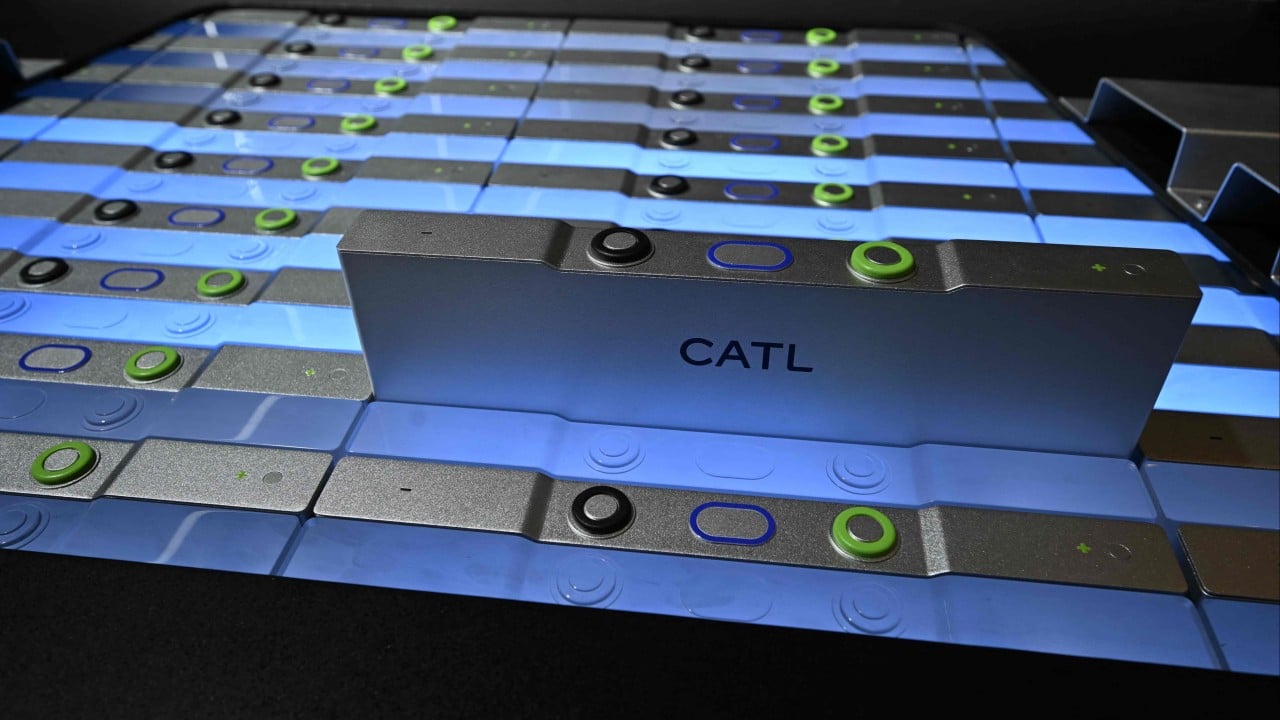
For years, the arithmetic of China’s electric vehicle miracle rested on a single, immovable pillar. Contemporary Automotive Amperex Technology Co., better known as CATL, held a stranglehold over the global energy storage supply chain that felt as permanent as gravity. When a vehicle battery accounts for roughly forty percent of an electric car's total manufacturing cost, whoever controls those cells dictates the margins of every assembly line from Shanghai to Shenzhen. Automakers referred to it quietly as the "CATL tax," a heavy tithe paid for reliability, scale, and technological supremacy.
Then the floor dropped out. Expanding on this theme, you can find more in: The Quiet Weight of a Coin in the East.
Major Chinese automotive brands, tired of acting as margin-donors to a single supplier, began aggressively scattering their procurement contracts across second-tier cell makers while pouring billions into in-house energy initiatives. Li Auto took a substantial equity stake in Sunwoda Power, effectively locking in alternative supply lines. Xiaomi rolled out its proprietary battery architecture while partnering openly with CALB. Huawei and Xpeng initiated parallel sourcing strategies that systematically chipped away at CATL's exclusive allocations. Wall Street and domestic markets panicked, translating this supply chain redistribution into a multi-billion-dollar sell-off that erased massive chunks of the battery giant's valuation.
Beijing noticed. State media organs quickly stepped into the fray to push back against panic narratives of an all-out supplier war, issuing sharp warnings against market overreaction. Government officials recognized a structural hazard hiding beneath the corporate drama. If hyper-competition and price slashing trigger a race to the bottom, the entire export engine of China's green technology sector could implode under its own weight. Analysts at Harvard Business Review have provided expertise on this situation.
To understand why this friction matters, look past the corporate press releases and examine the factory floors. China’s automotive ecosystem has been launching new vehicle models at a dizzying pace—averaging nearly three rollouts every single day. That breakneck velocity places an unprecedented strain on validation cycles. CATL leadership publicly warned that the obsession with speed and cutthroat price wars is directly shortening testing periods, heightening the threat of batch-level cell failures. When a battery pack is pushed from drawing board to showroom floor in months rather than years, safety margins evaporate.
This is the hidden crisis behind the diversification push. Automakers are not merely exercising procurement optionality; they are scrambling to protect their own balance sheets as vehicle price wars eat away at profitability. When a carmaker operates on thin single-digit auto segment margins while a dominant supplier maintains robust twenty-percent-plus gross margins, a structural fracture is inevitable. The moment alternative suppliers like EVE Energy, Gotion High-Tech, and CALB proved capable of delivering functional cells at lower price points, the dam broke.
Yet, Beijing’s anxiety is rooted in the reality of overcapacity. State planners spent a decade constructing an industrial behemoth designed to out-produce the rest of the world. Now, domestic cannibalization threatens to turn that asset into a liability. When battery makers engage in destructive price competition to secure dwindling exclusive contracts, capital efficiency plummets. Financial disclosures reveal that while shipment volumes climb, unit profitability shrinks across the board.
The government's intervention is an attempt to impose order on a market running high on adrenaline and low on margin safety. Tax adjustments, such as shifting VAT export rebate policies and implementing domestic consumption levies on lithium-ion cells, are designed to weed out marginal players who survive only on state-supported debt and predatory pricing. Beijing wants a consolidated, resilient high-tech manufacturing base, not a bloodbath that leaves domestic suppliers vulnerable to international trade retaliation.
International pressure compounds the domestic squeeze. Western markets are erecting trade barriers, investigating subsidies, and rewriting local content rules precisely because they fear being overwhelmed by Chinese overproduction. If domestic automakers and battery titans tear each other apart in a protracted price war at home, they weaken their collective ability to absorb external shocks and maintain global market dominance.
The myth of an unassailable monopoly is gone. What remains is a turbulent transition toward a multi-supplier reality where automakers hold genuine leverage for the first time. CATL will undoubtedly remain a formidable technological force, anchored by heavy investments in solid-state R&D and overseas production footprints. But the era of effortless dominance has ended, replaced by an unforgiving industrial Darwinism that will test the structural limits of China's electric vehicle ambitions.