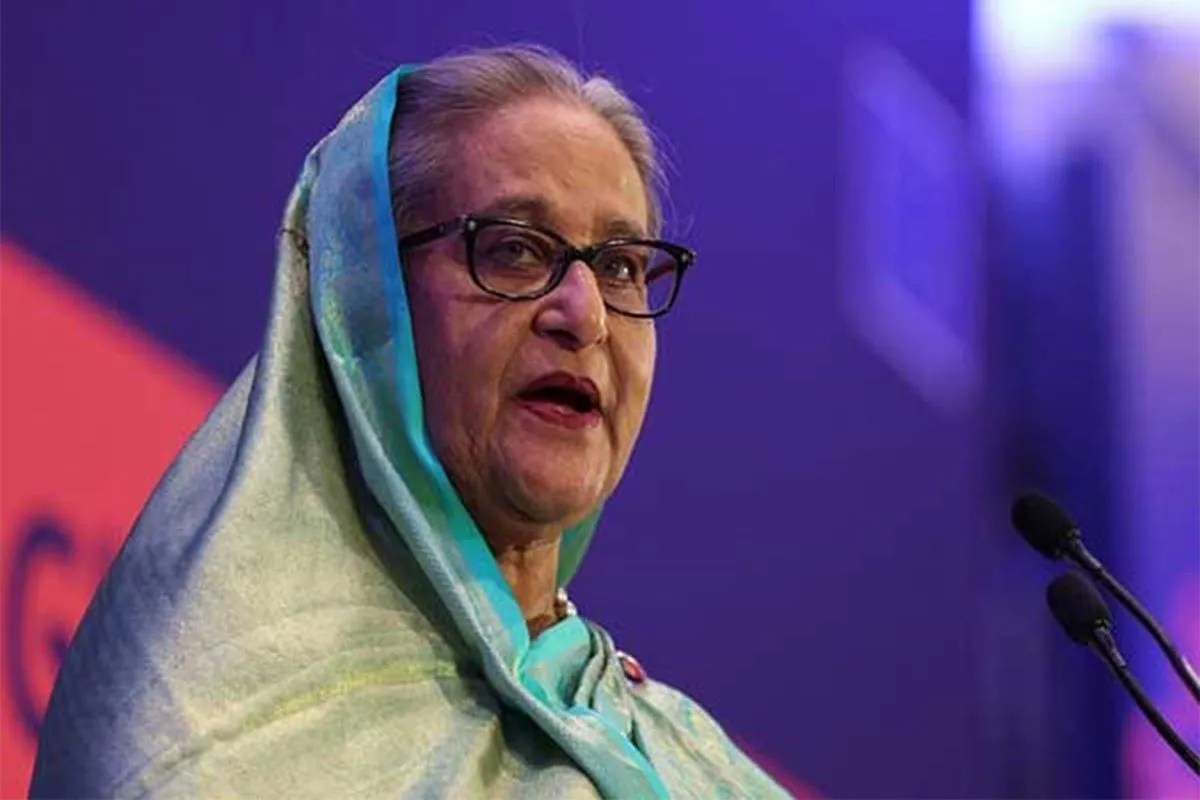
Ousted Bangladeshi Prime Minister Sheikh Hasina has announced her intention to return to Dhaka by December, a high-stakes move that directly challenges the current administration and risks triggering fresh political instability. Speaking from exile in India, the 78-year-old leader revealed plans to surrender voluntarily alongside exiled Awami League colleagues, despite facing a death sentence at home for crimes against humanity. Her planned return forces Bangladesh to confront a delicate question: can the fragile, post-uprising government handle the arrival of its most polarizing figure without igniting a new wave of street violence?
By setting a winter timeline, Hasina is not merely making a dramatic gesture. She is executing a calculated political strategy designed to shift pressure back onto Dhaka and test the resolve of the administration currently led by Tarique Rahman.
The Strategy Behind a Voluntary Surrender
To understand why a leader sentenced to death would willingly walk back into her country, one must look at the state of the Awami League. Since the student-led uprising in August 2024 unseated her after a two-decade rule, the party has been effectively banned from formal operations. Thousands of its cadres are in hiding, facing criminal charges or retaliatory violence.
Hasina is using her own liberty as leverage to reorganize a fractured base. She has quietly held online meetings covering 125 of the country's 300 parliamentary constituencies, working to sustain the party infrastructure from a distance. By arriving in Dhaka with senior figures like former Home Minister Asaduzzaman Khan Kamal, she aims to force a public trial that she has already labeled a farce.
A high-profile trial provides a public stage. The Awami League bets that a televised, contentious legal battle will expose procedural flaws in the International Crimes Tribunal, transforming her from an ousted autocrat into a political martyr in the eyes of her supporters.
The Extradition Dilemma Straining Regional Alliances
For nearly two years, Hasina’s presence in New Delhi has been a thorn in bilateral relations between India and Bangladesh. The administration in Dhaka has consistently demanded her extradition to face trial for the lethal crackdown that killed an estimated 1,400 people during the 2024 protests. New Delhi, which historically viewed Hasina as a vital anchor for regional security, found itself caught between protecting an old ally and building a relationship with Bangladesh’s new rulers.
By opting to return on her own accord, Hasina defuses a diplomatic time bomb for India. If she boards a plane voluntarily, New Delhi avoids the unpleasant choice of either handing over a former head of state or flatly refusing the legal requests of a neighboring government. For Dhaka, however, the development presents a logistical nightmare. The current authorities must now prepare for the security challenge of processing a high-profile prisoner whose arrival could easily mobilize rural and urban loyalists.
A Fractured Political Landscape
The current government maintains that it is unbothered by Hasina’s declarations, dismissing them as rhetorical pressure. Yet beneath the official confidence lies an uneasy political reality. Islamist factions, including Jamaat-e-Islami, have expressed concern over a potential Awami League revival, warning against a return to the polarization that characterized Bangladeshi politics for decades.
Meanwhile, the daily reality for ordinary citizens is defined by a slow struggle to stabilize an export-heavy economy. The garment sector, which serves as the backbone of the nation's finances, requires absolute predictability to retain international buyers. Renewed political clashes in the streets of Dhaka or Chittagong would jeopardize economic recovery.
Hasina is counting on the idea that public memory is short. She has pointed to rising inflation, security issues, and reported attacks on minorities under the current administration as evidence that the post-2024 order is struggling to govern effectively. "If we have done badly, let the people decide," she stated, challenging the state's decision to sideline her party from the electoral process.
The Risks of the Homecoming
The risks of this maneuver are total. The legal framework arrayed against her is severe, and the public anger that fueled the 2024 uprising has not entirely evaporated. There is no guarantee that her arrival will inspire a popular wave of sympathy; it could just as easily trigger immediate, angry counter-protests from student groups and opposition parties determined to ensure she serves her sentence.
Yet for a politician who survived the 1975 assassination of her family and endured multiple prison terms under military rule, brinkmanship is a familiar terrain. By setting a definitive horizon for her return, Sheikh Hasina has ensured that the uneasy peace currently holding in Bangladesh will face its ultimate test before the year ends.