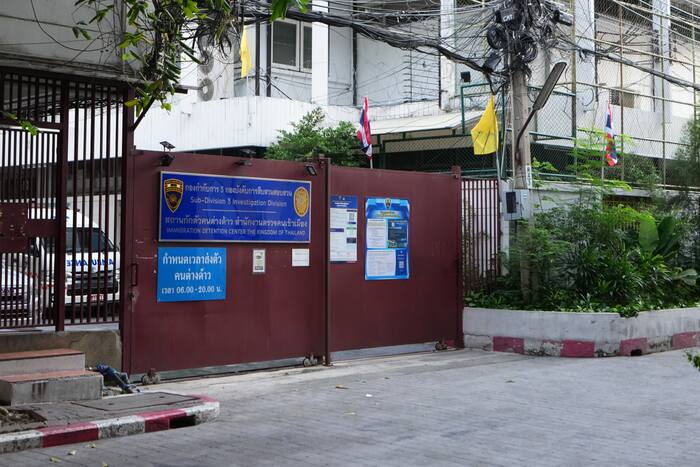
Two Uyghur men held for over a decade inside Thailand's notorious Suan Phlu immigration detention center are facing imminent deportation to China, prompting urgent legal appeals and human rights warnings that a forced return would result in arbitrary detention, torture, or disappearance.
Their desperate plea to remain in Bangkok—or be resettled in a third country—exposes a quiet, decade-long diplomatic deadlock. For ten years, dozens of ethnic Uyghurs who fled severe repression in China's Xinjiang region have been locked in indefinite limbo inside Thai holding cells. They have not been charged with any violent crimes. Their only offense was crossing a border without valid travel documents while trying to reach safety in Turkey. Now, shifting geopolitical alliances and quiet backchannel diplomacy between Beijing and Bangkok threaten to erase the slim protections keeping these men alive.
A Decade Lost in Suan Phlu
To understand why two men are begging not to be put on a plane to Beijing, you have to look at where they have spent the last ten years.
Suan Phlu Immigration Detention Center in central Bangkok is not designed for long-term incarceration. It is a transit facility meant to hold visa overstayers for a few days or weeks before they buy a ticket home. Instead, it became a permanent cage for around 48 Uyghur men who arrived in Thailand in 2013 and 2014.
The conditions inside are brutal. Overcrowded cells, stifling tropical heat, inadequate medical care, and contaminated food are standard features of daily life. Over the last decade, at least five Uyghur detainees have died in Thai custody—including a newborn baby and a three-year-old child—primarily from preventable illnesses like pneumonia, tuberculosis, and liver failure brought on by malnutrition and lack of basic medicine.
These men were part of a larger wave of hundreds of Uyghurs who fled China via Southeast Asia between 2013 and 2015, attempting to reach Turkey, which shares linguistic and cultural ties with the Turkic-speaking Muslim minority. When Thai authorities intercepted them near the Malaysian border in 2014, Beijing immediately demanded their return, labeling them terrorists and separatists without presenting evidence to Thai courts.
In July 2015, Thailand bowed to Chinese pressure and forcibly deported 109 Uyghurs back to China. Videos of hooded detainees being escorted onto chartered Chinese planes sparked international outrage, violent protests at the Thai consulate in Istanbul, and fierce condemnation from the United Nations. Fearing further diplomatic blowback, Bangkok froze the remaining deportations. Roughly 170 women and children were eventually allowed to resettle in Turkey. The men were left behind.
For ten years, those remaining men existed in a bureaucratic void. Thailand refused to grant them refugee status because it is not a signatory to the 1951 UN Refugee Convention. At the same time, Bangkok blocked the United Nations High Commissioner for Refugees (UNHCR) from accessing the detainees to process them for third-country resettlement, terrified of angering Beijing.
Why the Deportation Threat Returned
For years, the status quo held through inertia. Bangkok kept the men locked up out of sight; Beijing stopped publicly demanding their immediate transfer. That uneasy equilibrium has fractured.
Several converging factors have pushed the two Uyghur men—and potentially the rest of the surviving cohort—back to the edge of deportation.
- Deepening Sino-Thai Security Integration: Over the past two years, Thailand's political leadership has aggressively courted Chinese investment, tourism, and infrastructure financing. Visa-free travel agreements and joint policing initiatives have brought Thai law enforcement closer to Beijing's Ministry of Public Security than at any point in recent memory.
- Administrative Fatigue in Bangkok: Holding aging, chronically ill detainees indefinitely creates a domestic headache for Thai immigration officials. Every death inside Suan Phlu triggers negative international press and inquiries from foreign embassies in Bangkok.
- Quiet Pressure Without Public Spectacle: Unlike 2015, when Beijing loudly demanded mass repatriations, Chinese diplomats have shifted toward quiet, bilateral persuasion. Securing the return of small groups—two or three individuals at a time—avoids the media firestorm of a chartered plane full of hooded prisoners while achieving the same strategic goal.
When the two men managed to smuggle out a plea through legal advocates and rights monitors, they were reacting to tangible signs inside the detention center: sudden administrative questioning, biometric data collection, and whispers among guards that transfer orders were being drafted.
The Legal Shield That Thailand Keeps Ignoring
Under international law, sending anyone back to a country where they face a real risk of torture or persecution is strictly prohibited. This is the principle of non-refoulement.
It is not a polite suggestion or an optional treaty clause. Non-refoulement is recognized as customary international law, meaning it binds every nation on earth regardless of whether they signed the 1951 Refugee Convention. Furthermore, Thailand ratified the UN Convention Against Torture (UNCAT) in 2007, which explicitly bars the expulsion or return of a person to another state where there are substantial grounds for believing they would be in danger of being subjected to torture.
Bangkok even went a step further on paper. In 2023, Thailand enacted its own Prevention and Suppression of Torture and Enforced Disappearance Act. Section 13 of that domestic statute explicitly forbids government agencies from expelling, deporting, or extraditing a person to another country if there are substantial grounds to believe they will face torture, cruel treatment, or enforced disappearance.
The legal protection exists right there in Thai criminal code. The problem is enforcement.
Immigration detention in Thailand operates largely outside standard judicial oversight. Detainees held under the Immigration Act of 1979 do not receive automatic court hearings to challenge the legality or duration of their confinement. Unless a well-funded legal team intervenes with a writ of habeas corpus—a rarity for penniless, non-Thai-speaking detainees—immigration officials hold near-total discretion over who stays and who is put on a flight.
What Happens When Uyghurs Are Returned to China
The fears expressed by the two men in Bangkok are not theoretical. They are backed by a decade of documented evidence regarding what awaits deportees upon arrival in Xinjiang.
Since 2017, the Chinese government has constructed a vast network of extrajudicial internment camps, high-security prisons, and digital surveillance systems targeting Uyghurs and other Turkic Muslims. UN human rights assessments have concluded that the scale of arbitrary detention in Xinjiang may constitute crimes against humanity.
Merely leaving China without state permission, applying for asylum abroad, or traveling through Southeast Asia is treated by Chinese authorities as a de facto indicator of religious extremism or separatist intent.
Of the 109 Uyghurs Thailand deported in 2015, almost nothing has been heard since. Independent researchers, journalists, and family members abroad have been unable to verify their whereabouts, health, or legal status. Similar deportations from Egypt, Saudi Arabia, and Cambodia have consistently resulted in detainees disappearing into long prison sentences—ranging from ten years to life—on vague charges of "splittism" or "illegal border crossing."
To put the two men in Suan Phlu on a plane to China is not a routine immigration removal. It is a transfer into a black hole.
The Diplomatic Tightrope in Southeast Asia
To be fair to Thai policymakers, Bangkok is navigating an unforgiving geopolitical reality that Western critics often flatten into simple moral binaries.
Thailand is a middle-power nation situated directly in China's geographic and economic backyard. China is Thailand's largest trading partner, its top source of foreign direct investment in key manufacturing sectors like electric vehicles, and the lifeblood of its post-pandemic tourism recovery. When Washington or Brussels condemns Bangkok over human rights, they offer stern press releases and congressional resolutions. When Beijing makes a request, it carries the weight of billions of dollars in rail infrastructure, agricultural exports, and regional security cooperation.
For Thai officials, the Uyghur detainees represent an inherited trap. The current administration did not arrest them in 2014, nor did it order the 2015 deportation. Yet it is stuck managing the fallout while trying to maintain neutrality between the United States—a formal treaty ally—and China, its dominant economic neighbor.
However, acknowledging Thailand's diplomatic constraints does not excuse the paralysis. A third option has existed for ten years, and Bangkok has consistently refused to take it.
The Resettlement Bottleneck
Several third countries, including the United States, Canada, and Turkey, have repeatedly signaled willingness to accept the remaining Uyghur detainees for permanent resettlement. Under standard international protocol, the UNHCR interviews the detainees, verifies their refugee claims, and coordinates with host nations to fly them out of the country at zero financial cost to Thailand.
Thailand has blocked this pathway at every turn.
Why? Because allowing the UNHCR to formally process the men as refugees requires Bangkok to implicitly acknowledge that China is persecuting its citizens. For Beijing, that diplomatic humiliation is unacceptable. China views the Uyghurs not as refugees, but as Chinese nationals who violated exit laws and must be repatriated under bilateral judicial cooperation.
By keeping the men locked in Suan Phlu, Thailand tried to split the difference: it avoided angering the West by not deporting them, and it avoided angering China by not letting them resettle elsewhere. That compromise has rotted into a slow-motion human rights catastrophe. Ten years of indefinite detention without charge or trial is, by any legal definition, arbitrary detention.
The Strategic Misstep of Silence
If Thai authorities believe they can quietly hand over two men without triggering a major diplomatic crisis, they are misreading the current international environment.
In 2015, global awareness of the situation in Xinjiang was still nascent. Today, the persecution of Uyghurs is one of the most heavily scrutinized human rights issues in the world. The United States has enacted the Uyghur Forced Labor Prevention Act, sanctioned senior Chinese officials, and formally designated Beijing's policies in Xinjiang as genocide.
Any move by Bangkok to deport Uyghur detainees now would carry immediate, severe consequences:
- Sanctions Exposure: Under the Global Magnitsky Act and U.S. visa restriction policies, individual Thai immigration officials and political decision-makers directly involved in facilitating a deportation to torture could face targeted asset freezes and travel bans.
- Trade and Alliance Friction: Thailand is currently negotiating sensitive trade frameworks and defense procurement deals with Washington and the European Union. Assisting Beijing in transnational repression would poison those negotiations overnight.
- Domestic Legal Challenges: Unlike in 2015, Thai civil society groups and human rights lawyers now have Section 13 of the 2023 Anti-Torture Act as a direct legal weapon to file emergency injunctions in Thai criminal courts.
The two men pleading for their lives from inside Suan Phlu have already lost a decade of their existence to a geopolitical stalemate they had no part in creating. Keeping them in concrete cells indefinitely is indefensible, and sending them back to China violates Thailand's own laws. Until Bangkok grants the UNHCR immediate access to process these men for third-country resettlement, every day they remain behind bars deepens Thailand's complicity in their slow erasure.