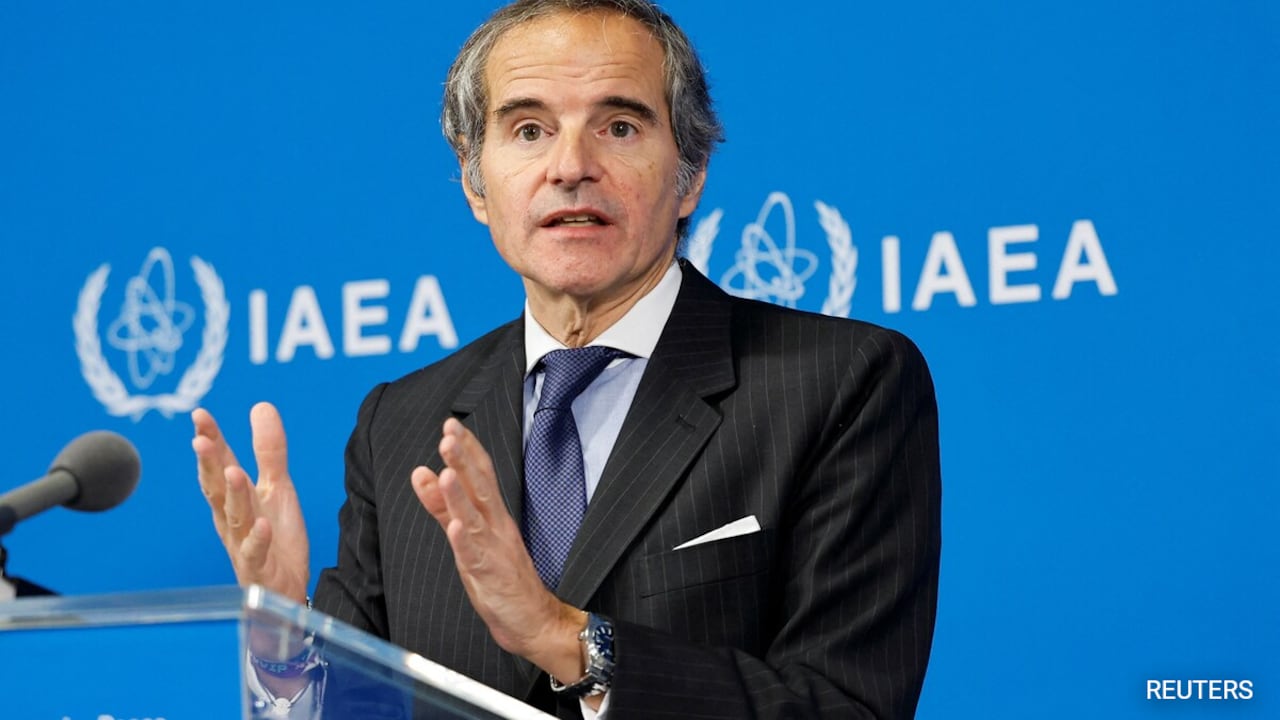
The physical remnants of Bashar al-Assad's clandestine nuclear ambitions are finally yielding to international inspectors, nearly two decades after an Israeli airstrike blasted a remote desert installation into jagged concrete and twisted rebar. International Atomic Energy Agency Director General Rafael Grossi stepped inside the heavily scrutinized Deir al-Zour site, marking a stark pivot from decades of systematic stonewalling, denial, and concealment by the fallen Damascus regime. Several metric tons of low-grade radioactive uranium ore concentrate, commonly known as yellowcake, sit at the center of this sudden diplomatic opening.
The transition of power in Damascus has rewritten the rules of engagement for international nonproliferation monitors. Interim authorities are granting unprecedented physical access to locations that were previously treated as sovereign black boxes. Yet, opening these doors solves only part of a long-standing geopolitical puzzle. Beneath the surface lies a web of foreign technology transfers, hidden storage depots, and unresolved questions regarding North Korea's historical assistance to the old regime.
The Ghosts of Al-Kibar
To understand the gravity of the current excavation work, one must look back to September 2007. Israeli warplanes executed Operation Outside the Box, leveling a covert facility at Al-Kibar in Syria's eastern desert. Western intelligence agencies maintained that the building was a plutonium-production nuclear reactor explicitly modeled on North Korea's Yongbyon design. Damascus flatly rejected the accusation, bulldozed the site, removed debris under cover of night, and stonewalled every subsequent request for transparent inspections.
The civil war that erupted a few years later slammed the door shut on any meaningful verification. The region traded one militant faction for another, eventually passing through Islamic State control before falling to local coalition forces. For years, the IAEA could do little more than analyze soil samples remotely gathered from secondary locations, finding scattered anthropogenic uranium particles that hinted at undeclared processing activities.
The sudden collapse of the Assad government in late 2024 transformed this stagnant standoff. The new leadership in Damascus, seeking international legitimacy and economic rehabilitation, adopted a starkly different posture toward global watchdog organizations. Pledging full cooperation on residual security threats, the interim government invited Grossi and his inspection teams directly into the restricted zones.
Metrics of Risk
The material now under international scrutiny is substantial. Inspectors are dealing with several metric tons of nuclear-capable substances that require secure accounting, containment, and eventual removal to prevent misuse or illicit proliferation. Yellowcake itself is not weapons-grade material, but it represents the foundational feedstock necessary for fuel fabrication or further enrichment cycles. Left unsecured in a fractured state transitioning out of civil war, these stockpiles presented a nightmare scenario for regional security planners.
Regional anxiety played a heavy hand in forcing this breakthrough. Israeli intelligence closely monitored secret storage facilities, warning international partners that any hesitation by Damascus to secure or surrender the material could trigger preemptive military action. Parallel diplomatic pressure from Washington helped finalize an arrangement that brings the material under direct IAEA safeguards.
Foreign Minister Asaad al-Shibani has maintained that Damascus retains an interest in developing peaceful nuclear energy, particularly for medical and domestic power applications. At the same time, the administration has agreed to keep the discovered stockpiles strictly under international oversight. This diplomatic balancing act allows the new government to project national sovereignty while satisfying Western and regional demands for absolute transparency.
Unanswered Questions in the Sand
Excavation equipment is currently churning up earth at Deir al-Zour, but physical digging is only the superficial layer of a much deeper investigative mandate. Inspectors must still establish a complete accounting of the supply chain that built the original infrastructure.
The exact nature of North Pyongyang's technical footprint remains shrouded in classified archives. Historical assessments indicate that technicians from North Korea provided structural blueprints, engineering oversight, and specialized components over a decade-long period. Tracking down the paper trail of illicit foreign procurements, financial transactions, and secondary storage sites for reactor fuel rods remains a daunting task for agency investigators.
Furthermore, the involvement of regional intermediaries adds a layer of diplomatic friction. Intelligence reports prior to the current agreement suggested external actors held ambitions regarding the remaining yellowcake inventory. Bringing these materials under a verified international safeguard framework effectively neutralizes that geopolitical chess piece, though it leaves regional capitals watching every truck movement across the desert.
The work happening inside Syria today represents a rare instance where a historical proliferation threat is being systematically unpacked rather than buried under political expediency. International monitors are finally touching the physical evidence of a secret that Damascus guarded with lethal intensity for decades. As excavation continues and transport logistics are hammered out ahead of upcoming agency briefings, the true test will be whether total transparency can survive the harsh realities of Middle Eastern geopolitics.