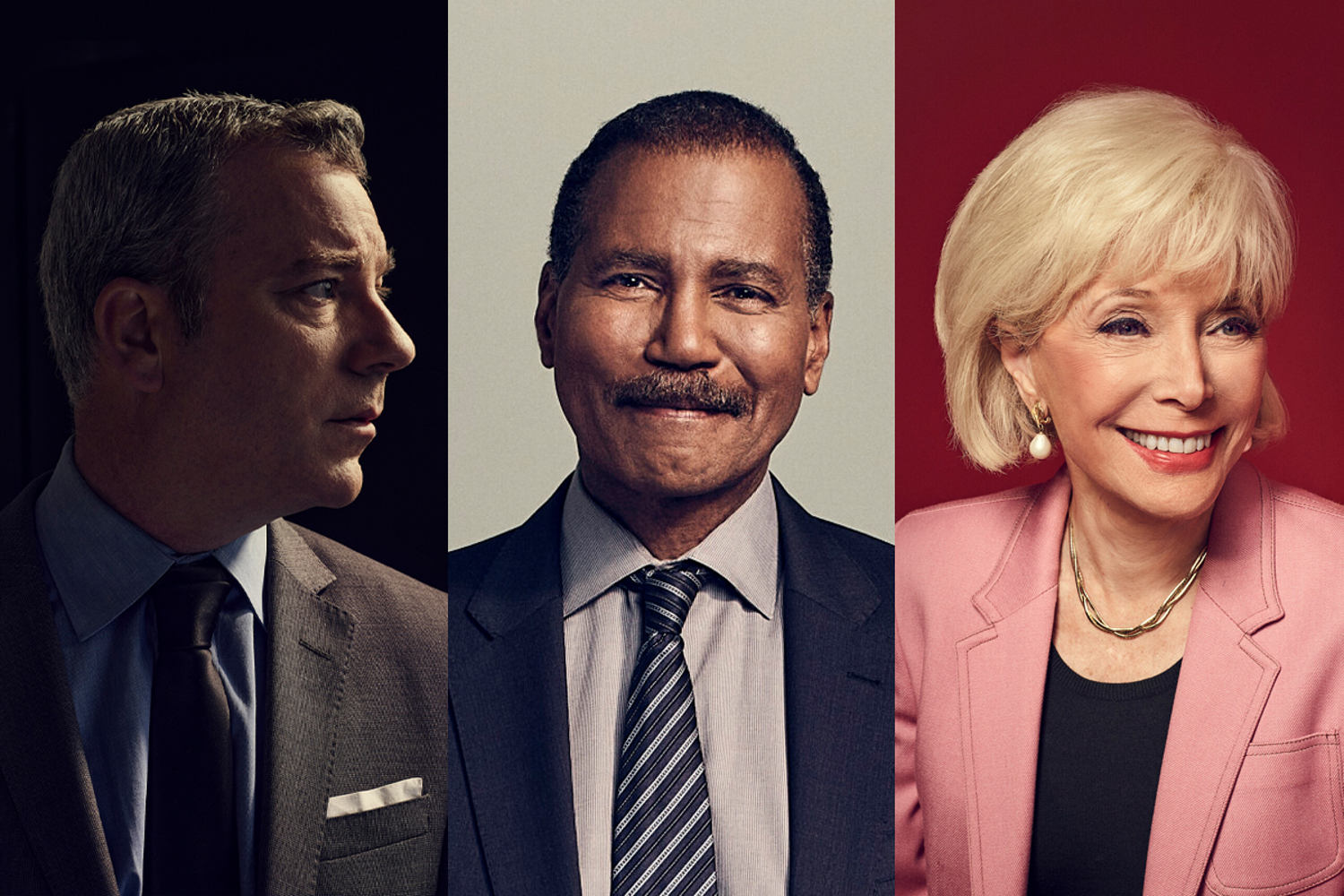
The internal bloodletting at CBS News briefly paused on Friday morning when the remaining institutional pillars of 60 Minutes—Lesley Stahl, Bill Whitaker, and Jon Wertheim—issued a joint memo declaring they would "stay and fight." To the casual observer, the announcement looks like a stabilizing victory for a network teetering on the edge of structural collapse. In reality, it is a desperate rearguard action by a legacy workforce trying to prevent the complete corporate dismantling of American television’s most profitable newsroom.
When Scott Pelley was summarily fired for "cause" on Tuesday after accusing CBS News Editor-in-Chief Bari Weiss of "murdering" the broadcast, the network’s leadership anticipated a total mutiny. Instead, the surviving correspondents chose to remain. This decision is not an endorsement of the new regime, nor is it a sign that the crisis has passed. It is the tactical choice of veteran journalists who realize that if they walk out the door, the traditional ethos of the program goes with them.
The Decapitation of West 57th Street
To understand why the stay-and-fight memo reads more like a hostage note than a press release, one has to look at the sheer scale of the purge that preceded it. Within a matter of days, CBS News leadership stripped the broadcast of its institutional memory.
Executive producer Tanya Simon and her top deputy, Draggan Mihailovich, were ousted. Correspondents Sharyn Alfonsi and Cecilia Vega were terminated. Senior producer Guy Campanile and producer Matthew Polevoy were shown the door. The immediate catalyst for the collapse was an explosive staff meeting where Pelley confronted the newly appointed executive producer, Nick Bilton—a former tech writer with zero background in television news—and challenged his editorial credentials. Pelley’s firing followed within twenty-four hours.
The network’s executive suite under Weiss has framed these moves as a necessary modernization of an aging property. The reality on the ground is far more punitive. Internal friction had been building since late 2025, when management spiked an Alfonsi segment regarding a Salvadoran mega-prison hours before it was scheduled to air. The killed piece focused on Venezuelan migrants held without trial. When Alfonsi resisted internal demands to alter the reporting, her contract renewal was denied.
The management strategy here follows a distinct corporate playbook. Rather than managing editorial disagreements through traditional newsroom debate, current leadership is using contract non-renewals and abrupt dismissals to enforce absolute alignment.
The Corporate Subjugation of Editorial Independence
Television newsrooms have always been volatile environments where big egos clash with corporate budgets. What is happening at 60 Minutes is fundamentally different. It is the direct consequence of a shifting corporate ownership model that views aggressive, independent investigative journalism as an unacceptable regulatory and financial liability.
Paramount, the parent company of CBS, operates under acute commercial pressure. The legacy broadcast model is shrinking, and the network can no longer afford to shield its news division from political and legal blowback.
Consider the financial baggage hanging over the division. Prior to its recent corporate transition, Paramount paid a staggering $16 million to settle a lawsuit filed by Donald Trump over a October 2024 interview with Kamala Harris conducted by Bill Whitaker. The network later acceded to intense regulatory pressure from the Federal Communications Commission to release full unedited transcripts and production footage.
For corporate executives, an investigative unit that triggers multi-million dollar lawsuits and hostile federal scrutiny is a luxury the balance sheet cannot support. The systematic removal of Simon, Mihailovich, and Pelley represents the elimination of the editorial firewalls that historically protected reporters from executive suite interference. By replacing Simon with Bilton—a figure outside the traditional broadcast news tradition—management has installed a leadership structure far more receptive to corporate oversight.
Why Staying is the Only Hard Choice Left
The joint memo from Stahl, Whitaker, and Wertheim explicitly noted that they had a "hard time" deciding whether to remain at the network. Their return leaves them in an incredibly exposed position.
Stahl is 84 years old and has been with the program since 1991. Whitaker joined in 2014 and remains one of the network's most formidable interviewers. They are fully aware that their presence provides a thin veneer of continuity and respectability to a depleted brand. Their memo went out of its way to decry the "indecency" with which their colleagues were treated, openly calling the current management structure a "dictatorship."
"We feared that our returning might be construed as an endorsement of the existing power structure. That is simply, categorically not the case. We don't want '60 Minutes' to die."
This is extraordinary language for active network employees to use against their employers. It reveals a profound tactical gamble. If Stahl and Whitaker resigned in solidarity, CBS management would have a blank canvas to completely reinvent the program as a low-cost, high-opinion newsmagazine stripped of its expensive investigative apparatus. By staying, the remaining correspondents force the network to maintain at least the appearance of its traditional identity.
But maintaining an appearance is not the same as maintaining influence. With the production infrastructure gutted—with trusted senior producers like Campanile and Polevoy gone—the remaining correspondents are effectively isolated. A correspondent is only as strong as the producing team that digs up the documents, verifies the sources, and structures the narrative. By decapitating the mid-level editorial leadership, management has effectively disarmed the correspondents without having to fire them.
The Grim Outlook for Broadcast Journalism
The crisis at 60 Minutes is the final chapter in the corporate domestication of American broadcast news. For decades, the Sunday night program was considered untouchable because its massive ratings generated enough revenue to dictate its own terms to corporate executives. That exceptionalism has expired.
The program now faces a dual threat. From above, it is squeezed by corporate owners who prize regulatory compliance and cost-cutting above hard-hitting journalism. From within, it faces an identity crisis under leadership that views traditional reporting methods as obsolete relics of a bygone era.
Nick Bilton’s mandate is clear. He is there to reshape the broadcast into an entity that avoids costly litigation, fits into a broader digital distribution strategy, and lowers the temperature with regulators. The "Mike Wallace tradition" of holding feet to the fire, which the remaining correspondents pledged to preserve, is precisely what corporate leadership is trying to phase out.
Stahl, Whitaker, and Wertheim may win a few temporary editorial battles in the coming months. They might successfully block the most egregious attempts to soften the show's reporting. But the structural defenses are gone. The gatekeepers have been cleared out, the budget is under direct corporate control, and the corporate entity has demonstrated that it will terminate even its most revered figures to achieve compliance. The remaining anchors are fighting a holding action inside a fortress that has already been breached.