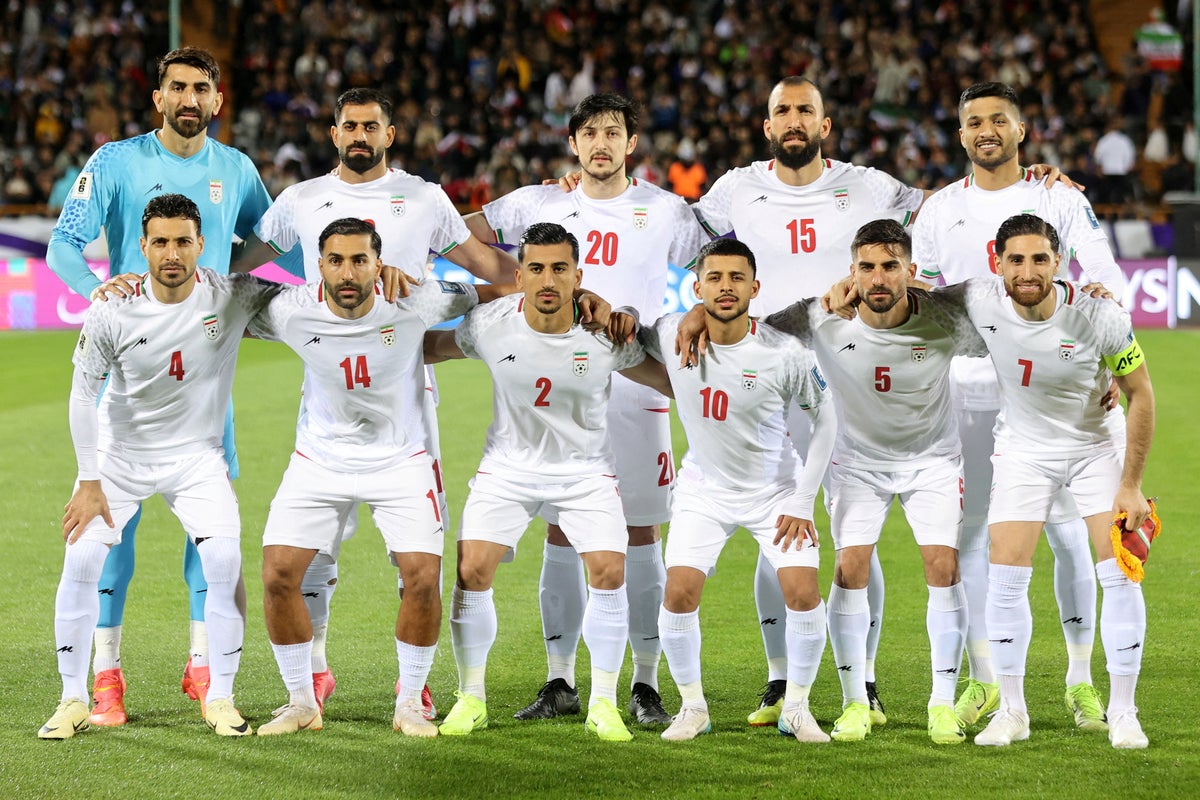
FIFA has rejected an extraordinary demand from the Iranian Football Federation to relocate its 2026 World Cup matches from the United States to Mexico. On Tuesday, world football’s governing body issued a firm statement insisting that the tournament will proceed exactly as scheduled, despite Tehran’s claims that the safety of its players cannot be guaranteed on American soil.
The standoff puts FIFA in a direct collision course with both a participating nation and the shifting geopolitical realities of a tournament co-hosted by three different countries. By refusing to budge, FIFA is gambling that its ironclad contracts and logistical blueprints can override a volatile security situation that involves active military conflict and a U.S. President who has publicly questioned whether Iranian athletes should even cross the border.
The Trigger for the Request
The friction reached a breaking point following comments from U.S. President Donald Trump, who suggested last week that while the Iranian team is technically "welcome," their presence in the United States might not be "appropriate for their own life and safety." For Mehdi Taj, the president of the Iranian Football Federation, this was more than just a rhetorical swipe; it was a formal admission of a security vacuum.
"When Donald Trump has explicitly stated that he cannot ensure the security of the Iranian national team, we will certainly not travel to America," Taj stated in a message disseminated through the Iranian embassy in Mexico.
The Iranian delegation is currently scheduled to play its entire Group G slate in the U.S., with high-profile matches against New Zealand and Belgium in Los Angeles, followed by a final group encounter with Egypt in Seattle. The federation’s request was specific: swap these venues for cities in Mexico, such as Mexico City, Monterrey, or Guadalajara. Mexico’s President, Claudia Sheinbaum, has already signaled a willingness to accommodate the change, noting that Mexico maintains diplomatic relations with all nations and has the infrastructure to step in.
A Logistics Nightmare in Zurich
From the perspective of FIFA’s headquarters in Zurich, the "why" matters far less than the "how." Moving three matches—and the thousands of tickets, broadcast slots, and hotel blocks attached to them—is not a simple administrative pivot. It is a structural upheaval.
FIFA characterized the proposed relocation as "unprecedented" and "not planned." The current match schedule was finalized in December 2025, and the governing body operates on the principle that host nations are legally bound to provide security and visa access to all qualified participants. If FIFA allows Iran to move its games based on political friction, it sets a precedent that could lead to a fragmented tournament where teams effectively "shop" for the host most sympathetic to their domestic politics.
Furthermore, the logistical ripple effect would be massive.
- Ticketing: Thousands of fans have already purchased tickets and travel for Los Angeles and Seattle.
- Broadcasting: Rights holders have built their production schedules around specific time zones and stadium infrastructures.
- The Knockout Trap: Even if FIFA moved the group games, a successful Iranian run would likely land them right back in a U.S. city for the Round of 32 or Round of 16, as the vast majority of knockout venues are on American soil.
The Visa Weapon
Beyond the immediate threat of violence, there is the more subtle, bureaucratic obstacle of the visa process. Iranian officials have accused the U.S. government of a lack of cooperation regarding entry permits for the delegation. For a national team, a "delegation" isn't just eleven players on a pitch. It is a massive entourage of coaches, medical staff, analysts, and federation officials.
In the current climate of heightened tensions—following the February 2026 airstrikes that killed senior Iranian figures—the U.S. State Department’s vetting process is under intense scrutiny. If the U.S. denies visas to key personnel under the guise of national security, the team is effectively hobbled before they even land.
The Precedent of Neutral Grounds
While FIFA is holding the line, the world of international sport is littered with examples of teams playing on neutral territory due to conflict. India and Pakistan’s cricket matches are almost exclusively held in third-party countries like the UAE. UEFA has frequently moved matches involving teams from Russia, Ukraine, and Belarus to neutral sites in Hungary or Poland.
The difference here is the "co-host" dynamic. Iran argues that because Mexico is already a host, moving matches there isn't moving them out of the tournament, but rather redistributing them within the existing framework. They see it as a loophole; FIFA sees it as a breach of the hosting agreement.
A Tournament on the Brink
If FIFA refuses to move the matches and Iran refuses to travel to the U.S., the 2026 World Cup faces its first high-profile withdrawal in the modern era. This would force the Asian Football Confederation (AFC) and FIFA into an emergency scramble to find a replacement team—likely the next highest-ranked side from the Asian qualifiers—on just a few months' notice.
The fallout would be catastrophic for the tournament’s image as a "unifying" global event. It would transform the biggest World Cup in history, featuring 48 teams for the first time, into a stark reminder of the limitations of "soft power" sports diplomacy.
FIFA’s current stance—looking forward to all teams competing "as per the match schedule"—is a desperate attempt to maintain order. However, as the June 11 kickoff approaches, the gap between FIFA's official schedule and the reality on the ground is widening. The governing body is essentially betting that Iran will cave to the pressure of a global stage rather than miss the tournament entirely. It is a high-stakes game of chicken where the collateral damage is the integrity of the World Cup itself.
The pressure is now back on Tehran. They must decide if they are willing to risk their players' safety and their political pride for 270 minutes of football, or if they will become the first nation to walk away from the world's biggest stage over a security dispute.