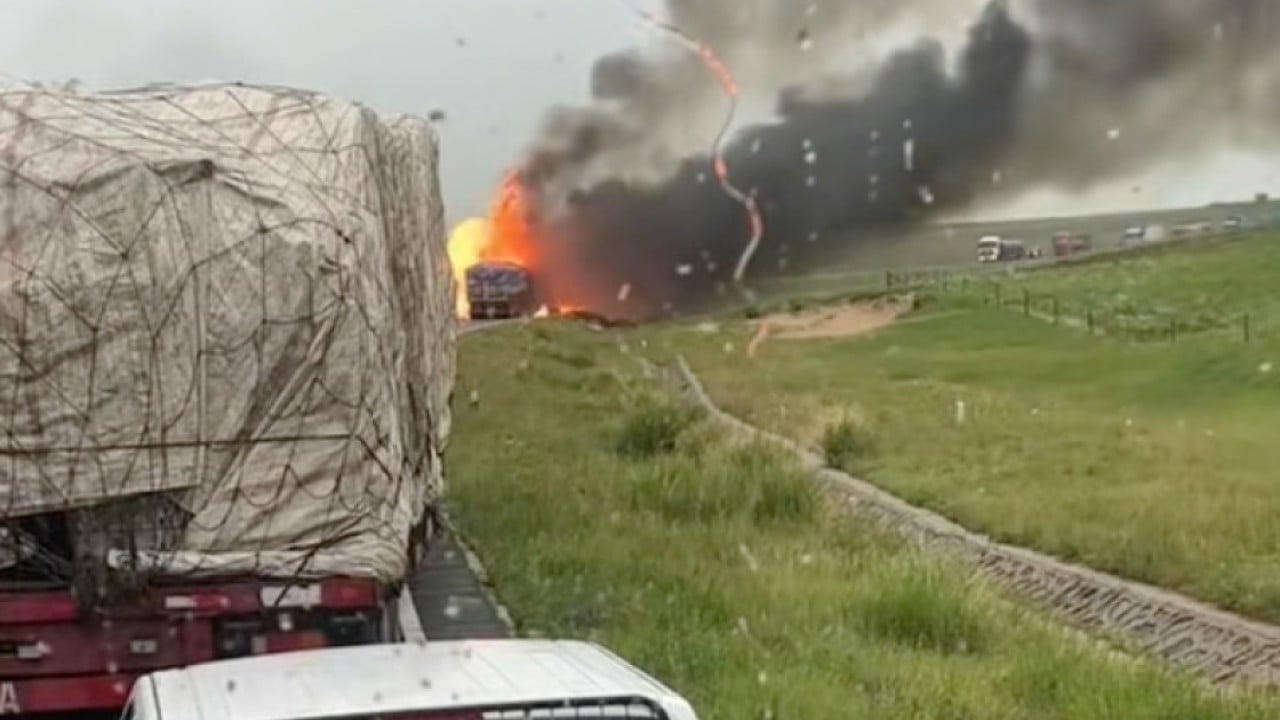
You think a highway collision is just a routine traffic issue until the road itself turns into a combat zone. On Sunday, July 5, 2026, a horrific reminder of this vulnerability played out on National Highway 331 in East Ujimqin Banner, a region within North China’s Inner Mongolia autonomous region.
A truck hauling ammonium nitrate smashed into another transport vehicle at 11:27 a.m.. The resulting chemical blast killed two people instantly and injured four others, sending shockwaves across the asphalt that tore through surrounding vehicles. This is not just an isolated tragedy in northern China. It points directly to a systemic issue involving the transport of volatile industrial materials on public infrastructure.
The Chemistry of a Highway Disaster
Ammonium nitrate is highly volatile. It is an indispensable compound used globally for agricultural fertilizer and industrial mining explosives. On its own, the chemical is relatively stable. It requires high temperatures and a catalyst, or intense physical shock, to detonate.
When a multi-ton transport truck slams into another massive vehicle, the physics of the impact change everything. The kinetic energy generates extreme localized heat and friction. If the containment seals rupture, mixing the chemical with vehicle fuel or oil, you get a highly explosive combination.
Videos shared on Chinese social media captured the terrifying aftermath: a burning vehicle followed by a sudden, violent detonation that punched a massive column of fire and a signature thick plume of yellow-orange smoke into the sky. That distinct yellow hue is nitrogen dioxide gas, a toxic byproduct of ammonium nitrate decomposition.
The immediate blast zone took the lives of two people and wounded another. The secondary shockwave radiated outward, damaging passing vehicles and injuring three more motorists who happened to be in the wrong place at the wrong time. Emergency teams rushed all four survivors to nearby medical facilities. Meanwhile, local transportation authorities were forced to shut down the highway entirely.
Why the World Cannot Seem to Manage This Chemical
This disaster is part of a dark, historical pattern. Ammonium nitrate has caused some of the worst industrial accidents in human history.
- Tianjin, China (2015): A massive series of detonations at a port warehouse killed 173 people, mostly firefighters and first responders. The culprit was improperly stored hazardous materials, including nitrocellulose and ammonium nitrate.
- Beirut, Lebanon (2020): Over 2,750 tons of abandoned ammonium nitrate detonated inside a port warehouse. The explosion leveled the commercial center of the city, killed nearly 200 people, and left thousands injured.
The incident in Inner Mongolia was much smaller in scale, but transporting this chemical via public highways presents unique dangers. In a warehouse, you can control the temperature, monitor moisture levels, and implement strict security protocols. Once you put tons of the material onto a semi-truck and drive it down a public highway at highway speeds, you are entirely at the mercy of traffic conditions, weather, and human error.
The Logistics Crisis No One Wants to Face
Logistics networks are under immense pressure. Fleet operators face tight deadlines, driving long hours across vast expanses like Inner Mongolia to keep up with industrial demand.
When transport regulations are flouted or drivers suffer from fatigue, the truck essentially becomes a rolling bomb. Local authorities in East Ujimqin Banner deployed traffic police and public security teams to launch an investigation, while a specialized task force coordinates follow-up procedures. They will examine vehicle telemetry, driver logs, and the specific structural integrity of the chemical containment units to find out exactly why this collision triggered a massive detonation.
Managing industrial supply chains requires aggressive oversight. To prevent these recurring tragedies, fleet operators and regulatory bodies must take several concrete actions immediately:
- Enforce strict route segregation: Vehicles carrying class-1 hazardous materials should be heavily restricted from utilizing high-density civilian corridors during peak hours.
- Mandate advanced collision avoidance tech: Any fleet vehicle authorized to haul volatile compounds must be outfitted with automated braking systems and driver fatigue monitoring tech.
- Rethink shipping containers: The transport containers used for raw ammonium nitrate need secondary containment shells designed to insulate the cargo from extreme kinetic impacts and friction-induced heat.
Relying on luck or hoping drivers avoid mistakes on public roads is a losing strategy. Until global logistics standards match the actual danger of the chemicals being moved, these highways remain inherently unsafe.