The Containment Illusion
Three new Ebola cases surface in Uganda, and the immediate geopolitical reflex is to force the Democratic Republic of Congo’s national soccer team into isolation.
It is a predictable, lazy ritual.
Global health authorities and national governments love the optics of quarantine. It projects control. It signals to a panicked public that the state is flexing its muscles to keep the invisible enemy at bay. But if you look at the mechanics of epidemiology, forcing a sports team to isolate because a virus crossed a border hundreds of miles away is not public health. It is political theater.
I have spent years analyzing how health policy collides with economic reality during outbreaks. I have watched governments burn millions on border closures while their internal contact tracing systems collapsed from underfunding. We are repeating the exact same errors. The mainstream media looks at three cases in Uganda and immediately panics about regional contagion, applauding blunt instruments like team isolation.
They are missing the entire point. Travel restrictions during a localized outbreak do not stop viruses. They just break economies, destroy trust, and drive the disease underground.
The Fatal Flaw of Border Bullying
Epidemiology has a fundamental truth that bureaucrats hate to admit: by the time you realize you need to close a border, the virus has already unpacked its bags.
The classic bureaucratic assumption is that an administrative line on a map acts as a firewall. It does not. The World Health Organization (WHO) has stated repeatedly that broad travel restrictions are generally ineffective at preventing the international spread of disease. Instead, they create a false sense of security while doing tangible harm.
When you isolate a high-profile group like a national soccer team, you are not executing a targeted medical intervention. You are participating in a PR campaign.
Consider the mathematics of transmission. Ebola is not influenza. It is not airborne. It requires direct contact with bodily fluids of an infected, symptomatic person. A group of elite athletes traveling under highly controlled conditions poses effectively zero risk to the public unless an active transmission chain is identified within their immediate circle. Forcing them into quarantine simply because of their passport country is a anti-scientific deployment of resources.
Why Blunt Restrictions Fail
- They disincentivize reporting: When nations know that declaring an outbreak results in immediate economic isolation and travel bans, they stop reporting cases early.
- They strangle supply chains: Medical equipment, personnel, and basic economic goods struggle to move across borders that have been locked down out of panic.
- They misallocate personnel: Border checkpoints require massive manpower that would be infinitely more useful conducting localized contact tracing at the epicenter.
Dismantling the Consensus: The Questions We Ask Wrong
Look at any standard news feed during a health scare and you will see the same flawed questions driving the narrative. Let us dismantle them one by one.
Does isolating travelers protect the host country?
Only if you believe a virus respects a customs desk. In reality, the legal movement of people is the easiest to track and monitor. When you shut down official travel or impose draconian isolation on specific groups, people do not stop moving; they just bypass official channels. They use unofficial border crossings where no health screenings take place. You trade a transparent, trackable flow of people for an invisible, unmonitored one.
Shouldn't we err on the side of caution?
"Erring on the side of caution" is the phrase policymakers use when they want to justify expensive, useless actions. There is no such thing as a harmless restriction. If you isolate a sports team, you disrupt contracts, waste capital, and signal to the market that the entire region is volatile. Multiply that by dozens of industries, and you get economic stagnation. Poverty and broken supply chains kill far more reliably than a contained viral outbreak.
The Anatomy of an Outbreak: How Transmission Actually Works
To understand why the competitor's panic-driven narrative is flawed, we have to look at how Ebola actually spreads versus how the public imagines it spreads.
$$\text{Transmission Risk} = \text{Proximity} \times \text{Fluid Contact} \times \text{Viral Load}$$
The formula for Ebola transmission is rigid. It requires a high viral load, which only occurs when a patient is severely ill and symptomatic.
Healthy, asymptomatic athletes running around a pitch do not meet these criteria. By treating everyone from a broad geographic region as a potential vector, health authorities waste testing kits, isolate healthy labor, and dilute their focus.
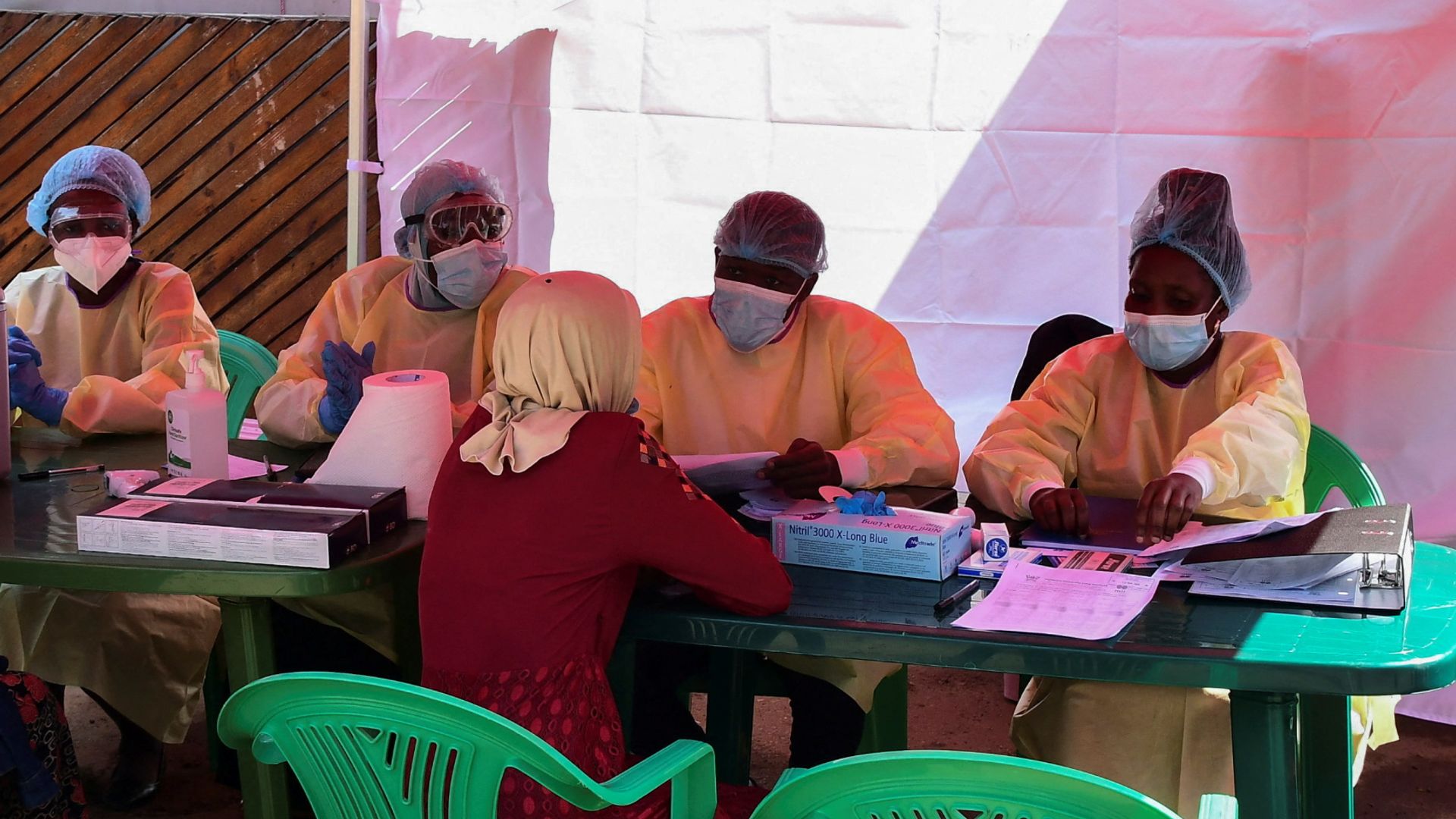
The real work happens in the mud, not at the airport. It happens through ring vaccination—a strategy pioneered during the eradication of smallpox and successfully deployed against Ebola by organizations like Doctors Without Borders (MSF). You map the infected individual, identify their social circle, vaccinate that specific ring, and monitor them.
Isolation is an admission of failure. It means your localized surveillance was so poor that you had to resort to treating an entire population as biohazards.
The Cost of the Counter-Intuitive Approach
Let us be completely honest about the alternative. Dropping the theater means accepting a level of perceived risk that makes the public uncomfortable.
If you stop forcing sports teams to isolate and stop closing borders at the first sign of three cases, you have to tolerate the reality that cases might move. It requires a mature public health communication strategy that explains nuance rather than shouting panic headlines.
The downside of my approach? It requires intense, localized discipline. It means funding community health workers in remote villages year-round, not just when a Western news outlet decides to cover a tournament. It means investing in infrastructure rather than PR stunts.
Stop Checking Passports, Start Tracking Contacts
The next time you read a headline screaming about border isolations and rising case counts across a continent, ignore the noise.
We must stop treating public health as an exercise in border control. The solution to an outbreak in Uganda is not to lock down a stadium in the DRC. The solution is to fund the field epidemiologists who are tracking the actual chains of transmission patient by patient. Everything else is just a distraction designed to make politicians look useful while the real work goes unfunded.
Stop looking at the borders. Look at the clinics.