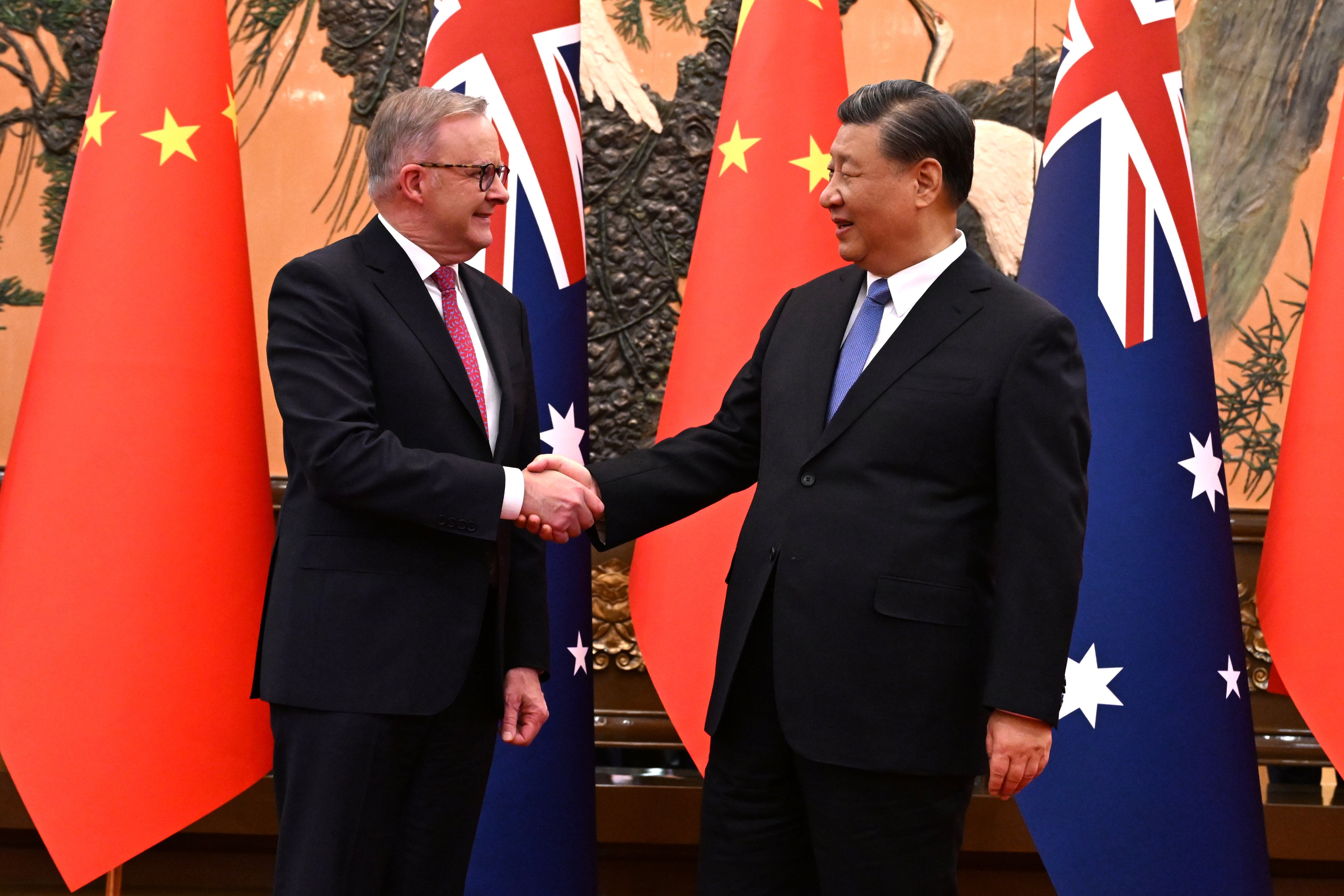
The mainstream media is currently obsessed with the optics of the recent high-level meeting between the Indian and American Air Chiefs. They see a photo of two generals in a decorated room and scream "strategic alignment." They look at a joint statement about "interoperability" and "technology transfer" and think we are watching a revolution in aerial warfare.
They are wrong.
What the "lazy consensus" ignores is that air superiority in the 2020s is not built on handshakes or symbolic flypasts. It is built on supply chain sovereignty and data-link integration—two things the US is hesitant to give and India is struggling to build. While the headlines focus on the camaraderie, the reality is a brutal tug-of-war over source codes and the "Black Box" problem that neither side wants to admit in public.
The Myth of Technology Transfer
Let’s dismantle the biggest lie first: the idea that the US is about to hand over the "crown jewels" of jet engine technology.
I have watched these negotiations for years. The GE F414 engine deal is heralded as a landmark, but the nuance missed by most analysts is the distinction between "manufacturing" and "knowing." There is a massive gap between being allowed to assemble a complex machine and owning the metallurgical secrets that make that machine survive 2000°C.
The US remains the most protectionist nation on earth regarding its defense IP. To believe they will foster a truly independent Indian aerospace sector is to misunderstand the very nature of American hegemony. They want a customer, not a competitor. When we talk about "iCET" (Initiative on Critical and Emerging Technology), we aren't talking about a gift. We are talking about a leash.
The Source Code Standoff
Imagine a scenario where India needs to integrate a domestic Astra missile onto a US-supplied platform during a hot conflict.
Under current terms, that requires opening the "source code"—the digital brain of the aircraft. The US treats this code like a religious relic. Without it, India is flying a high-tech brick that can only do what Washington permits it to do. This isn't a partnership; it’s a subscription model.
- The Dependency Trap: Buying American keeps you locked into their logistics loop.
- The Sovereignty Tax: Every "joint exercise" is actually a data-mining expedition for the manufacturer to see how the aircraft performs in local conditions.
- The Maintenance Mirage: "Deep maintenance" often still requires parts to be shipped back to the original equipment manufacturer (OEM), bypassing local technicians entirely.
Interoperability Is a Buzzword for Compliance
The competitor article loves the word "interoperability." It sounds efficient. It sounds modern. In reality, it is a polite way of saying "technical subservience."
For two air forces to be truly interoperable, they must share the same data links (like Link 16) and the same encrypted communication protocols. If India fully adopts these, it effectively integrates its air defense network into the American ecosystem. This is a nightmare for a nation that prides itself on "strategic autonomy."
You cannot be "autonomous" if your primary radar and sensor fusion systems are pinging back to a server in Fort Worth.
The China Factor: A Distraction or a Driver?
The common argument is that the threat from the North (China) forces this marriage. It’s a convenient narrative. But look at the geography. The Himalayan theater requires high-altitude performance and specific weight-to-thrust ratios that the US F-16 or even the F/A-18 weren't originally designed to prioritize.
The US is selling India a solution to a problem they defined. India needs a nimble, high-altitude interceptor fleet with an open architecture. The US offers a heavy, data-integrated ecosystem designed for carrier decks and Middle Eastern deserts. We are trying to fit a square peg into a jagged, mountainous hole because the political optics look good.
The Atmanirbhar Contradiction
The Air Chief's meeting discussed "collaboration," but that word is an insult to the "Make in India" (Atmanirbhar Bharat) initiative. You cannot build a domestic industry while simultaneously courting the world’s most dominant defense exporter for your "urgent" needs.
Every dollar spent on an American platform is a dollar taken away from the Tejas Mk2 or the AMCA (Advanced Medium Combat Aircraft). The military-industrial complex in India is being squeezed between the desire for "status symbol" American jets and the necessity of "sovereign" Indian ones.
I’ve seen air forces blow billions on "prestige" acquisitions only to realize five years later that they can't afford the hourly flight cost. An F-35 or a top-tier F-15EX isn't just a purchase; it's a long-term liability that eats the budget of every other domestic project.
Why the "Experts" are Silent
Most "defense analysts" you read are former bureaucrats or lobbyists who have a vested interest in keeping the procurement wheels turning. They won't tell you that the "joint training" at Cope India or Red Flag is often sanitized. We don't show them our best moves, and they certainly don't show us theirs.
We are playing a game of poker where everyone is pretending they’ve shown their hand.
The Real Power Play: Software, Not Steel
The future of air power isn't in the airframe. It’s in the algorithms.
- Electronic Warfare (EW): The US has the best EW suites in the world, but they are "black-boxed." India will never be allowed to see how the signal processing actually works.
- AI Integration: While the Air Chiefs talk about AI, the US is miles ahead in "loyal wingman" tech. They will sell India the drone, but they won't sell the logic that drives it.
- Sensor Fusion: This is the ability to take data from a satellite, a ground radar, and a jet to create a single picture. If that picture is generated by American software, who really owns the battlefield?
The hard truth is that India is at a crossroads. One path leads to becoming a "strategic partner" (read: a high-tier vassal state with fancy toys) and the other leads to the painful, slow, and expensive process of true indigenous capability.
Meetings like the one we just witnessed are designed to nudge India toward the former. They wrap dependency in the flag of cooperation. They call a sales pitch a "strategic dialogue."
Stop looking at the smiles in the photo. Look at the fine print in the end-user monitoring agreements. That’s where the real war is being lost.
Buying a plane is easy. Owning the sky is hard. If India continues to prioritize high-profile handshakes over low-profile software sovereignty, it will find its Air Force is nothing more than a localized wing of a global American franchise.
The jets will be beautiful. The pilots will be brave. But the "Off" switch will remain in Washington.