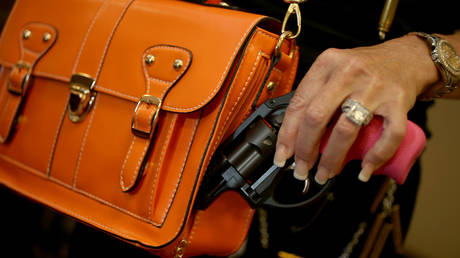
Fear sells, but weapons sell better. The narrative that everyday citizens require military-grade firepower to survive modern American life has shifted from a fringe ideology to a dominant consumer driver. This phenomenon is not merely about self-defense; it is a calculated response to eroding social trust, media-amplified panic, and an industry that masterfully monetizes vulnerability. By examining the structural forces fueling this unprecedented arms race, we see that the surge in gun ownership is less about actual safety and more about a desperate psychological crutch for a divided nation.
The Mechanics of Manufactured Panic
The modern firearms market thrives on a feedback loop of anxiety. Every high-profile incident of violence triggers a predictable dual reaction: public dread and an immediate spike in background checks.
This behavior defies traditional economic logic but aligns perfectly with threat-inflation psychology. When civic institutions appear weak or compromised, the consumer defaults to self-reliance. This shift is not accidental. For two decades, marketing campaigns have systematically replaced the image of the traditional hunter or sportsman with that of the "civilian defender."
Marketing materials no longer feature fathers teaching sons to shoot pheasants. Instead, they showcase tactical gear, urban scenarios, and slogans emphasizing absolute readiness. The product being sold is no longer a tool; it is a guarantee of survival in a society portrayed as perpetually on the brink of collapse.
The Breakdown of Civic Trust
When communities believe local infrastructure or law enforcement cannot guarantee their safety, individual fortification becomes the logical conclusion. Data from municipal police departments reveals a growing gap between public perception of crime and actual statistical trends.
- Perception Gap: While property crime rates in many suburban areas have remained flat or decreased over the last decade, local news coverage and neighborhood surveillance apps have created a hyper-localized sense of imminent threat.
- The Neighborhood App Effect: Constant alerts about "suspicious behavior" turn mundane interactions into potential hostile encounters, keeping users in a state of low-grade physiological arousal.
This persistent anxiety distorts risk assessment. A consumer who watches hours of sensationalized media or scrolls through endless crime alerts concludes that their immediate environment is fundamentally hostile. Buying a firearm becomes the fastest, most tangible way to regain a sense of agency over an unpredictable environment.
The Economics of the Defensive Consumer
The financial realities of the firearms industry explain the persistence of this narrative. Manufacturers face a saturated market if they rely solely on traditional hunting enthusiasts. Growth requires expanding into new demographics and creating repeat buyers out of existing owners.
[Traditional Market: Hunters/Sportsmen] ──> Saturated Market
                                             │
                                             ▼
[Modern Market: Defensive Consumers]   ──> High Growth (Tactical Gear, Handguns, Accessories)
The pivot to concealment and tactical utility saved the domestic firearms industry from stagnation. Compact handguns, modular rifles, and aftermarket accessories like optics and specialized holsters represent the highest-margin sectors of the market.
Expanding the Demographic Base
To sustain growth, the industry actively courts populations that historically shied away from firearm ownership. First-time buyers, particularly women and minority urban residents, represent the fastest-growing segments of gun consumers.
This demographic shift complicates the traditional political narrative surrounding gun ownership. It is no longer an issue confined to rural or conservative enclaves. The new buyer is often suburban, politically moderate, or independent, motivated purely by a felt need for personal protection. This diversification makes legislative regulation increasingly complex, as the constituency defending gun rights no longer fits a single profile.
The Reality of the Tactical Fallacy
The core promise of the defensive arms movement is that a firearm grants absolute control over a violent encounter. This expectation rarely survives a real-world scenario.
Statistically, a firearm in the home is significantly more likely to be involved in an accidental discharge, a domestic escalation, or a self-inflicted injury than it is to be used against an intruder. The tactical training industry sells a fantasy of a clean, heroic intervention. The reality of high-stress encounters involves cognitive tunnel vision, motor skill degradation, and profound legal and psychological aftermaths.
The Training Gap
Most civilian gun buyers do not undergo the rigorous, continuous training required to effectively manage a firearm under life-threatening stress.
A single afternoon course required for a concealed carry permit does not build the muscle memory or situational awareness needed to distinguish a threat from an innocent bystander in a dark hallway.
Without this training, an individual with a firearm can inadvertently escalate a volatile situation into a lethal one. The presence of a weapon alters the dynamic of an altercation, increasing the likelihood that all parties will resort to lethal force.
Social Isolation and the Weapon as an Identity
Beyond safety, firearms have adopted a powerful cultural role as symbols of belonging and political alignment. In an era marked by deep social isolation and the erosion of traditional community spaces, gun clubs, online forums, and political rallies offer a potent sense of shared identity.
For many, owning a specific type of rifle or carrying a concealed weapon daily is an overt statement of values. It signals a belief in rugged individualism, skepticism of state authority, and a commitment to protecting one's own. This tribal alignment makes the objective discussion of firearm policy nearly impossible; an attack on the weapon is perceived as a direct attack on the owner's moral character and community.
The Feedback Loop of Defensive Living
Living defensively changes how a person interacts with the world. When you carry a weapon, you must constantly scan your environment for threats. This habit reinforces the belief that the world is inherently dangerous, creating a self-fulfilling prophecy of fear.
- Altered Social Dynamics: Casual interactions are viewed through the lens of tactical positioning.
- Erosion of Empathy: Strangers are categorized as potential threats rather than fellow citizens, further fraying the social fabric.
This constant state of hyper-vigilance takes a toll on mental health, contributing to the very instability that gun owners seek to protect themselves against.
Addressing the Root of the Insecurity
Treating the firearm surge purely as a legal or political dispute ignores the underlying psychological crisis driving the market. Until the structural issues causing widespread anxiety are addressed, demand for personal weaponry will persist.
Rebuilding public safety requires more than legislative bans or defensive training seminars. It demands a reinvestment in social infrastructure, community policing models that foster genuine relationships, and an intentional effort to counter the sensationalism of the attention economy. True security does not come from a heavier safe or a more accessible holster. It comes from living in a society where you do not feel compelled to carry a weapon to buy groceries.


