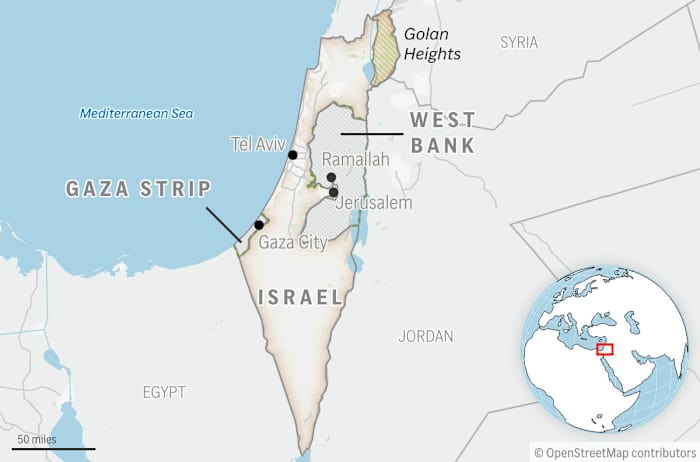
An Israeli airstrike tore through a funeral procession in central Gaza's Nuseirat refugee camp on Friday, killing at least seven people and wounding 22 others. The attack, which the Israeli military stated targeted an active Palestinian Islamic Jihad militant cell, highlights a dark reality that official diplomatic channels have sought to obscure. The comprehensive ceasefire signed in October 2025 to end two years of open warfare has not stopped the bleeding. Instead, the conflict has morphed into a deadly war of attrition where surgical strikes and guerrilla ambushes replace heavy armor maneuvers, leaving civilians caught in a relentless cycle of violence.
While global powers celebrate the reduction of full-scale artillery barrages, the ground truth in Gaza remains profoundly dangerous. Since the truce took effect nine months ago, at least 1,123 Palestinians have been killed, alongside five Israeli soldiers. The tragedy at the Nuseirat camp is not an isolated malfunction of a ceasefire agreement. It is the logical outcome of an unspoken operational shift by both sides. Read more on a similar subject: this related article.
The Mechanics of the New Attrition
The nature of the military engagement has fundamentally transformed since late 2025. During the first two years of the war, the Israel Defense Forces relied on massive firepower, widespread neighborhood evacuations, and heavy armor incursions to dismantle Hamas infrastructure. Today, the strategy relies on intelligence-driven precision strikes. This involves tracking mid-level operatives via drone surveillance, signals intelligence, and local informants, then striking them in real-time.
The strike on Friday morning illustrates this rapid-fire chain of events. Initially, an early morning Israeli operation targeted a vehicle in central Gaza, killing a suspected Hamas operative. Hours later, as mourners gathered to bury the dead from that specific attack, Israeli intelligence identified what it claimed was a gathering of Palestinian Islamic Jihad militants among the crowd. A second missile was launched directly into the funeral procession. More analysis by BBC News explores similar perspectives on the subject.
This creates a terrifying loop for the local population. Attending a funeral—a fundamental cultural and religious obligation—has become an act of extreme risk. The military's acknowledgment that it knew civilians might be harmed reflects a calculated acceptance of collateral damage that undercuts the spirit, if not the legal technicalities, of the ceasefire.
Data from independent monitoring organizations shows this trend is accelerating. The Armed Conflict Location and Event Data project tracked 40 distinct Israeli attacks targeting militants in June 2026 alone. This represents the highest monthly total since the formal end of major hostilities last autumn. Rather than winding down, the air campaign has become more frequent, relying on smaller munitions deployed in crowded markets, tent cities, and residential avenues.
Guerilla Resistance and the Preemption Trap
Israel defends these escalating operations as a necessary defensive response to persistent violations by insurgent factions. Since the October agreement, fragmented militant cells have shifted away from coordinated rocket volleys toward localized asymmetric warfare. They utilize sniper fire, improvised explosive devices, and sudden close-quarters ambushes against Israeli troops stationed along security corridors.
This creates a preemption trap for military planners. To prevent these localized cells from executing attacks, intelligence agencies feel compelled to strike first, often relying on compressed timelines that leave little room to verify the presence of civilians. The presence of armed militants within civilian crowds complicates the battlefield enormously. Militants live, move, and mourn alongside their families. When a commander decides to neutralize a target at a public gathering, the civilian toll is guaranteed.
Medical workers at Awda Hospital in Nuseirat bore the brunt of this calculus on Friday. Emergency rooms already suffering from a chronic shortage of basic medical supplies were flooded with dozens of shrapnel victims within minutes of the blast. The Gaza Health Ministry maintains that women and children continue to constitute the majority of casualties across these localized actions, even as overall numbers have declined from the peak of the 2023–2025 war. Total fatalities from the multi-year conflict have now surpassed 73,000.
The Diplomatic Fiction of Pacification
The persistence of these strikes exposes the profound limitations of the current diplomatic framework. The October 2025 ceasefire was heralded by international mediators as a historic achievement that would allow for massive humanitarian reconstruction. In practice, the agreement primarily served to halt the high-altitude destruction of entire urban blocks and the mass displacement of hundreds of thousands of people at a time. It did not resolve the underlying security dilemmas or establish a governing authority capable of policing the strip.
Because the agreement lacked a robust, neutral international peacekeeping force on the ground, enforcement relies entirely on the self-restraint of the combatants. That restraint has evaporated. Hamas and its allies view localized guerrilla operations as a legitimate resistance against continued Israeli surveillance and containment. Conversely, Israel views any militant movement as an existential threat requiring immediate kinetic intervention.
This diplomatic fiction allows international governments to look away. Because there is an official ceasefire in place, the political urgency to negotiate a permanent, sustainable political settlement has dissipated. Major donors remain hesitant to fund large-scale reconstruction projects when a single afternoon strike can turn a newly rebuilt facility into a graveyard. The result is a frozen conflict that remains highly lethal for those living inside it.
Surviving the Gaps in the Truce
For the two million residents of Gaza, the current phase of the conflict brings a different kind of psychological terror. During the height of the conventional war, danger was pervasive but somewhat predictable based on evacuation orders and broad frontline movements. Now, the danger is entirely unpredictable. A missile can strike a vehicle parked next to a bakery, a tent in a designated humanitarian zone, or a group of walking mourners without any warning.
The social fabric of the community is fraying under this pressure. People are increasingly wary of gathering in large numbers, visiting crowded markets, or associating with individuals suspected of having political or militant ties. The basic rituals of life, including communal grief, are being altered by the threat from above.
The international community must confront the reality that the ceasefire has become a tool of management rather than a path to peace. It has normalized a baseline level of daily casualties while providing political cover for a low-intensity war that shows no signs of concluding. Until the core political status of Gaza and the long-term security arrangements are directly addressed, the truce will remain a piece of paper, completely disconnected from the violence unfolding on the ground.